Article source: Virani Law, Canada
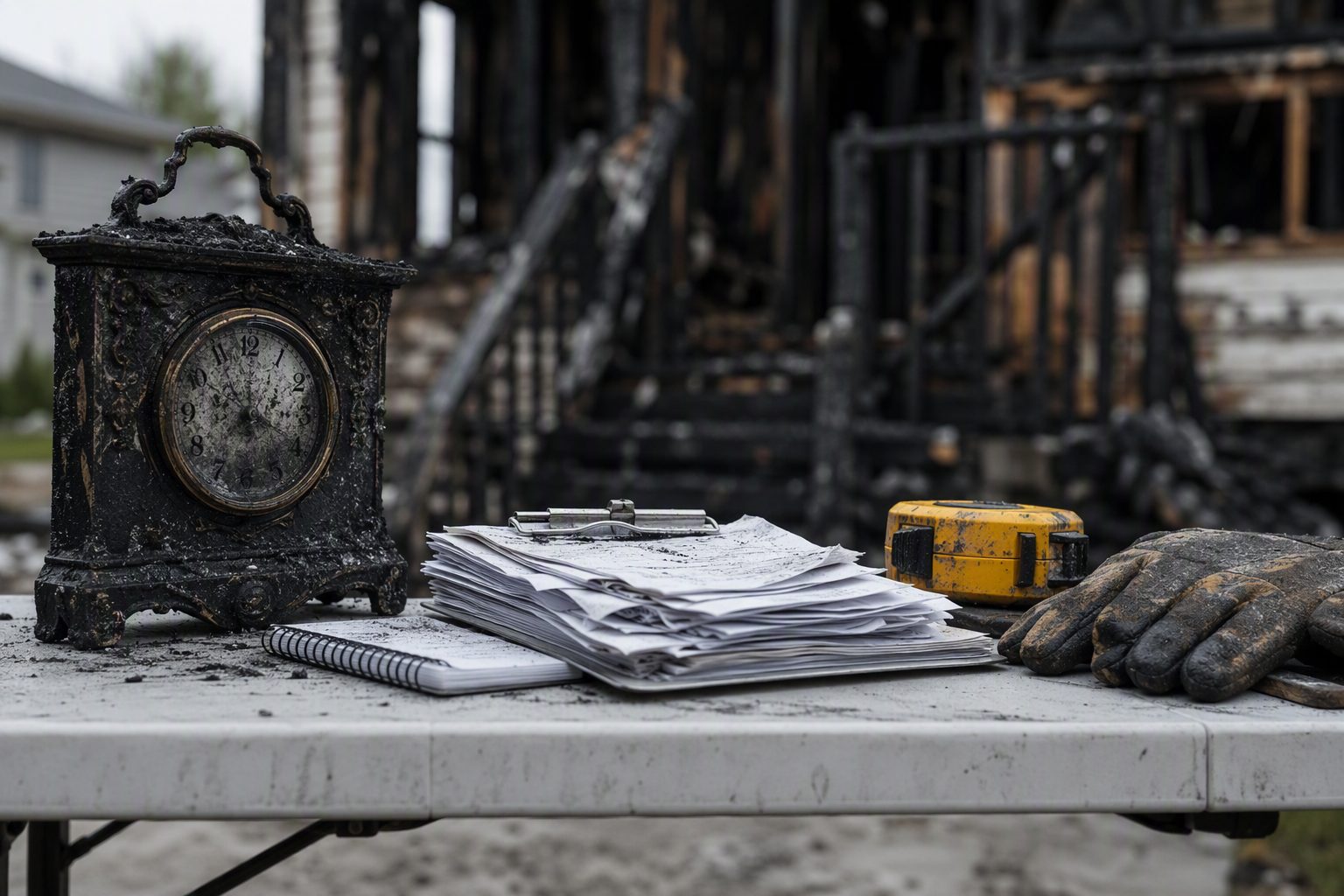
A house fire creates two problems at once. Your household needs shelter and clean clothes within hours. The claim runs on a much slower clock, and the choices you make during cleanup and temporary relocation can quietly limit what the insurer is able to verify weeks later.
Most delays in residential fire files are procedural, not adversarial. An adjuster can’t value a sofa that went to a landfill on day three, and can’t reimburse a hotel stay that exists only in your memory. The mistakes below tend to happen after you report the loss, when you’re displaced and rebuilding a paper trail from a phone and a borrowed laptop.
| Mistake | How It Can Delay the Claim | Immediate Corrective Action | Records to Preserve |
|---|---|---|---|
| Discarding damaged property too early | Removes physical evidence needed for inspection | Obtain written disposal authorization | Photographs and video |
| Submitting an incomplete contents inventory | Prevents valuation of personal property | Build the inventory room by room | Receipts and account statements |
| Losing additional living expense records | Makes reimbursement difficult to verify | Use a dedicated expense log | Itemized receipts and invoices |
| Missing requests or deadlines | Interrupts claim administration | Record every due date in one calendar | Notices and delivery confirmations |
| Authorizing repairs without an agreed scope | Creates disputes over necessity and cost | Separate emergency work from permanent repairs | Written estimates and change orders |
| Accepting unclear valuation figures | Leaves scope and depreciation differences unresolved | Request an itemized written calculation | Valuation schedules and policy provisions |
| Allowing stalled communication to continue | Prevents disputed issues from being identified and escalated | Send a written status request and escalate proportionately | Communication log and responses |
How Fire Insurance Claims Work After a House Fire
The adjustment process follows a predictable sequence in most Canadian residential files. You report the loss and an adjuster is assigned. The site gets inspected. The adjuster identifies and values the property, then assesses payment against your policy wording. Each of those stages depends on the information you provide.
What Counts as a Fire Insurance Claim
A fire insurance claim is your formal request for payment or other covered assistance after fire, smoke, and the damage that follows them. The insurer investigates the cause and extent of the loss, reads the applicable policy terms, and assesses the amount payable for covered damage.
One point trips people up. “Fire insurance” in Canada is usually coverage within a broader home insurance policy rather than a standalone product, so the documents governing your claim are the homeowner policy and any attached endorsements.
What the Policy Usually Covers
Coverage commonly reaches the dwelling itself and the personal property inside it. Qualifying additional living expenses come in when the home can’t be occupied. The exact protection available to you is a separate question.
Treat none of it as automatic. What you actually have depends on the policy you bought and the limits printed on your declarations page. Some policies pay replacement cost only after replacement happens and you provide proof of purchase, while others calculate the first payment using actual cash value or another contractually defined method that accounts for age and condition.
Where Coverage Stops
Exclusions and limitations come from your contract, not from general industry practice. An excluded cause of loss is the obvious one. Intentional loss by an insured falls into a different category, as do fraud and material misrepresentation. Then there’s property that falls outside the insured categories altogether, and claimed amounts sitting above an applicable sub-limit.
A common assumption deserves correction here. Vacancy and deferred maintenance don’t automatically create an exclusion in every case, and neither do questions about building code upgrades or business property stored at home. The reliable way to find out is to read the specific clause, plus any endorsement that modifies it.
How Long Payment Takes
There’s no single Canada-wide payout period for a fire claim. Timing depends on the policy and the provincial or territorial requirements that apply. Damage complexity matters, and so does the completeness of your documentation. So does whether the insurer disputes coverage at all, or only the scope of the repair and the numbers attached to it.
Undisputed portions of a claim, or an authorized advance, can sometimes be dealt with before the whole file settles. A displaced homeowner might receive an emergency payment for clothing and accommodation while the dwelling valuation stays open. Ask your adjuster in writing which portions are agreed and which are still under review.
When the Delay Stops Being Procedural
Managing a residential fire claim requires navigating complex policy language, strict timelines, and technical valuation frameworks. Given these increasing demands, having a dedicated advocate on your claim is becoming necessary to ensure your policy is interpreted correctly and your interests are protected from the outset. This is the core focus of Virani Law in their work in residential loss negotiations and policy interpretation. The firm offers free initial consultation to homeowners across Canada, informed by founder Fy Virani’s firsthand experience of a devastating house fire involving his family in 2014. Establishing professional advocacy early ensures your file remains clear, compliant, and properly supported against administrative and contractual hurdles.
The response should remain proportionate. Routine document requests and ordinary adjustment delays don’t necessarily require legal representation, and no professional can promise a particular settlement figure under a contract that limits what’s payable.
Mistake 1: Discarding Damaged Property Before Inspection
As a general rule, don’t discard fire-damaged property before the insurer has had a reasonable opportunity to inspect it, or has given written permission for disposal. When health or safety forces immediate removal, preserve detailed photographs, video, and identifying information before the item leaves the property.
Premature disposal creates an evidence problem, not a cleanliness problem. You have to establish ownership and the item’s pre-fire condition. You also need to establish repairability, the number of units that existed, and whether the damage came from the fire rather than a defect that predated it.
There’s a real difference between reasonable mitigation and unnecessary disposal. Dangerous debris and structural hazards may need to be stabilized or cleared quickly, and directions from fire officials or municipal building and health authorities take precedence over an insurer’s inspection preference.
When circumstances allow, call the adjuster before anything leaves the property.
Photograph first. Capture each affected room before anything moves, with wide shots that establish the space and close ones that pick up brand names, model numbers, and serial numbers wherever those details survive. Get the disposal authorization in writing, and hang onto the debris-removal manifest and any official order that required immediate removal.
Mistake 2: Submitting an Incomplete or Unsupported Contents Inventory
A contents claim usually asks for far more than a lump sum for what the house held. The insurer may want each article described one by one, with an approximate purchase date and an original cost. It may also want the item’s condition on the day of the fire, plus the amount you propose for replacement.
Rushed inventories leave property out and describe what’s left too vaguely to value. “Kitchen equipment” tells an adjuster nothing. “Stainless steel stand mixer, purchased in 2019, model number and receipt attached” gives them something to price.
Rebuilding Proof When the Receipts Burned
Paper receipts rarely survive a fire, so build proof from whatever you stored elsewhere. Old phone photos often show furniture and electronics in the background. Email confirmations, credit card statements, and online order histories can establish purchases you can no longer document on paper, and so can loyalty account records and warranty registrations.
A receipt isn’t necessarily the only acceptable evidence of ownership. Insurers weigh whatever evidence is available and may ask for further support before valuing something like jewelry or a musical instrument. What’s required depends on the policy and the circumstances.
Save the exact file you sent, including attachments, and the submission confirmation. If you revise the inventory later, identify what changed and why instead of quietly replacing the earlier schedule, because an unexplained increase can trigger another round of questions or a second inspection request.
Mistake 3: Failing to Document Additional Living Expenses
Keep receipts for additional costs, as the insurance company may require them for reimbursement. A household moving between hotels has more urgent concerns than maintaining a spreadsheet, and the receipts from those weeks are the ones nobody can reproduce later.
Document the costs as you go. Itemized receipts, each one annotated with the date and the purpose. Then note how the expense exceeded what your household normally spent because the home was uninhabitable, and submit the policy and insurer-set schedule.
This isn’t necessarily a blanket reimbursement of everything you spend while displaced. The insurer may compare post-loss spending with your ordinary household expenses, and the policy may impose a dollar limit, a time restriction, or both.
Ordinary Spending Versus Increased Cost
Consider groceries. If your household normally spent a set amount each week on food and now runs up restaurant bills because there’s no usable kitchen, the figure that matters may be the documented increase rather than the full restaurant bill. It depends on how your policy defines the additional expense.
Keep records showing both sides of that comparison. Put temporary accommodation invoices and itemized meal receipts in one dated log, along with laundry and parking costs and any email in which the adjuster approves a longer-term rental or a monthly allowance.
Mistake 4: Missing Response Deadlines
Deadlines reach you from more than one direction. The policy sets some. Provincial or territorial insurance requirements set others, and the adjuster sets the rest through specific written requests made during the adjustment. Because statutes and regulators differ across the country, no single national deadline applies to every homeowner.
The dates that show up most often are for returning completed claim forms and delivering the contents inventory. Proof-of-loss materials have their own deadlines, and information requests come with their own response window. Confirm each one in writing instead of assuming the timeline is soft.
A Deadline Control System
Run one dated calendar for the entire claim:
- The date each request arrived
- The exact material requested
- Who is responsible for answering it
- The delivery date, with proof of submission
- Any written extension the insurer granted
When You Can’t Meet a Date
Where a date is unrealistic, ask for an extension in writing before it passes. Say precisely what remains outstanding, and propose a submission date you can hit. An extension is never automatic.
Keep the exchange itself, including whatever proves when the finished material actually arrived.
Mistake 5: Starting Permanent Repairs Without an Agreed Scope
Emergency mitigation and permanent reconstruction are different things, and the difference carries consequences. Boarding a window or tarping a roof protects the property from further damage, and so does extracting standing water. Framing and drywall do something else. Once the finish work goes on, the condition of the evidence has permanently changed.
Unapproved demolition or reconstruction can bury the original damage. Once burned framing has been replaced, the argument about cause and repair method gets harder to settle, and so does the argument about reasonable price, because the adjuster is looking at photographs instead of the structure.
Photograph the area before any work starts, if it’s safe to be in there. Ask the contractor for a detailed written estimate rather than a verbal figure, and keep the final invoice. Your message to the insurer should say specifically why the work couldn’t wait for an inspection.
Comparing Scopes and Controlling Change Orders
Contractor and insurer estimates differ because their assumptions differ. Quantities and material grades vary between estimating systems. So do labour productivity assumptions and code-related allowances, which is why you want a line-by-line comparison rather than a stare-down with the bottom line.
Discovering more damage behind a wall is routine in fire files. Document it, and where practical, obtain written approval before proceeding with further permanent work. Keep the revised estimate and the dated site photographs from that stage of the rebuild.
Mistake 6: Accepting Valuation Figures Nobody Has Explained
A low settlement offer isn’t a single number. It’s a stack of line items. You can’t assess it without knowing which property was included, which pricing assumptions were applied, and whether depreciation or a policy limit brought the total down.
So ask for the written estimate and the full valuation schedule. Then ask the insurer to identify the items actually in dispute and to show how depreciation was calculated for each one. Ask which coverage limits were applied, and which policy provisions produced the figure.
Assume somebody will one day have to reconstruct this file from what you kept, whether that’s an adjuster, an ombudsman, or a lawyer. Start with the policy and its endorsements. Add every piece of insurer correspondence, along with any settlement and release documents you sign.
Why Fire Claims Get Denied
Denials tend to rest on a short set of findings. The loss falls outside coverage, or an exclusion applies. Required evidence was never supplied. Or the insurer has concluded the claim contains a material misrepresentation. Whichever it is, the letter should explain the decision and identify the policy language the insurer relies on.
Disagreeing with an adjuster isn’t proof of bad faith. Before you weigh any review or complaint option, get the decision in writing, with the clause the insurer says applies and the evidence it considered.
Mistake 7: Letting a Stalled Claim Stay Informal
When an insurer goes quiet, or makes an offer that doesn’t match documented losses, send a dated written request. It should identify the unanswered issues and the documents you’ve already provided, and state the response you’re asking for. If the matter stays unresolved, the insurer’s complaint process comes next.
Keep the status request short. It needs the claim number and the outstanding issue. It also needs the date you submitted the supporting material, and a reasonable date by which you’re requesting a response.
Escalate proportionately. Two weeks of routine silence may call for nothing more than a follow-up to the assigned adjuster or the claims supervisor. A persistent disagreement over coverage is different. It may justify the insurer’s internal complaint process, and after that an ombudsman service or an inquiry to the provincial or territorial regulator. Not every route is open for every dispute, and a regulator may provide complaint oversight without deciding the amount payable under an individual contract.
External Complaint Options
Obtain the insurer’s written position, then follow its internal complaint process. The Financial Consumer Agency of Canada provides the complaint process for federally regulated insurance companies, and provincial or territorial requirements may differ.
For unresolved complaints involving participating Canadian property and casualty insurers, the General Insurance OmbudService may be the relevant body. If you’re not satisfied with an insurer’s response, file a complaint with the relevant province or territory’s insurance regulator. Confirm the correct regulator and its role before you file anything.
Protecting the Record While the Claim Is Open
Fire claims move on the strength of the record built from day one. An advocate guides your claim to ensure physical evidence is preserved, written records are maintained, and valuation figures are properly vetted before issues arise. Because your ultimate recovery depends on policy language and applicable provincial or territorial law, early claim advocacy provides the structure needed to prove your full entitlement.
None of that changes what the contract says. What’s payable still comes from the individual policy and from the law of the province or territory where the property sits, which is why the useful question in month six is rarely how hard you pushed, and usually what you can prove.