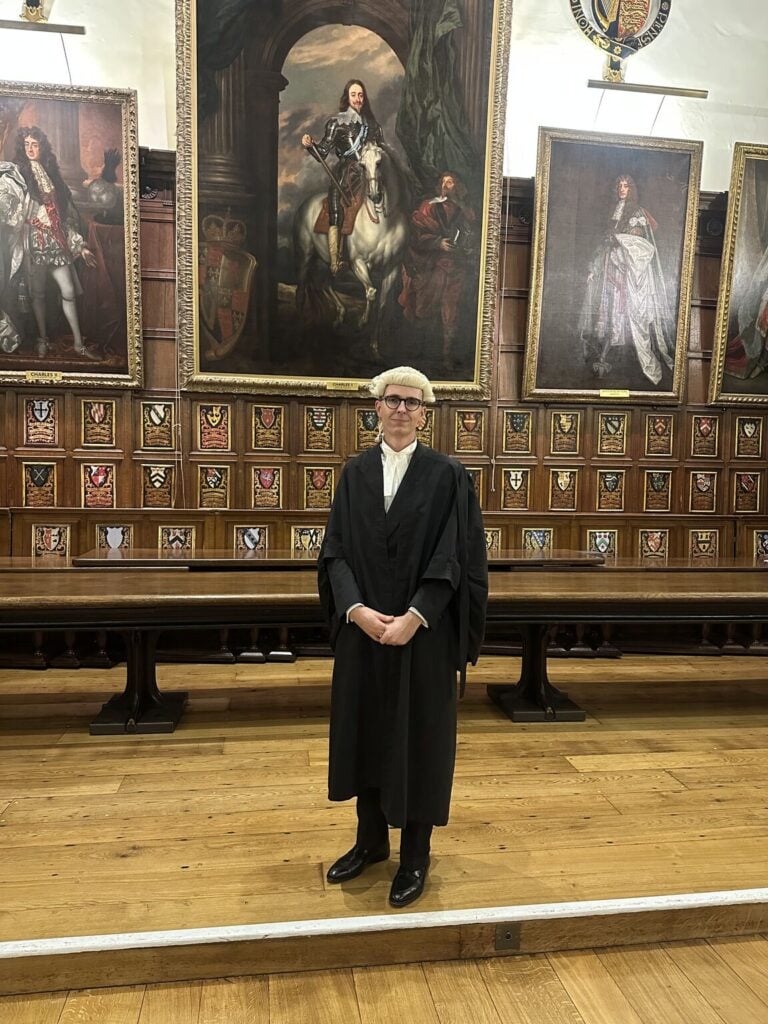
There are professional milestones, and then there are the ones that involve Elizabethan halls, centuries of legal tradition and some rather distinguished company.
New Job >>General Counsel & Company Secretary – Join the Executive Team in a Newly Established Organisation
Bankside barrister and LawFuel Power Lister Jeremy Johnson has been called to the Bar of England and Wales by the Honourable Society of the Middle Temple.
The Call ceremony occurred in the grand, Elizabethan Middle Temple Hall in London. The Hall was completed in the early 1570s and has hosted more than 450 years of legal history.
He announced the call in a LinkedIn post, noting the “palpable history” of the venue, whichbsurvived the Great Fire of London, took a wartime battering in the Blitz, and was reportedly where Shakespeare’s Twelfth Night had its first recorded performance in 1602. That’s not a bad venue for a career milestone.
For a New Zealand lawyer the occasion carries extra weight. Until 2004, the final court of appeal for New Zealand sat in London, in the Privy Council. Generations of New Zealand judges and lawyers grew up on English authorities, and some of those authorities were written by Middle Templars.
Blackstone, Denning and Other Legal Heavyweights
Middle Temple is one of London’s four Inns of Court, which alone have the right to call barristers to the Bar of England and Wales. It emerged as a society of lawyers in the mid-14th century, which makes the Hall the relatively new building on the block.
Its members have included Sir William Blackstone, whose Commentaries on the Laws of England shaped the common-law world, New Zealand’s included. Another was Vallabhbhai Patel, the barrister who became one of the founding fathers of modern India.

Lord Denning, among the most influential English judges of the 20th century, trained at Lincoln’s Inn. He was later made an Honorary Bencher of Middle Temple. He also did his pupillage at 4 Brick Court in the Middle Temple, so the connection goes back further than the honorary title.
Other Middle Templars include former Lord Chancellor John Sankey, and Mervyn Griffith-Jones, who prosecuted at Nuremberg. Griffith-Jones is better remembered for the 1960 Lady Chatterley’s Lover trial, where he asked the jury whether it was a book they would wish their “wife or servants” to read. The jury acquitted.
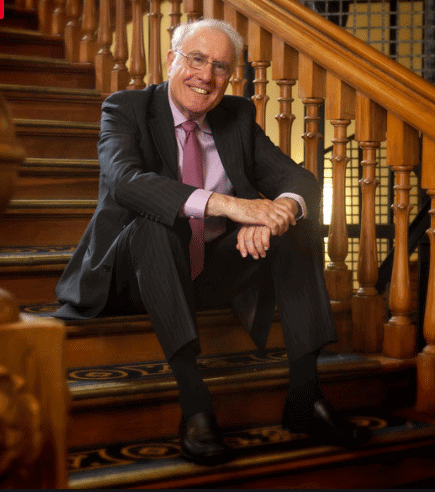
New Zealand has a place on the roll too. Former Prime Minister and constitutional lawyer Sir Geoffrey Palmer (left) has been made an Honorary Master of the Bench of the Middle Temple.
What Does It Take to Become a Middle Templar?
Membership is not simply a matter of turning up in a wig and gown and admiring the hammerbeam roof.
Aspiring barristers must complete the academic stage of training and join one of the four Inns. They then complete the vocational training and the Inn’s qualifying sessions, and meet the standards for Call to the Bar.
Lawyers who are already qualified overseas, New Zealand practitioners included, can take a transfer route. They apply to the Bar Standards Board, which assesses their qualifications and experience and decides what further training or assessment they need. They must still join an Inn, and it is the Inn that calls them to the Bar.
Being called does not by itself confer the right to practise as a barrister in England and Wales. That requires a practising certificate from the Bar Standards Board, which normally follows pupillage or an exemption from it.
And at a time when lawyers increasingly measure achievement in billable hours and partner profits, it’s reassuring that an institution still thinks 450 years of history is worth celebrating, preferably over dinner in Hall.