Saunas, Salons and 2,000 Hours – Inside Big Law’s ‘Wellness’ Arms Race

Big Law Perks - Arms race for the best benefits - LawFuel

Big Law Pay Wars to Perk Wars

Norma Harris

Law firms aren’t just trying to out‑pay each other anymore – they’re now in an amenities arms race, turning offices into luxury wellness bunkers so lawyers can bill 80 hours a week and still get their steps in, their hair done and their chakras aligned.

The money is still obscene, but the new game is: who can make the golden handcuffs feel most like a spa bracelet.

Newly qualified lawyers in London are now pulling up to around £180,000 in their mid‑20s, with top partners into the multi‑million‑dollar level, but the issue for law firms once everyone is paying nose-bleed money is to be the differentiator.

And that is when the office perks arrive.

So the battleground has shifted to health food, juice bars, “office experience” and lifestyle perks that effectively turn the building into a high‑end holding pen for human capital.

US firms like Paul, Weiss have gone full “athlete” rhetoric, with healthy‑only canteens, coaching and carefully curated food designed to “fuel performance”, all housed in trophy real estate like Twitter’s former UK HQ. ​

Kirkland & Ellis: spa‑law as strategy

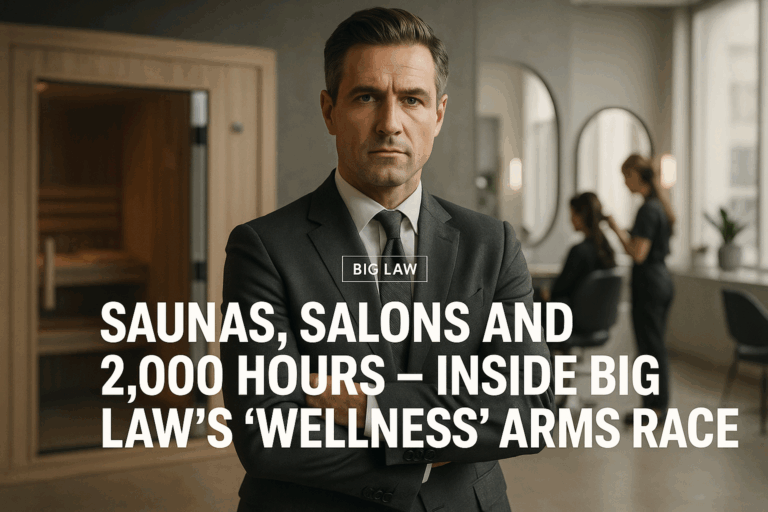
Kirkland & Ellis, the world’s biggest law firm by revenue and a direct rival to Paul Weiss, has planted the flag with a new London office that comes with saunas, an on‑site hair salon and a 10,000‑book library, just in case anyone remembers what non‑redlined text looks like.

It sits on top of an already aggressive benefits and wellbeing stack, rranging from formal wellbeing programs and fitness initiatives to comprehensive health coverage and financial benefits, all calibrated to support the firm’s relentless high‑performance, high‑billing model rather than soften it.

For Kirkland and its US peers expanding across London and Europe, these luxury‑spec offices are not just creature comfort but are brand theatre and recruitment collateral, signalling “elite, ultra‑profitable, always‑on” to laterals and clients alike. It is wellness as infrastructure: the spa is the strategy, not the afterthought.

Luxury cocoons and long nights

Academic observers have put a useful label on what is happening: “luxury cocoons.”

As Bayes Business School’s Laura Empson puts it, these buildings are built to deliver status (you feel special), security (if you’re spending nights and weekends there, it needs to feel like home) and psychological justification for the fees lawyers charge. In other words, if you’re billing seven figures to a client, a cold sandwich in a beige breakout room just isn’t going to cut it anymore.

The scale of the shift is underpinned by a massive turnover in London office space: in just one recent year, 52 law firms signed for new space, with almost 300 deals over the past seven years as firms upgraded and expanded.

That churn has let firms design from scratch, adding everything from “cooling down walls” and heated lockers for Lycra‑clad commuters, to Peloton‑equipped private fitness suites and click‑and‑collect coffee bars for the permanently half‑logged‑in.

Office perks, remote pressure

The timing isn’t accidental. Post‑COVID, firms are under pressure to drag people back from home offices and kitchen tables, and plush, hospitality‑style workplaces are the carrot to go with the mandatory “four days in” stick many US‑founded London firms now wield.

UK heritage firms have generally been a bit softer, closer to three days, but they too are rolling out their own spa‑lite versions: beauty treatments in‑house, music rooms, therapy access, and upgraded parental leave to make the grind look more “sustainable.”

So the message to talent is clear: come for the salary, stay for the saunas, smoothies and soft‑close locker doors. Just don’t confuse any of this with work‑life balance. It’s still work‑more, but better moisturised, nourised and coiffured.

Scroll to Top