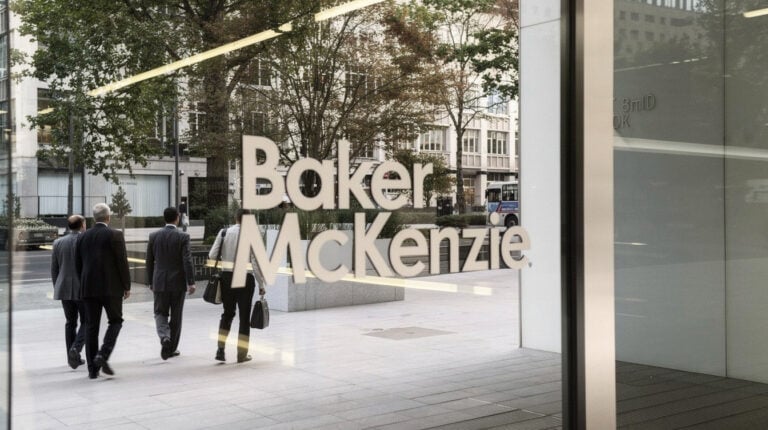
The job cuts that sent 700 Baker McKenzie employees home in February has sent major ripples around law firms everywhere.
The cuts, affecting less than 10% of Baker McKenzie’s total support workforce, touched nearly every non-lawyer function across every office. This is the kind of story that makes managing partners and chief operating officers sit up straight, because it’s not about associate headcount or NQ retention. It’s about the infrastructure that keeps a modern firm running.
The Scale of the Reductions
Sources confirm the firm has phased out or significantly restructured roles in IT, knowledge management, administration, DEI, leadership development, secretarial support, marketing, design and more. The reductions span every region and every major office.
At a firm the size of Baker McKenzie, losing just under 10% of business services staff is material. It’s not a trimming exercise – it’s a deliberate reset of how the firm delivers internal support.
What the Firm Is Saying
Baker McKenzie’s official position is clear and measured. In a statement provided to multiple outlets, the firm said:
“To position the firm for continued growth and remain agile in a fast-evolving business context, we recently undertook a careful review of our business professionals functions. This review was aimed at rethinking the ways in which we work, introducing efficiencies, and investing in those roles that best serve our clients’ needs.”
“Following the review, and consistent with many other organisations, we are proposing a series of changes to how we operate and deliver important business services. Subject to consultation processes in applicable jurisdictions, some roles will likely be phased out, while others will evolve. We have not taken decisions around these proposed changes lightly, but felt it was necessary to deliver on our long-term plans. We appreciate the valuable contributions our impacted colleagues have made to the Firm and will be supporting them.”
No drama or blame game. Rather just a straightforward admission that the old model needed updating to stay competitive.
Departments Feeling the Pressure
Marketing and business development teams have taken a noticeable hit, alongside secretarial, knowledge and research functions. These are exactly the roles that law firm CMOs, BD directors and heads of operations rely on day in, day out.
When a Top 10 global player starts streamlining these areas, the message to the rest of the industry is unmistakable: every firm is now under pressure to prove that its support structure delivers measurable value to clients.
What The Job Cuts Mean
Most law firms are still carrying legacy costs in areas that technology and smarter processes can now handle more efficiently. Baker McKenzie has simply acted first and acted decisively.
The move comes at a time when client expectations around speed, cost and responsiveness continue to rise. Firms that cling to outdated support models risk falling behind – not just on profitability, but on the quality of service they can actually deliver.
Practical Takeaways for Law Firm Leaders
Speaking with business development and law firm leaders it is clear that some of the key areas that demand attention from law leaders are signalled by the Baker McKenzie move, but which can be readily identified in most firms. Among the observations we heard –
- Audit your support structure now. Don’t wait for the next budget round. Look at every business services department with fresh eyes: which roles are truly client-facing, which are process-heavy, and which could be streamlined without losing quality?
- Protect your client-facing talent. Marketing, BD and knowledge teams that directly support pitches, client relationship management and thought leadership are usually worth every dollar. The real efficiency gains lies in trimming duplication and outdated processes, not cutting the people who win and keep clients.
- Invest where it counts. Use the savings from efficiencies to upgrade the roles that matter most – whether that’s specialist industry marketers, data analysts who understand legal metrics, or project managers who keep matters on track and under budget.
- Communicate early and often. If your firm is considering similar reviews, transparency with staff beats speculation every time. The way Baker McKenzie has handled messaging offers a solid template.
The legal market is moving faster than most insiders want to admit. Baker McKenzie’s decision isn’t about panic but about positioning for long-term strength. Smart firms will treat this as the early warning it is.
Have you seen similar pressure in your own support teams? Drop us a note – we keep sources confidential and the conversation going in the right direction.