A 30-person federal indictment has implicated attorneys from Wachtell, Latham, Willkie, Goodwin, Cleary, Sidley, Weil and DLA Piper in what prosecutors call one of the most sweeping M&A intelligence networks ever prosecuted on American soil.

The access a law firm grants its attorneys is built on a simple, foundational covenant: what comes through the door stays within those walls. For a decade, federal prosecutors allege, a network of Ivy League-trained lawyers decided that covenant was negotiable — and that confidential merger data was simply a different kind of billable asset.
On May 6, 2026, the U.S. Attorney’s Office for the District of Massachusetts unsealed two indictments charging 30 people — including corporate attorneys and financial professionals — with participating in a sprawling insider trading conspiracy that prosecutors say generated tens of millions of dollars in illegal profits across nearly 30 major M&A deals. Nineteen defendants were arrested the same day. Two others, located in Russia and Israel, are regarded as fugitives. Nine more had already quietly pleaded guilty in sealed proceedings dating back to 2024, their cooperation only becoming public with Wednesday’s unsealing.
The U.S. Securities and Exchange Commission filed a parallel civil lawsuit the same day, giving the public its first detailed picture of how the scheme operated — and how deep into the profession it reached.
Yale Law, Four Firms, One Scheme

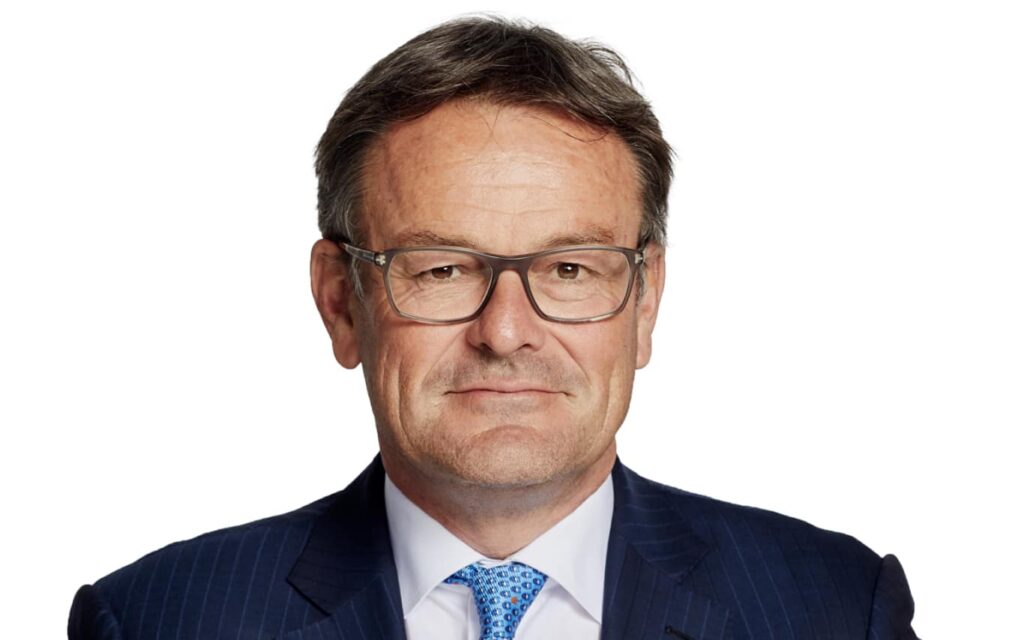
At the center of the indictments is Nicolo Nourafchan, (pictured above) a 2011 Yale Law School graduate whose BigLaw career reads, in retrospect, less like a résumé than a shopping list. Between 2013 and 2023, he worked at Sidley Austin, Latham & Watkins, Cleary Gottlieb, and Goodwin Procter — four of the most prominent M&A practices in the country.
Prosecutors allege he spent those years doing far more than billing hours: he was systematically accessing confidential deal materials and selling the intelligence to a layered network of traders and intermediaries.
His alleged co-architect was Robert Yadgarov, a New York personal injury attorney who was Nourafchan’s classmate at George Washington University. Together, prosecutors say, they recruited corporate lawyers, typically friends, relatives, and classmates from elite institutions, offering payments of hundreds of thousands of dollars in cash in exchange for tips on unannounced transactions.
The co-conspirators then communicated through burner phones, coded language, and in-person meetings to evade detection.
One episode has become emblematic of the scheme’s audacity. In June 2022, while Nourafchan was on a formal “leave of absence” from Goodwin Procter, which was then advising iRobot on Amazon’s proposed $1.7 billion acquisition, he logged into the firm’s document management system and accessed confidential materials on a deal he was not assigned to.
The Amazon-iRobot transaction ultimately collapsed amid antitrust opposition in Europe. Prosecutors say the breach of confidentiality happened anyway.
The Willkie Counsel: From Columbia Law to a Guilty Plea

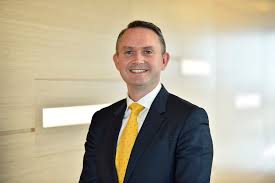
Among the most striking figures to emerge from the newly unsealed documents is Gabriel Gershowitz, (left) a Columbia Law School graduate whose career took him through Weil Gotshal & Manges, DLA Piper, and ultimately to a counsel role at Willkie Farr & Gallagher. The SEC identified him as a college classmate of Nourafchan and Yadgarov who, beginning in 2019, supplied non-public information from his employers.
The Enstar episode, which was detailed in the SEC’s civil complaint, illustrates the mechanics of the ring. Gershowitz was assigned to the deal because Willkie was advising Sixth Street Partners on its roughly $5 billion acquisition of Enstar Group.
He shared news of the pending deal with his former classmates, who told him within days that they had purchased between $2 million and $3 million in Enstar shares. After the deal was announced, Gershowitz was allegedly owed a $30,000 kickback for his role — though he received a reduced sum because the payment was offset against money he owed Yadgarov, borrowed for apartment renovations.
“The trading on unannounced financial news alleged here not only violated the securities laws, but it also took advantage of the special access and ethical duties that come with a law license.”— U.S. Attorney Leah Foley, District of Massachusetts
Gershowitz pleaded guilty in February 2025. His sentencing, repeatedly postponed at the government’s request in recognition of his ongoing cooperation, is currently scheduled for November. Prosecutors have agreed to recommend a two-year custodial sentence. His attorney, E. Scott Morvillo, declined to comment.
The Wachtell Connection
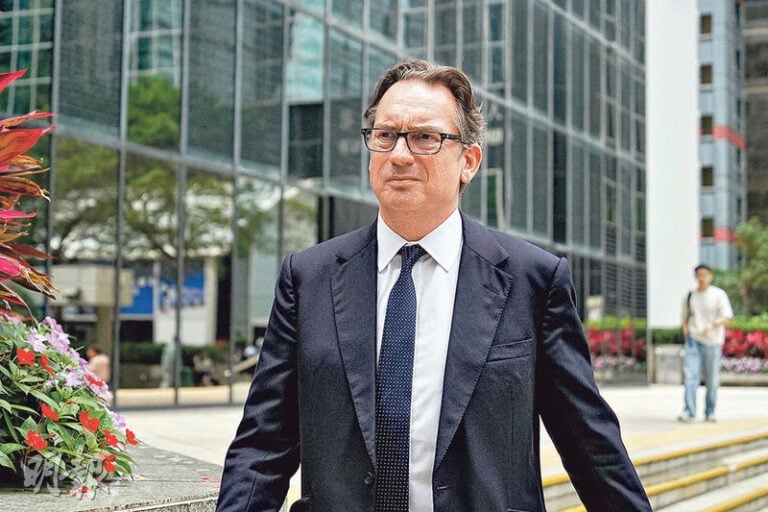
If any single development has jolted the profession’s confidence in its own safeguards, it is the involvement — however peripheral — of Wachtell, Lipton, Rosen & Katz. The firm has built its entire commercial identity on discretion, intensity, and a meritocratic culture that tolerates no dilettantes. Its standard deal-room protocols are legendary. Yet one of the co-conspirators named across the indictments is a former Yale classmate of Nourafchan who worked at Wachtell during two of the most consequential transactions in recent M&A history: Occidental Petroleum’s $55 billion acquisition of Anadarko Petroleum in 2019 and Burger King’s $11 billion takeover of Tim Hortons in 2014.
Wachtell’s response was characteristically terse: “The responsible party left Wachtell Lipton over four years ago. There are no allegations of wrongdoing against the firm. Wachtell Lipton has cooperated fully with the U.S. Attorney’s office and will continue to do so.”
Latham & Watkins confirmed it was named as a victim in the indictments, stating that the conduct alleged “would reflect a serious violation of our robust policies and procedures.” Goodwin said it was “deeply disappointed” that a former employee allegedly “violated the trust placed in him and misused confidential information as part of a broader criminal scheme affecting multiple law firms and their clients.” Willkie and Weil Gotshal both noted that the individuals in question left those firms years ago and that neither firm faces allegations of wrongdoing. All said they had cooperated fully with prosecutors.
The Legal System Question
Legal ethics experts have been quick to identify what makes this case qualitatively different from prior insider trading prosecutions involving law firm personnel.
The scheme was not built on hacking, data theft by outsiders, or a single rogue actor at one institution. It was based on the very foundations of legal franternities; legal education like Yale and Columbia friendships, GWU undergraduate ties, lateral moves between firms that left trusted relationships intact across key legal boundaries.
Milan Markovic, a law professor at Texas A&M who teaches legal ethics and insider trading, drew a comparison to James O’Hagan, a Dorsey & Whitney partner disbarred by the Minnesota Supreme Court and federally prosecuted in a landmark 1990s case that ultimately reached the U.S. Supreme Court.
“This is something that’s happened in the past,” Markovic told Bloomberg Law. “It’s certainly troubling, because clients need to be able to trust their attorneys with their confidential, nonpublic information.”
Susan Fortney, director of the Program for the Advancement of Legal Ethics at Texas A&M School of Law, pointed to document access controls as a particular vulnerability.
Nourafchan’s ability to access Goodwin’s deal management system while on leave, which was also for a matter he was not assigned to, raises serious questions about whether even the most prestigious firms have adequate monitoring of internal document retrieval, particularly during periods when an attorney’s employment status is in flux.
Georgetown Law’s David Frisch offered a sobering assessment of the limits of compliance programs: if an attorney is willing to commit fraud, they are unlikely to disclose that intent to their firm. The real deterrent, he suggested, must lie in detection — not declaration. And detection, the evidence suggests, took a decade.
What Comes Next
With nine cooperating witnesses already embedded in the government’s case, and two fugitives yet to face U.S. jurisdiction, the investigation shows few signs of reaching a tidy conclusion.
The indictments referenced unnamed co-conspirators who were still employed at BigLaw firms as recently as 2026, a detail that suggests further unsealing, and potentially further arrests, may follow.
For the profession generally there is major reputational damage that is still accumulating. The six firms named as victims in the indictments, described by prosecutors in those terms, not as wrongdoers. But they face some uncomfortable realities regarding their systems – such as their document systems, their lateral hiring practices, and their monitoring protocols will now be scrutinized by clients, regulators, and rivals alike.
The scheme, as U.S. Attorney Foley observed, didn’t just break securities law but weaponized the professional privileges that allow lawyers to function as trusted advisers to those executing the most consequential transactions in the economy.
Rebuilding that trust is an issue for law firms both in the courtroom and on the deal floor . It’s surely something that no compliance programme, however robust, can accomplish alone.
Sources: U.S. Department of Justice press release (May 6, 2026); SEC civil complaint (May 6, 2026); Reuters (Nate Raymond, May 6, 2026); Bloomberg Law (May 7–8, 2026); Above the Law (Kathryn Rubino, May 7–8, 2026); ABA Journal (May 7–8, 2026); Bloomberg Law, “M&A Insider Trading Allegations Threaten Big Law Reputations” (May 7, 2026); Financial Times (May 7, 2026); Bloomberg Law, “Big Law’s Alleged M&A Insider Traders Switched Firms With Ease” (May 8, 2026).