
The traditional workplace romance generally involves senior man, junior woman, and an eventual appointment with HR, but things are changing. More women enter senior management and partnership positions, law firms are increasingly seeing a reversed dynamic where female leaders hold organisational power over junior male colleagues.
Recent reports and surveys, including a major Finnish study, show that the primary workplace issue isn’t age or gender, but power. It’s the harassment/power issue exemplified by movies like ‘Disclosure’ that may come to haunt some law firms too.
Women lawyers in the US include 52.09% of all associates and 29.55% of partners in 2025, according to National Association for Law Placement frigures reported in its annual “Report of Diversity in U.S. Law Firms.”
And more women are occupying senior roles in law firms, despite the continued under-representation issue that occurs in major and minor jurisdictions alike, from the US and UK to Australia and New Zealand.
The Impact of Power Imbalances
A 30-year Finnish study of cohabiting workplace couples where one partner managed the other provides concrete data on the career impact of these relationships. The findings reveal a stark trajectory:
- While the relationship continued, the subordinate’s earnings increased by an average of 6 percent compared to peers whose manager-partner worked elsewhere.
- When the relationship ended, the subordinate’s earnings dropped by an average of 18 percent, an effect lasting at least four years.
- Subordinates were 13 percentage points more likely to leave the workforce in the year following the breakup.
The fallout also affected the wider workplace. Employee turnover at organisations with known boss-subordinate relationships increased by roughly 14 percent, driven by a breakdown in workplace trust and perceived favouritism.
In the smaller cohort of relationships involving female managers and male subordinates, the men enjoyed even larger earnings increases than women dating male managers.
Why Law Firms Need to Pay Attention
This dynamic is particularly significant for lawyers as law firm structures rely heavily on individual partners controlling work allocation, client exposure, mentoring, and promotion prospects.
A partner-associate relationship creates clear conflicts of interest that dictate who gets assigned the major case, who attends critical client meetings, and who receives favourable performance reviews.
Managing the underlying power dynamic through clear disclosure is far more crucial than the genders or ages of those involved.
Policies drafted on outdated gender assumptions expose firms to risk. While women still overwhelmingly make sexual-harassment complaints, accounting for 78.2 percent of charges filed with the US Equal Employment Opportunity Commission between FY2018 and FY2021, nearly 22 percent were filed by men.
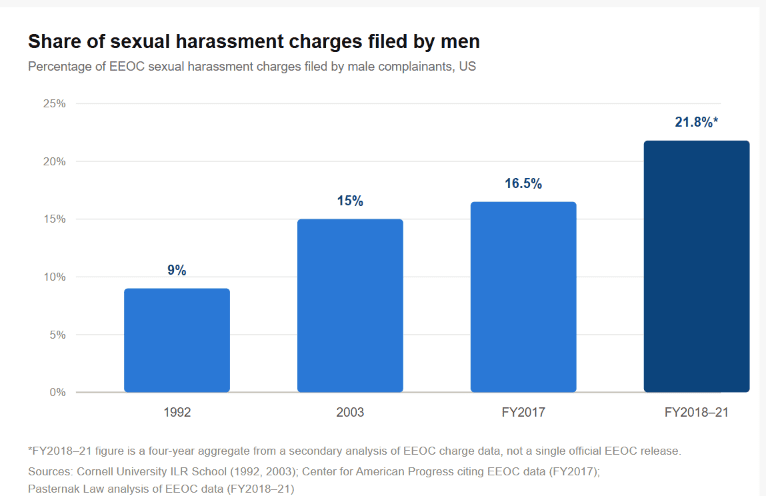
Workplace harassment and power abuses are not exclusively male-on-female issues.
A Changing Demographic Shift
As the demographics of the legal profession change, these management issues will become more prevalent.
While women remain substantially underrepresented at the highest levels the direction of travel is undeniable.
More women entering the law inevitably means more female partners, managing partners, judges, and general counsel. Consequently, situations where the person holding workplace power is female will only increase.
Rethinking Firm Policies
The sensible response for law firms is not to become the romance police. Instead, workplace-relationship policies must focus on authority, conflicts of interest, and mandatory disclosure rather than gender.
Relationships crossing reporting lines should trigger immediate disclosure. Arrangements must then be made to remove the senior person from any decisions concerning the junior person’s remuneration, appraisal, promotion, and work allocation.
This protects the participants and ensures fairness for everyone else competing for the same opportunities.
As law firms take steps to address historical gender imbalances, they need to also recognise an unspoken consequence of equality: When women obtain more organisational power, they face the exact same conflicts of interest, temptations, and capacity for spectacularly poor romantic judgment that senior men have demonstrated for generations.
Progress, it turns out, comes with paperwork.