While the plaintiffs’ bar lines up for private equity money, two former high-volume lawyers have built a firm on the opposite idea: take fewer cases and make insurers believe you’ll go to trial.
Personal injury law has become private equity’s favourite new asset class, and the money is arriving quickly.
Rafi Law Group, the Phoenix firm known for its billboards and wrapped buses, secured a $125 million private equity investment to fund the creation of a management services organization, and said the new MSO is valued at roughly $450 million, reportedly the largest publicly disclosed deal of its kind.
Then the industry’s biggest player moved. In June, Morgan & Morgan, the country’s largest PI firm with $2.4 billion in annual revenue, hired JPMorgan to explore a minority stake sale that could raise more than $1 billion, with an eventual IPO in view.
The investors’ reasoning is straightforward. PI and plaintiffs firms appeal to private equity because they produce a predictable, large volume of cases that settle quickly. More marketing brings more intake, which brings more files per lawyer and a steady stream of settlement cheques. It is a factory model, and factories are easy to finance.
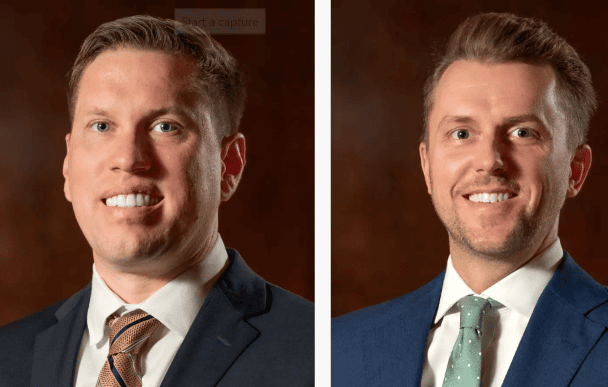
That makes Moore Payne Law interesting. Founding partners Geoff Moore and Spencer Payne (pictured) spent years at PI powerhouses before leaving to start a deliberately low-volume practice. They cap their caseload, skip mass advertising, and work closely with each client, which is an unusual choice at a moment when capital is pushing nearly everyone the other way.
Their argument is more interesting than “small firms care more.” A low-volume PI firm, they say, is not simply a smaller version of a high-volume one. It works on a different kind of leverage. Insurers do not value a claim only on its merits. They also value it on what the lawyer across the table is likely to do. A firm known for settling quickly gets a settlement-shaped offer. A firm the insurer expects to try the case gets a different number.
That points to the weak spot in the volume model. The quick, predictable settlement that makes a PI book attractive to private equity is also what an insurance adjuster can price at a discount. Volume brings in cases, but it does not necessarily raise their value.
The firm says the approach is working. By its own account, in its first year it tripled its staff, increased case filings tenfold and secured more than $8 million in verdicts and settlements. Those figures are self-reported and come from a PR pitch, so they should be read that way. Still, they are not the numbers of a firm in hardship.
None of this means the MSO wave is a mistake. For firms whose business is intake, outside capital is a reasonable way to scale. But independent firms weighing an offer should be clear about what they are selling. The cheque pays for growth. What may go with it is the credible threat of trial, and that is hard to buy back once insurers have stopped believing it.