Morgan & Morgan’s Exploration of )utside Investment Could Reshape how Plaintiff Law Firms are Owned and Funded
Ben Thomson, LawFuel contributing editor
The firm that built its empire on highway billboards and the populist slogan “For the People” is now talking to Wall Street.
Morgan & Morgan, the largest personal injury law firm in the United States, has hired JPMorgan to explore a minority stake sale that could raise more than $1 billion and pave the way for a public listing years from now.
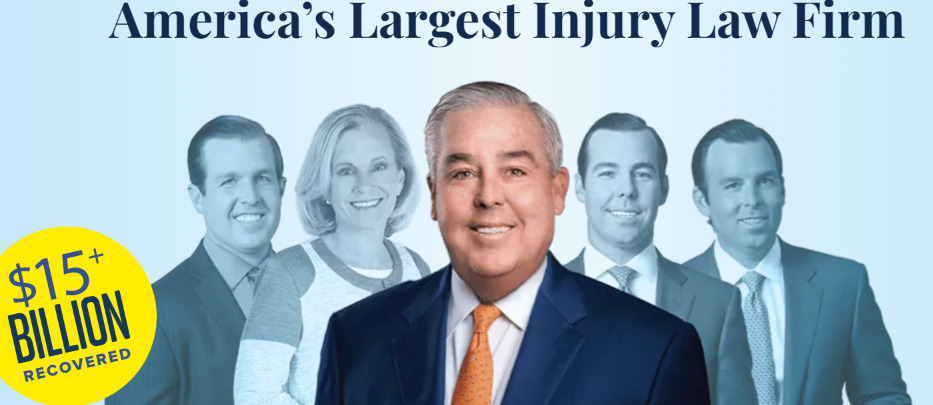
Morgan & Morgan founder John Morgan, a Florida-based billionaire and political donor, confirmed he was exploring deal options in a statement to Bloomberg Law, describing the discussions as “purely exploratory” with no immediate plan or timeline in place. “We’re simply listening to people smarter than us and working to understand the pros and cons,” he told BloombergLaw.
The story, first reported by the Financial Times and subsequently confirmed by Reuters and Bloomberg Law, lands as a landmark moment for the US legal services industry, which has long resisted outside capital while watching adjacent professional services sectors transform under private equity ownership.
It represents a growing trend of big money following big law, as we reported last year and with the Holland & Knight deal this year.
The Firm Behind the Billboard
John Morgan and his wife Ultima founded Morgan & Morgan in 1988 with a mission to ensure that no one — regardless of background or financial means — gets outmatched in the courtroom by powerful corporations and insurance companies. The firm’s origin story is personal: Morgan’s brother Tim was paralysed while working as a lifeguard at Walt Disney World, and the family hired a lawyer who failed them — an injustice that drove Morgan to become the lawyer his family never had. Morgan & MorganMorgan & Morgan
Three and a half decades later, the firm has recovered $25 billion for clients and operates offices across all 50 states with an army of over 1,000 attorneys. The firm grossed more than $2 billion in annual revenue, according to Forbes.
The family retains core control, John and Ultima Morgan control the firm together with their children Matt, Michael, Daniel and Kate, with equity partners owning the rest. The sons work as lawyers at the firm alongside their parents.
That family-controlled structure makes the current exploration all the more significant. This isn’t a distressed firm seeking a lifeline — it’s a profitable, self-funded giant testing whether outside capital can accelerate what is already the country’s dominant plaintiff practice.
The Structure: Why an MSO?
The deal, if it proceeds, would almost certainly not involve direct ownership of the law firm itself. Law firms in the US have historically been barred from sharing ownership and profits with non-lawyers, a restriction designed to prevent profit motives from influencing client representation.
The workaround is the management services organisation, or MSO. These deals are typically structured through an MSO that owns the marketing, intake, technology, and other back-office functions, while lawyers retain control of all legal work.
That setup can attract capital, but it also raises regulatory and ethics questions.
The proposed structure would separate legal work from services such as marketing and back-office operations, allowing outside capital to accelerate firm expansion. Recent deals using this model include private equity firm Trive Capital buying a stake in law firm Massumi + Consoli, and Orion Legal buying a position in Dudley DeBosier.
Morgan & Morgan has made a name for itself through its ubiquitous highway billboards and populist slogan. An MSO sale involving the firm could mark the biggest such transaction in the legal space on public record.
The IPO Question
The longer game here is an eventual public listing, although John Morgan himself acknowledges the road is long, saying there would be ethical and regulatory issues involved in taking a law firm public, making any such plans distant.
If the firm ever goes public, it would probably look like an MSO-style listing tied to platform cash flows, rather than a traditional law-firm partnership float.
That reframes what a “law firm IPO” actually means as investors would effectively be buying into the operational engine that powers the legal practice, such as the advertising spend, the client intake infrastructure, the case management technology, rather than the legal partnership itself.
Professional services firms, including law firms and consulting firms, have emerged as a growing focus for private equity investors, drawn by their steady revenue and the potential to use artificial intelligence to improve efficiency and profitability.
The Morgan Impact
The significance of this move by Morgan & Morgan extends well beyond one firm’s capital structure because by any measure, the firm is a bellwether of the US plaintiff’s bar. The firm’s size and visibility, any move would face heavier scrutiny, a factor that could influence both the timing and design of a deal that many investors view as a template.
Interest in the MSO structure is now drawing pushback in some states, where critics argue that private equity ownership could inject commercial pressures into legal work and encourage more costly litigation.
It remains unclear how well the model stands up under state ethics rules that prohibit non-lawyers from sharing legal fees or interfering in case decisions.
That tension sits at the heart of what Morgan & Morgan is now navigating. If the deal proceeds and succeeds, it will almost certainly accelerate the MSO trend across the plaintiff’s bar. If it stumbles under regulatory scrutiny, it could set back the broader experiment in law firm investment by years.
For the moment, John Morgan is keeping his options open. His firm built a $2 billion-a-year business without a dollar of outside money.
The question now is whether taking Wall Street’s capital, even through a carefully structured MSO, changes what it means to be “For the People.”