
Article source: Meldon Law, FL
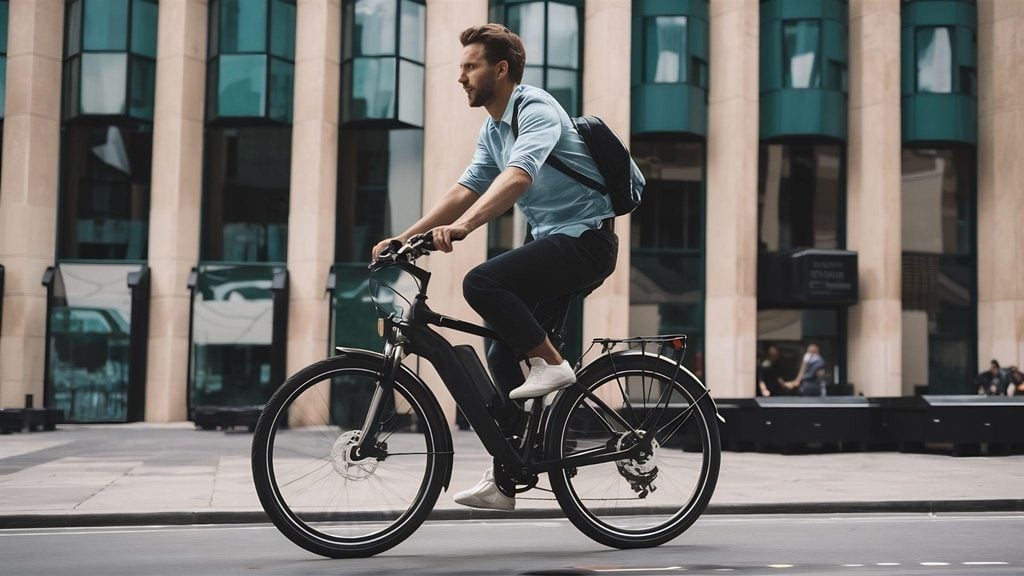
An adjuster rarely denies an e-bike claim outright. Instead, a number shows up in the file, something like 35 percent, and the offer shrinks to match it. Most riders never find out where that figure came from, or that it was open to argument in the first place. Anyone holding a reduced offer next to a stack of medical bills eventually asks an e-bike accident lawyer in Aventura the same question: how much of this is actually mine to keep?
How Florida Splits Fault After an E-Bike Crash
Florida divides responsibility instead of handing all of it to one person. Under section 768.81, contributory fault chargeable to the claimant reduces the damages in proportion to that share. A rider found 20 percent responsible for a crash still collects 80 percent of the damages proven.
One line in that statute changes everything past the halfway mark. Subsection (6) says any party found greater than 50 percent at fault for their own harm may not recover damages at all. The distance between 50 percent and 51 percent is the distance between a reduced check and nothing at all, which is why that single percentage point gets fought over so hard.
The Rights You Have on an Aventura Street
Fault arguments usually start with where the rider belonged. Section 316.20655 gives an electric bicycle and its rider all the rights and privileges of a bicycle and its rider, and states that an e-bike is a vehicle to the same extent as a bicycle. Riders may travel anywhere bicycles are allowed, including streets, roadways, shoulders, bicycle lanes, and bicycle or multiuse paths.
Those rights arrive attached to duties. Section 316.2065 sets the bicycle rules that follow e-bike riders, covering lighting after dark, signaling, and lane use. An adjuster who spots a broken duty has the beginning of a percentage, so knowing which rules actually applied on that particular day is where the real argument starts.
Fault Arguments Insurers Aim at Riders
Adjusters work from a short and fairly predictable list. The arguments rarely concern the collision itself and almost always concern the rider’s position, speed, or visibility in the moments before it. Each one of them arrives as a proposal rather than as a finding of any kind.
- No lights – riding after sunset without required lamps
- Wrong lane – leaving the bike lane for no clear reason
- Speed – using motor assist above surrounding traffic
- Distraction – headphones in or a phone in hand
The Helmet Argument Florida Does Not Allow
Helmets come up first in almost every call, and they are one of the few things that cannot count. Section 316.2065(18) states that a person’s failure to wear a bicycle helmet, or a parent’s failure to prevent a child from riding without one, may not be considered evidence of negligence or contributory negligence. Because the e-bike statute applies section 316.2065 to e-bike riders, that protection follows them onto the road.
The practical effect is narrow but genuinely useful. A missing helmet still shapes the head injury itself, and everything that lands in the medical record, and no statute changes that part of it. What the law blocks is the step from no helmet to a larger fault percentage, which is precisely the step an adjuster tries on a first phone call.
What Protects the Value You Keep
A fault percentage is a negotiation, and evidence is what moves it. Legal commentary on injury claims notes how insurers use fault in negotiations to reduce what they pay, which means the number reaches you as an opening position. Proof is the only thing that reliably pushes that opening number back down.
- Lighting proof – photos showing lamps and reflectors
- Lane evidence – markings and the bike’s resting position
- Witnesses – names collected before anybody drives off
- Camera footage – requested before it gets overwritten
Percentages Are Argued, Not Handed Down
The figure an adjuster types into a file looks official, and it is not. It is one side’s early estimate, usually produced before anyone has read a full medical record or watched a single frame of video. Florida gives e-bike riders real standing on the road and takes at least one argument off the table entirely, so a rider who can document the ordinary details tends to keep more of the claim than that first letter suggested. If a percentage has already landed on you and the reasoning behind it looks thin, a Florida injury attorney can test it before you start treating it as settled.
