Nearly 500 American nonprofits that describe themselves as advocates for Palestinian rights have adopted increasingly radical positions since October 7, 2023. The same research documented an online surge of more than 3,000 percent in calls for violence and a 186 percent increase in anti-American and anti-police rhetoric.

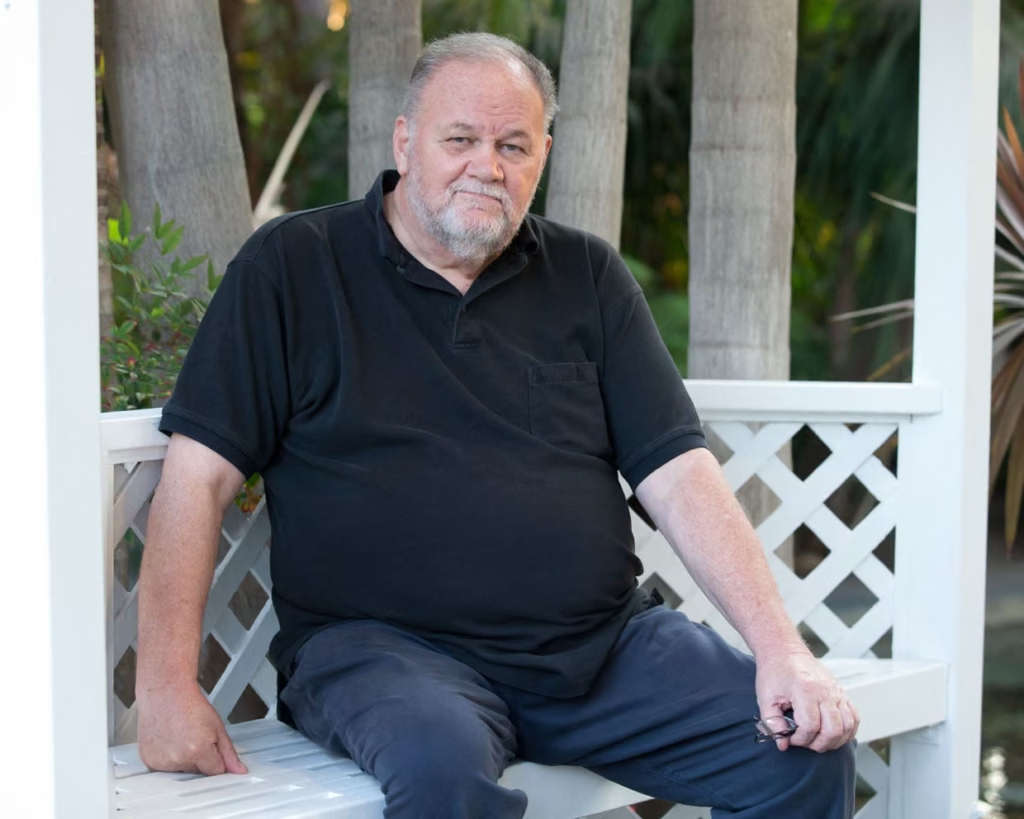
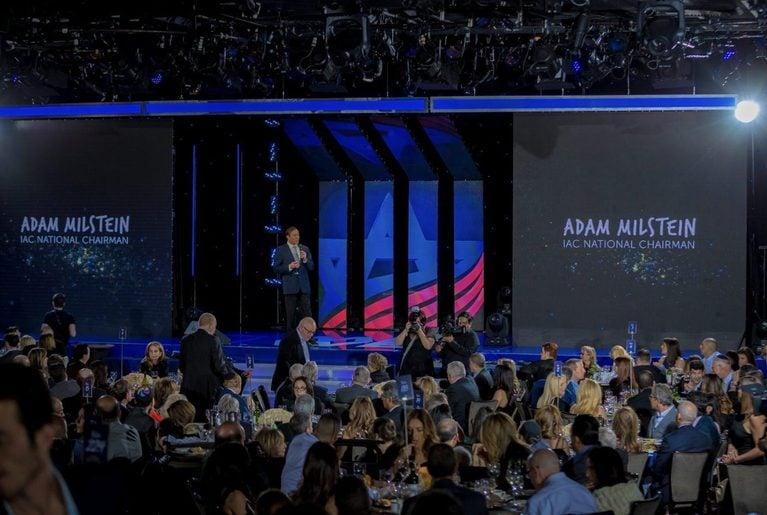
Those figures, compiled by the Capital Research Center, sit near the center of an essay Adam Milstein (pictured) wrote for the Jewish Policy Center’s inFOCUS journal, and they lead him to a question that much of the debate over campus protests and activist movements tends to skip: the question of who is paying for it.
“This decades-long campaign is funded by the detractors of the West, particularly by regimes including Qatar, China, Russia, and Iran,” Milstein writes.
The essay, titled “Enemies Within: Islamo-Left Alliance and Far-Rightists,” appeared in the journal’s Summer 2025 issue, and its section on foreign influence lays out a set of remedies that he has continued to press since.
The Numbers Behind the Argument
Adam Milstein opens with October 7, when Hamas killed more than 1,200 people, wounded roughly 3,400, and took 251 hostages into Gaza.
What alarmed him as much as the attack, he writes, was the reaction in the West, where some academic institutions, news outlets, and individuals rationalized or even celebrated the atrocities. In his words, that reaction “revealed a dangerous ideological shift underway in the United States.”
Milstein treats the Capital Research Center data as evidence that the shift is organized.
“As recently documented by the Capital Research Center, nearly 500 American nonprofits claiming to support Palestinian rights have adopted increasingly radical positions since October 7,” he writes, naming groups such as Within Our Lifetime, the Palestinian Youth Movement, and Code Pink.
A movement that operates through hundreds of nonprofits has budgets, donors, and filings, which makes it something that can be examined.
The Shape of the Threat
Milstein warns first about what he calls the Islamo-Left Alliance, “a coalition between far-left ideologues, anarchists, and Islamists,” which he argues “is working to dismantle America from within.”
He also warns that, on the right, what began as “a sensible ‘America First’ doctrine” has, in some circles, “morphed into an ‘America Only’ worldview” that would pull the United States back from its allies.
His foreign-money argument belongs mainly to the first danger. Adam Milstein describes the spread of certain academic ideas as part of that decades-long campaign. He describes ethnic studies, post-colonial theory, intersectionality, and DEI programs as centers of anti-Western orthodoxy, and he ties the long campaign behind them to foreign regimes hostile to the West. “This is a cultural insurgency designed to undermine the American project from within,” he writes.
A Toolkit Built From Existing Law
What separates the essay from a general warning is its list of remedies, nearly all of which rely on rules already on the books or on simple disclosure. Milstein calls for enforcing foreign agent registration laws.
He urges authorities to defund and decertify tax-exempt organizations that shelter antisemitic propaganda. He wants universities and think tanks to be required to disclose the foreign donations they receive. He also calls for ending federal funding to institutions that tolerate calls for intifada and jihad, and for both parties to reject the moral relativism he associates with the far left.
The common thread is transparency. Most of the proposals turn on disclosure, or on obligations that already accompany tax-exempt status and federal funding. For Adam Milstein, that is the core of the approach. An argument about foreign influence can be tested once the money is visible.
Milstein came to these questions with a long record outside philanthropy. Born in Haifa and a veteran of the Israel Defense Forces, he immigrated to the United States in 1981, earned an MBA from the University of Southern California in 1983, and is a managing partner of Hager Pacific Properties, a commercial real estate investment firm. He describes himself as an Israeli-American “Strategic Venture Philanthropist.”
From Journal to State Capitals
Adam Milstein did not leave the foreign-funding argument on the page. In August 2026, the Adam and Gila Milstein Family Foundation, which he and his wife, Gila, co-founded in 2000, sponsored a panel at the State Policy Network’s annual meeting in Orlando titled “Transparency, Parental Power, and Exposing Foreign Influences in K–12.”
Its announcement carried a one-sentence statement from Milstein that compressed the essay’s argument: “Educational institutions that accept foreign funds must face scrutiny and accountability.”
The host, the State Policy Network, is a national network of state-level policy organizations, which placed the question in front of people who work directly with state governments. Bringing the question there follows the foundation’s own stated method. Its mission describes a principle it calls Strategic Force-Multiplication: “We encourage the creation of partnerships between our grantees to combat bigotry and hatred in a proactive and strategic way that engages the American people to take action.”
The Bipartisan Frame
Milstein is careful to present foreign influence as a national concern rather than a partisan one. His essay criticizes the isolationist right as sharply as the far left, and he closes it with a call for a renewed bipartisan commitment to moral leadership.
As early signs of the isolationist retreat, he cites the firing of Michael Waltz as national security adviser, a ceasefire deal with Yemen’s Houthis, and the pursuit of a nuclear deal with Iran. His argument is that both extremes, for different reasons, would leave the country less able to resist governments that wish it harm.
He also places the issue in a global context. “We don’t need to be the world’s police. But we must be the world’s anchor,” he writes.
Following the Money Forward
Adam Milstein’s essay ends on a note of resolve. “The threats are real. The stakes are historic. But so is our opportunity,” he writes.
Put into practice, the remedies he proposes begin with a question that can be asked of any institution: where does the money come from. Adam Milstein started with the Capital Research Center’s count of nearly 500 radicalized nonprofits. His proposals would give Americans the information to see who is behind them.