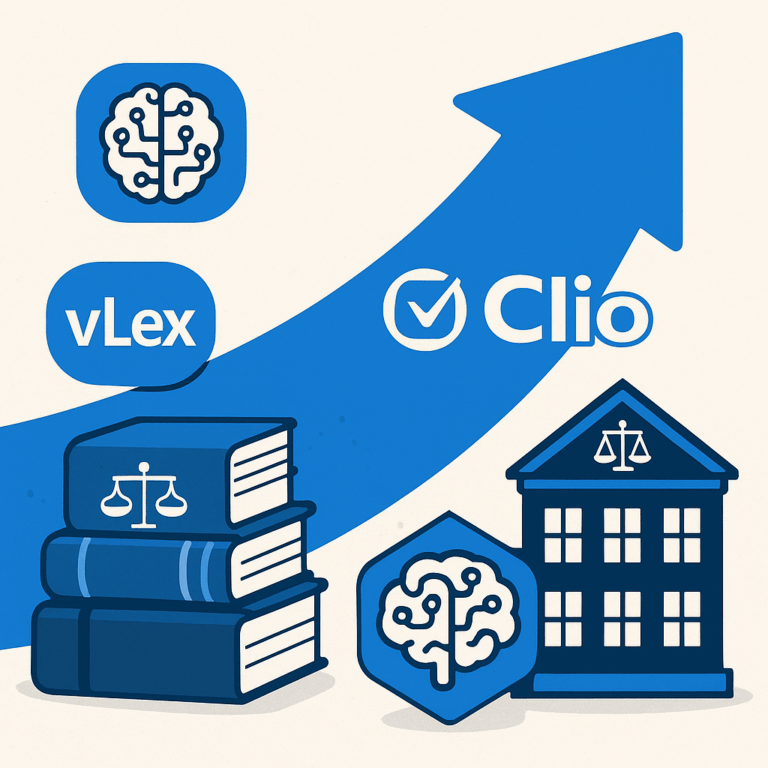
How Clio Has Just Altered The LegalAI Space In A Major Way
John Bowie, LawFuel publisher
Clio made a major move that will reshape the emerging LegalAI marklet by buying vLex for $1 billion, a deal that brings together two big names in law tech. Clio is known for tools that help lawyers run their firms. vLex is famous for smart AI-powered legal research.
The deal is a game-changer for law firms, putting a world-class legal AI engine—Vincent—and a massive database of case law in the hands of a company that powers law firms, not just legal publishers.
The deal also marks a shift in how legal AI is used. Clio’s main job is to help law firms run smoothly and serve clients. Now, with vLex’s AI, Clio can turn legal research into real, practical results for clients.
Legal commentator Jordan Furlong (left) agrees that the deal is a big one, noting that companies like Lexis and Westlaw see AI as knowledge and tech tools while Clio, will use AI to drive actual legal outcomes. This is a new way of thinking about generative AI in law that opens doors that were closed before.
Furlong also points out that Clio has no reason to keep case law locked behind a paywall. For Lexis and Westlaw, legal info is their main business. For Clio, it’s a tool to help lawyers and clients. This could make law more accessible and put pressure on the old guard.

Other experts agree. The deal “signals the onset of a transformative era in the legal industry, unlike anything we’ve seen before,” says vLex CEO Lluís Faus (right). With Clio and vLex together, law firms get smarter tools and deeper insights, all in one place.
Clio’s move also sets the stage for more deals in legal tech. As AI reshapes the field, firms will look for ways to stay ahead. Clio’s bet is that combining research and practice tools will win clients and redefine legal work, transforming the way legalAI can work.

“This sets the stage for a future powered by agentic AI, and marks the establishment of a new industry category—one that will empower legal professionals to serve clients with unprecedented insight and precision,” says Clio CEO Jack Newton (left).
AI Making Legal Waves
This deal comes as AI in law is making headlines. Courts and firms are testing AI for research and client work. The merger puts Clio at the front of this trend. It could also speed up how law firms adopt new tech.
For lawyers, this means less time on paperwork and more on clients. For clients, it could mean faster, smarter legal help.
Challenging The Legal Incumbents
The deal must also be a threat to Lexis and Westlaw as the deal puts Clio into direct competition with the major players in the area. By adding research into their practice managementoffering, Clio could well lure clients away from the major players, particularly for firms looking for an all-in-one solution.
Clio is known for law firm management, not just legal information. By adding vLex’s AI-driven research and global legal data, Clio can offer a unified system where lawyers manage cases, clients, and research in one place. This contrasts with Lexis and Westlaw, which focus mainly on legal content and research tools.
Clio will use AI to help lawyers achieve real results for clients, not just to search case law. This approach is different from Lexis and Westlaw, which treat AI as a way to improve search and knowledge access whereas the new deal will see AI used as a practical tool as well.
Clio has no reason to keep case law locked behind high fees. For Lexis and Westlaw, proprietary legal data is their main business. Clio’s model could make law more accessible and affordable, putting pressure on the incumbents in a major way.
The deal signals a new wave of mergers in legal tech. As Clio and others build more complete platforms, Lexis and Westlaw may need to adapt or risk losing market share. And the deal may also be a bargain – even at a billion dollars.
The data and AI power now under Clio’s roof could fuel new products, better client service, and more competition for big legal publishers.
Whatever way you look at it, the deal is big and the legal publishing and legaltech has just made a seismic change.


If you’re serious about your contracting business, obtaining a State Contractor License is a necessary step. It helps you build credibility with clients and ensures you’re abiding by all state laws and regulations. With the proper license, you’re legally equipped to work on a variety of projects while maintaining your business’s reputation and trustworthiness.