Article source: Englander Peebles Accident & Injury Law
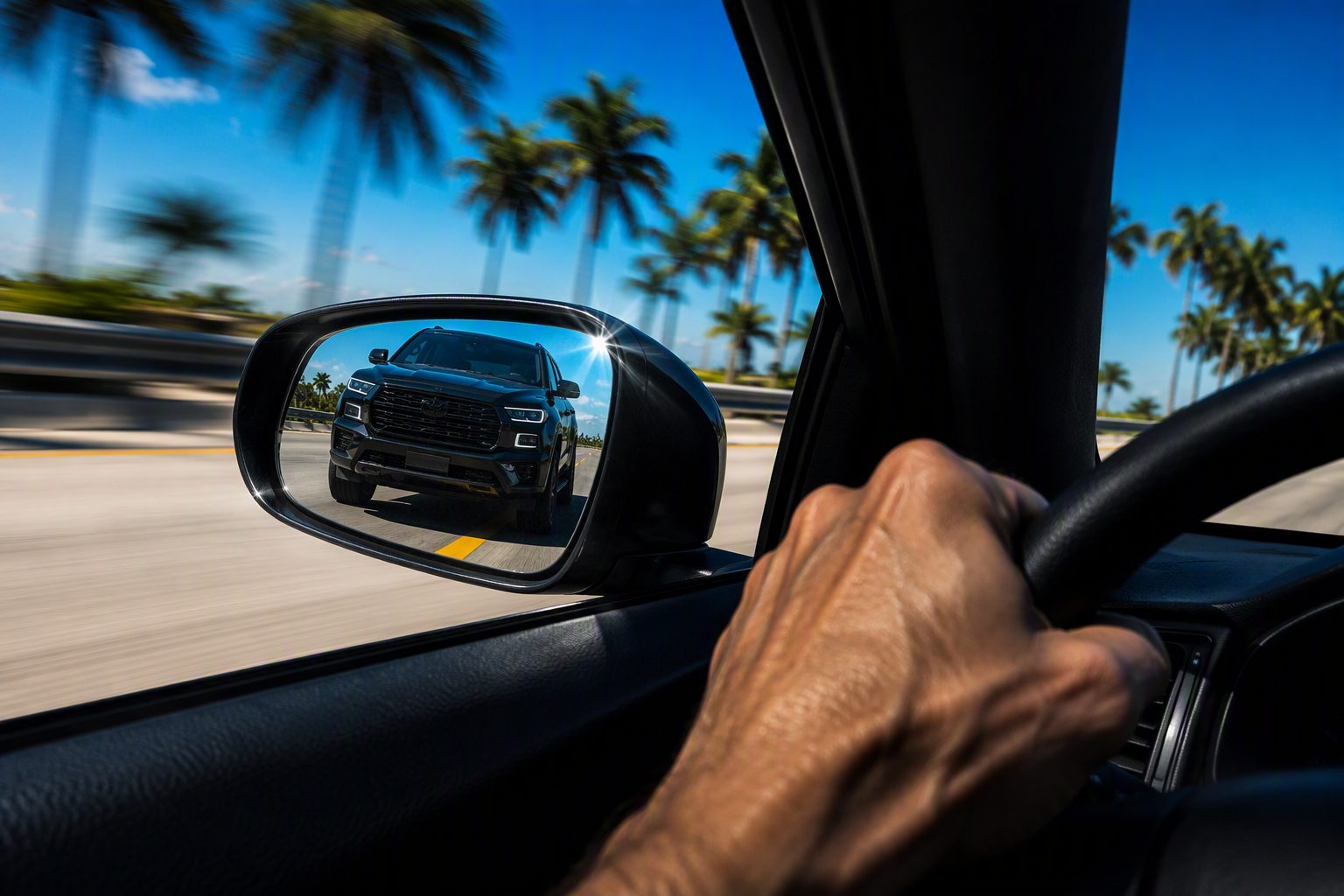
A driver tailgates, then cuts across two lanes and forces another car toward the shoulder. Most people call that road rage. Florida law doesn’t charge the label. So, is road rage a crime in Florida?
Road rage is not a separate crime under Florida law. What the driver did determines the charge: reckless driving under Fla. Stat. § 316.192, aggressive careless driving under § 316.1923, or another offense proved on its own elements. Property damage or serious bodily injury can sharply increase exposure.
Statutory citations here are to the 2025 Florida Statutes. When a client asks whether road rage is a crime, the useful answer opens with a second question: what did the driver do? The analysis runs on conduct and mental state, then on the harm that followed and on the evidence somebody can put in front of a factfinder, not on the phrase.
Is Road Rage a Crime Under Florida Law?
Florida has no general road-rage offense, no set of elements, and no penalty schedule tied to it. Police and prosecutors work from the individual acts instead, and so do insurers and civil litigators. Those acts might be reckless driving under Fla. Stat. § 316.192, or following too closely, or an unsafe lane change. If someone gets out of the car or a weapon is involved, the analysis leaves the traffic code entirely.
Anger, by itself, is not an offense. A driver can be furious and say so loudly without committing a chargeable offense. The state still has to prove every element of a recognized violation or crime before a penalty attaches.
Two frameworks carry most of the weight here, and they land on opposite sides of the criminal line: reckless driving under § 316.192, and aggressive careless driving under § 316.1923. A workable road rage definition must account for a third track running parallel to both: the injured driver’s civil claim, which doesn’t depend on a conviction and can succeed on evidence the state never used.
Reckless Driving vs. Aggressive Careless Driving
Comparing reckless driving vs aggressive careless driving in Florida starts with the element each provision requires.
To secure a reckless driving conviction under Florida Statutes § 316.192(1), the state must prove a motorist acted with either deliberate intent or a complete indifference to public safety and property. Simple traffic errors, high speeds, aggressive behavior, or the crash itself are not enough on their own—prosecutors must present specific proof connecting the driver’s actions to that heightened mental state. Additionally, the statute automatically classifies fleeing from law enforcement in a vehicle as reckless driving.
Aggressive careless driving runs on a different logic. Section 316.1923 lists the qualifying violations: exceeding the posted speed, making unsafe or improper lane changes, following too closely, passing improperly, failing to yield the right-of-way, and violating traffic-control devices and signals. Willfulness never enters the analysis. Two of those in the same episode, at once or one after another, and the combination stands on its own.
| Issue | Reckless Driving | Aggressive Careless Driving |
| Governing statute | Fla. Stat. § 316.192 | Fla. Stat. § 316.1923 |
| Core requirement | Willful or wanton disregard for safety | Two or more listed violations committed simultaneously or in succession |
| Mental-state focus | Yes | Focuses mainly on the combination of specified acts |
| Classification | Criminal traffic offense | Moving violation under Chapter 318 |
| Effect of injury or damage | Can elevate the offense | Underlying citations apply; resulting conduct may support separate charges |
One episode can generate several citations and a criminal charge at the same time, but they don’t merge.
When Tailgating and Lane Changes Cross the Line
Each maneuver has its own provision. Fla. Stat. § 316.0895 covers following too closely and requires a reasonable and prudent distance given speed, traffic, and road conditions. Section 316.089 governs lane use, and it permits a driver to move between lanes only after determining the movement can be made safely. Both appear on the § 316.1923 list, which is why the pair can support an aggressive careless driving analysis when neither act alone would. That is why tailgating and unsafe lane change citations in Florida can arise from the same episode.
Criminal exposure is a separate question, and the answer usually lives in the pattern rather than the maneuver. A hurried lane change followed by close spacing produces ordinary citations and little else. Repeatedly cutting in front of one particular car and braking hard each time reads differently once video and witnesses are added. Steering it toward a barrier makes the inference easier still.
Charging decisions turn on what an officer can reconstruct after the fact. Two cars may be on the shoulder with two flatly contradictory accounts. Without corroboration, the file often closes with no enforcement action.
How Property Damage and Serious Injury Change the Penalties
The ladder in § 316.192 has four rungs, and the distance between the third and fourth is the gap between a misdemeanor and a felony. Florida road rage penalties for property damage depend on the underlying offense and the harm it caused.
- Absent the aggravated harm described in Florida Statute § 316.192(3), a first-offense reckless driving conviction subjects the driver to statutory fines of $25 to $500, potential imprisonment of up to 90 days, or both.
- Repeat offenders face stiffer penalties: a second or subsequent conviction increases potential jail time to up to six months and raises fines to $50 to $1,000, or both.
- Reckless driving that causes damage to another person’s property or bodily injury to another person is a first-degree misdemeanor.
- If reckless driving causes serious physical harm, the offense escalates to a third-degree felony.
In this context, statutory law defines serious bodily injury as harm causing a substantial risk of death, severe disfigurement, or prolonged impairment of a bodily organ or limb. Whether an injury satisfies these statutory criteria determines the level of the criminal offense.
Classification matters because Florida’s general punishment statutes set the ceilings. A first-degree misdemeanor generally carries up to one year of imprisonment under Fla. Stat. § 775.082. A third-degree felony generally carries up to five. Fine ceilings sit in § 775.083 and should be read against the current text.
Causation does the rest of the work. Subsection (3) operates as an enhancement rather than a standalone offense, so the willful-or-wanton driving has to be established before the harm can lift the classification, and the state has to connect that driving to the damage or the injury. That is why the sequence of events and the point of impact get litigated so hard, and why reconstruction evidence often determines whether the enhanced charge survives.
What Police Do With a Road Rage Call
Officers work backward from the acts reported to the offenses those acts might satisfy, then decide whether probable cause supports a citation or an arrest. Nothing in that sequence depends on the caller’s vocabulary.
Can I Call the Police on Someone for Road Rage?
Yes.
Call 911 when a weapon appears, or a collision happens, and call when the driving itself puts someone in immediate danger. Give the dispatcher your location and the direction of travel, plus the plate number if you can read it without doing anything reckless yourself. Then describe what you saw rather than how it felt.
A plate and a clear account of the maneuvers give an officer something to work with. “He was enraged” does not.
What follows isn’t guaranteed. Officers may need corroboration, and they have to match the reported facts to a recognized offense before anything issues. Don’t pursue, and don’t make eye contact. Get somewhere populated and stay on the line with the dispatcher.
Dashcam Footage and Witnesses in a Civil Claim
Video and testimony can carry a Florida civil claim by documenting how a driver moved, when, and in response to what. Their value turns on authenticity and completeness, not on whether an officer used them to write a citation. Dashcam evidence in Florida road rage cases can preserve details that later testimony may not.
What Dashcam Evidence Can Establish
Video shows what the following distance actually looked like and timestamps the braking. A traffic signal’s color at the moment of entry is no longer contested. It also captures the detail testimony struggles to convey: a driver who kept following after the first encounter was over.
Preserve the original file with its metadata intact, and keep the recording from well before and well after the event rather than the clip that looks worst for the other driver. An edited excerpt invites an authentication fight under Fla. Stat. § 90.901. Footage rarely proves intent by itself. Read alongside the rest of the record, it can support the inference.
A witness with personal knowledge may testify to what that witness saw or heard, subject to Fla. Stat. § 90.604 and the rest of the evidence code. Collect contact details at the scene. Memories fade, and phone numbers change, and the independent witness who seemed easy to reach on the shoulder often isn’t a year later.
Why a Citation Is Not Civil Proof
Fla. Stat. § 316.650 restricts the admission of traffic citations as evidence at trial, and the crash-report privilege in § 316.066 limits the use of certain statements made for the purpose of completing a crash report. A citation issued to the other driver is not, by itself, a finding of civil liability.
The core facts of the incident can still be proven in court using witness testimony, photographic evidence, video footage, and official business records. Civil litigation operates under its own evidentiary standards; thus, a Florida road rage lawsuit can move forward even without a criminal conviction, provided admissible evidence supports the claim.
Florida’s no-fault framework then shapes what you can recover. Fla. Stat. § 627.737 addresses the tort exemption and the injury threshold for noneconomic damages. Comparative fault under § 768.81 can reduce an award by the claimant’s share. Negligence actions generally carry a two-year limitations period under § 95.11, though the accrual date and any exception need case-specific analysis.
What Survives the Confrontation
The phrase used at the scene matters far less than what the evidence can carry. A moving violation and a criminal charge can come out of the same confrontation as a civil claim, and each one stands or falls on its own proof. Recordings and witness details are easiest to lose, so secure that evidence first.