The Billionaire Cage Fight Powered By Elite Litigators
Tom Borman, LawFuel contributing editor
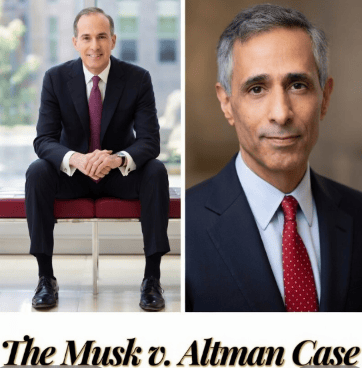
The Musk v Altman trial is being sold as a grudge match between two tech billionaires over the future of artificial intelligence. But the real contest is between two skilled commercial litigators. Elon Musk has turned to New York trial lawyer Steven Molo of MoloLamken who delivered his opening statement in Oakland to a nine-person jury on April 28, 2026 with Morgan Chu of Irell & Manella’s Los Angeles office playing a supporting role having been lead counsel on Musk’s original state court filings.
OpenAI and Sam Altman have retained Bill Savitt of Wachtell Lipton Rosen & Katz, the Wall Street litigator who previously helped force Musk to close his Twitter acquisition and who is now tasked with defending the OpenAI structure Musk is attacking.
Musk has chosen courtroom technicians with strong track records in high-value commercial disputes. Altman has gone to the corporate bar’s most feared chancery-style litigator the same lawyer whose earlier work helped compel Musk to pay $44 billion for Twitter, and who is now defending the OpenAI structure Musk has spent two years trying to unwind.
Who is Steven Molo?

Steven Molo of MoloLamken is Musk’s lead trial counsel at the Oakland courthouse. His firm, MoloLamken, is a boutique litigation powerhouse known for handling high-stakes trials and appeals. In his opening statement, Molo told the nine-person advisory jury that “without Elon Musk, there would be no OpenAI, pure and simple,” and that Sam Altman and Greg Brockman betrayed their co-founder and the public by turning a nonprofit dedicated to the safe development of artificial intelligence into what he called a “wealth machine.”
Molo’s strategy in opening was deliberately accessible. By avoiding technical AI language and facing the jury the entire time he presented his opening arguments, speaking clearly throughout. His central analogy was that a nonprofit museum can open a gift shop, but the museum store cannot loot the museum and sell the Picassos. That is exactly, he told the jury, what happened to OpenAI.
The supporting role of Morgan Chu and Irell & Manella

The Irell & Manella connection remains significant. Morgan Chu, who is widely described as one of the most able technology trial lawyers in the United States was listed as lead counsel on Musk’s original California state court complaint when it was filed in 2024.
Chambers USA has described Chu as delivering “staggering results for clients” in complex technology and intellectual property matters, and his career record includes multi-billion dollar verdicts against Intel on behalf of VLSI Technology LLC.
His presence on the legal team gives Musk’s side deep technical litigation firepower, even although Molo holds the courtroom lead at this stage.
The case Musk’s lawyers must make
Musk’s team is trying to thread three needles at once. They are convincing a federal court that informal and partly unwritten understandings around OpenAI’s founding created enforceable obligations; painting Altman and OpenAI’s later structure as a commercial bait-and-switch; and keeping the spotlight on OpenAI’s links to Microsoft as evidence of mission drift.
Critically, of the 26 claims Musk originally asserted in 2024, only two go to this trial. These are unjust enrichment and breach of charitable trust. Musk’s lawyers have put the potential damages at up to $134 billion in wrongful gains, though Musk has since said any award should flow back into OpenAI’s nonprofit foundation rather than to himself personally.
The legal argument rests on Musk’s founding contributions. Molo told the jury that Musk poured approximately $38 million into the nonprofit over roughly five years — though Musk himself has claimed the figure was closer to $44 million. Either way, his lawyers frame those donations as creating a charitable trust that required OpenAI to remain a nonprofit in perpetuity. NPRCNN
Sam Altman and OpenAI’s side: Bill Savitt and Wachtell’s litigation engine

On the other side of the courtroom sits Bill Savitt, currently co-chair of Wachtell Lipton Rosen & Katz with a practice that focuses on complex commercial litigation and the representation of corporations and directors in disputes involving mergers and acquisitions, proxy contests, corporate governance, and class actions involving allegations of breach of fiduciary duty.
Savitt earned his BA magna cum laude from Brown University. He then took graduate studies in French legal history at Columbia, earning a Master of Philosophy degree before completing Columbia Law School in 1997, where he was editor-in-chief of the Columbia Law Review. After graduating, he clerked for Judge Pierre Leval of the US Court of Appeals for the Second Circuit, and then for Justice Ruth Bader Ginsburg of the US Supreme Court.
Savitt’s name will be familiar to anyone who followed Musk’s 2022 attempt to walk away from his agreement to buy Twitter.
In 2022, Savitt led Wachtell to represent Twitter in its battle against Musk, who had sought to withdraw from a $44 billion acquisition deal. Savitt argued then that Musk’s attempt to exit the deal lacked a legal basis, and the Delaware Court of Chancery granted an expedited hearing.
Musk eventually agreed to proceed with the acquisition on its original terms. Wachtell subsequently became the target of a separate Musk lawsuit in San Francisco over the $90 million in fees it earned in that fight and which, as we reported, he later dropped. That earlier litigation puts an especially sharp edge on Savitt’s appearance now defending OpenAI and Altman against Musk’s claims.
Savitt was appointed co-chair of the Wachtell firm itself, co-chairing both the Executive Committee and the Litigation Department, in November 2023.
Savitt’s playbook
In his opening statement, Savitt told the jury: “We are here because Mr. Musk didn’t get his way at OpenAI. That’s what happened. He quit, saying they would fail for sure. But my clients had the nerve to go on and succeed without him.”
His defence rests on the argument that Musk was not only aware of but actively supportive of creating a for-profit structure — as long as he was in control. Musk wanted to merge OpenAI with Tesla, Savitt told the jury; the other founders refused. He is also expected to press a limitations defence: Savitt has argued that Musk’s suit was filed too late, after the three-year statute of limitations had already expired. CNBC
Savitt’s likely priorities include narrowing any alleged obligations to actual written instruments, highlighting Musk’s own departure from the OpenAI board in 2018 and his subsequent launch of xAI as a direct rival, and framing the 2019 creation of a for-profit OpenAI subsidiary — and its 2025 conversion to a public benefit corporation — as a rational and properly disclosed response to the capital demands of frontier AI development.
Savitt’s strategic positioning
Savitt’s presence sends is more than just hiring a formidable litigator – it also sends a message about the fact that they have the lawyer and firm that previously compelled Musk to close the Twitter deal.
That choice signals confidence in their position and creates a natural rematch narrative, giving OpenAI instant credibility with courts and investors accustomed to seeing Wachtell in the most consequential corporate cases.
The supporting cast: MoloLamken, Irell, Quinn Emanuel and Microsoft’s counsel

Although the current case pits Molo and Savitt against each other in the Oakland courtroom, we also have to mention a number of supporting lawyers, including our much-mentioned law star Alex Spiro.
Spiro of Quinn Emanuel. Spiro has been one of Musk’s most visible defenders across multiple matters, including Tesla securities litigation over the “funding secured” tweet, where Quinn Emanuel partners were named Litigators of the Week after a San Francisco jury cleared Musk and Tesla of liability.
Spiro is better known as a criminal defence and high-profile personality lawyer but has become a fixture in Musk-world litigation. Even though he is not fronting the current trial, his earlier work has shaped media expectations about how aggressively Musk is prepared to litigate.
On the defence side, Altman is not relying on Wachtell alone because court filings show that Morrison & Foerster is acting as co-counsel for OpenAI.

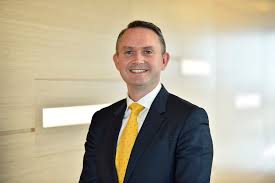
Microsoft, who are named as a co-defendant and accused of aiding and abetting OpenAI’s alleged breach of charitable trust, has turned to Dechert, with Russell Cohen (pictured) delivering Microsoft’s opening statement and arguing that Musk’s suit was brought outside the statute of limitations.
Cohen pointed to a September 2020 post on X in which Musk himself wrote that “OpenAI is essentially captured by Microsoft” evidence, he argued, that Musk knew about the Microsoft relationship years before filing his lawsuit.
The trial is being heard before US District Judge Yvonne Gonzalez Rogers in Oakland, California — a highly experienced trial judge also known for her handling of Epic Games v Apple — who is presiding over a nine-person advisory jury.
Watching with Interest
The Musk-Altman ‘cagefight’ case will be watched by lawyers everywhere – in particular by those advising AI ventures, dual-structure companies and entities with a public interest element.
How Molo and Savitt try this case will doubtless influence how future clients draft founding documents, manage expectations about “mission” and allocate control when large strategic investors arrive. The interest lies as much in the litigation craft as in the outcome.