By LawFuel Legal Newsdesk
Ratepayers across Tauranga are picking up a legal and professional advice bill exceeding $1.2 million in the aftermath of the fatal Mauao (Mount Maunganui) landslide, highlighting the mounting exposure and legal complexities facing local authorities in disaster response.
Figures presented to the Tauranga City Council (TCC) reveal that responding to the tragic 22 January 2026 slip, which claimed six lives at the Mount Maunganui Beachside Holiday Park, has so far cost more than $5 million from the council’s $7 million emergency risk reserves.
Of that, professional advice and legal review expenses have rapidly spiralled past $1.7 million, with external counsel and legal support alone accounting for well over $1.2 million.
The council engaged external legal representation just four days after the disaster struck, moving swiftly to safeguard governance processes as statutory probes and liability questions loomed.
Inquiries, Inquests, and HSWA Exposure
The rapid ramp-up in legal spending reflects the multiple regulatory and liability fronts confronting the council:
- Independent Review Findings:An external investigation conducted by former High Court Judge Hon Paul Davison CNZM KC concluded the tragedy was “preventable,” citing systemic vulnerabilities in risk identification, escalation, and severe weather warning mechanisms. While Council Chief Executive Marty Grenfell and Mayor Mahé Drysdale unreservedly accepted the Davison report’s recommendations, the finding of preventability intensifies scrutiny across other legal avenues.
- Government Inquiry & Coronial Jurisdiction:The Government has instituted a formal Government Inquiry into the Fatal Landslides in Tauranga under the Inquiries Act 2013, running in tandem with ongoing inquiries from the Coroner and the Police. Preparing submissions, managing institutional evidence, and advising council officers during witness interviews constitute a primary driver of legal costs.
- WorkSafe & Health and Safety at Work Act 2015 (HSWA):Local authorities operate under stringent duties as Persons Conducting a Business or Undertaking (PCBUs) under the Health and Safety at Work Act 2015. Because the camping ground was a council-controlled facility, potential prosecution under HSWA sections 36–49 represents an acute legal risk carrying severe statutory fines.
- LGOIMA Withholding & Privilege Battles:The council has also had to defend extensive information requests under the Local Government Official Information and Meetings Act 1987 (LGOIMA), citing legal professional privilege and the maintenance of the law (such as potential court proceedings or prejudice to formal inquiries) to withhold select high-priority operational records.
Meredith Connell’s Strategic Local Government Play
The substantial legal retainer underscores the central role played by specialist Meredith Connell in local government risk management.
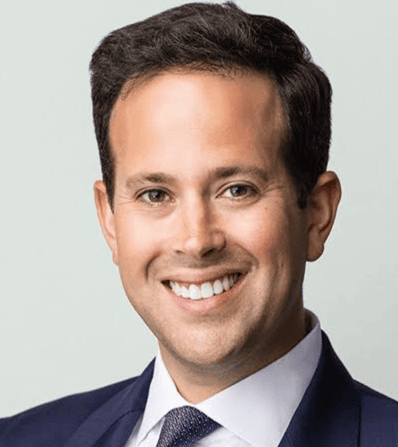
Council disclosures and committee minutes confirm that Meredith Connell led in this space by partner and local government specialist Nathan Speir, who returned to Meredith Connell in 2024 after commencing his legal career there, moving to Rice Speir in 2014 before exiting that firm and returning to the MC fold. He has been front-and-centre advising TCC’s Audit & Risk Committee and executive management through the governance, risk framework, and inquiry proceedings.

The mandate highlights Meredith Connell’s aggressive expansion into provincial local government and public law advisory. The firm has made targeted moves into the Bay of Plenty, set up a Tauranga office to capture major municipal and regulatory workflows across the region, with local body specialist Jessica Easton (right) opening the door to the new MC outpost.
MC’s public interest, regulatory defence, and municipal law practices have become key counterweights as traditional commercial and civil litigation rotates into regional public authority work.
The Bottom Line for Councils
For local authorities nationwide, the Tauranga scenario provides a stark benchmark: when severe weather and infrastructure hazards intersect, legal defence, risk mitigation, and inquiry representation costs can easily run into seven figures within months of an event.
With public submissions on the Government Inquiry closing this month and implementation of TCC’s structural overhaul scheduled for late September, the council’s total legal expenditure is expected to climb further before the legal chapter on Mauao is finally closed.