
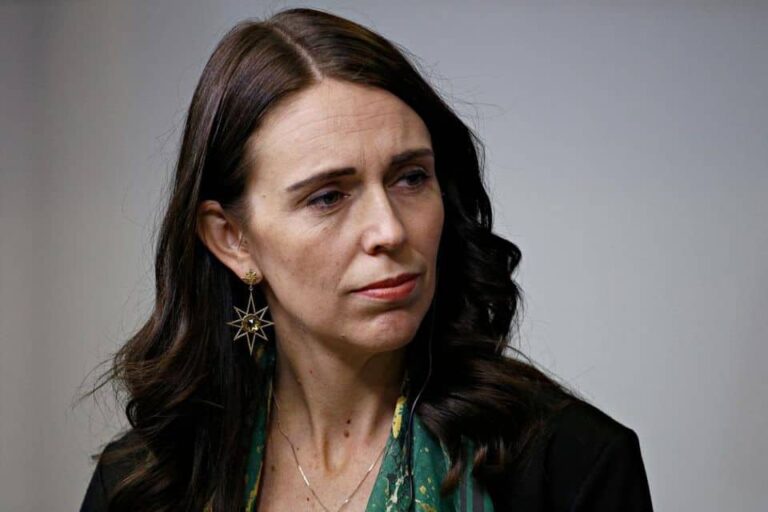
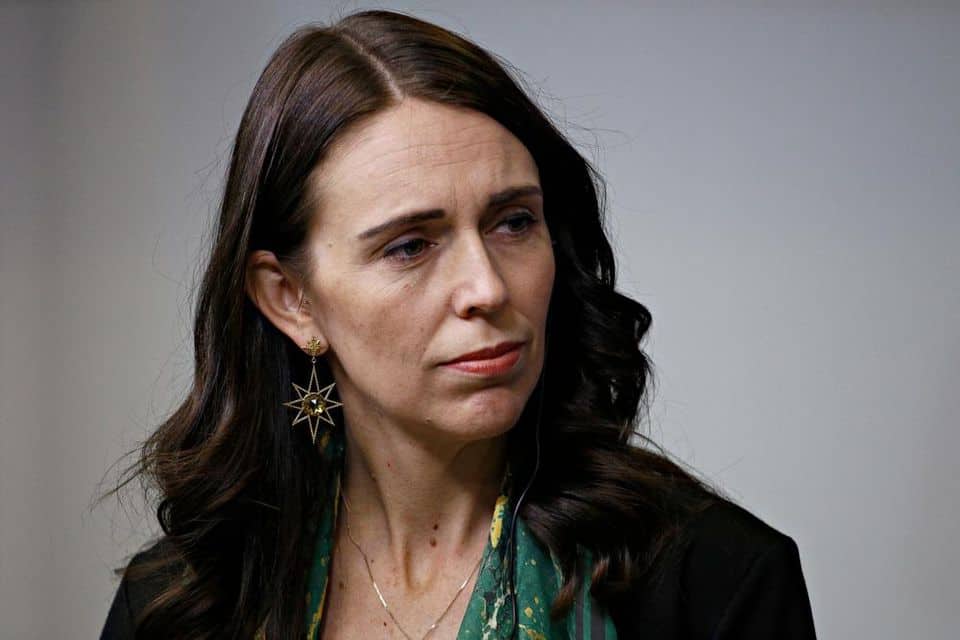
Despite the most unusual situation New Zealand has ever found itself outside of wartime, Jacinda Ardern’s popularity has remained high. That may all change, but two lawyers have taken her to task over the Bauer media shutdown, calling her comments “naive and reckless”.


Anthony Harper lawyers Dan Hughes, the firm’s head of litigation, and senior associate Lucy George (pictured above) took aim at the Prime Minister over the controversial closure of Bauer Media saying that the government wage subsidy and business loan guarantee was merely a band aid for business and insufficient to save a business like Bauer.
They also point out the reckless trading issues that were highlighted in the Mainzeal case, which famously caught former PM Dame Jenny Shipley in its net.
We have re-published the full article below –
The Rt. Hon. Jacinda Ardern has said that:
“They [Bauer] didn’t enter a conversation about becoming an essential service. They didn’t seek to continue to operate in lockdown … and they didn’t want to use the Government support to keep their doors open.
“So I just reject any suggestion that Covid-19 and our response to it has caused them to shut their printing press but I deeply regret that they have.
“In my view, they should have taken it up and they should have kept going.”
However, the Wage Subsidy is nothing more than a band aid for businesses such as Bauer where the staff are largely highly educated and skilled labour. The same can be said of the Government’s Business Loan Guarantee Scheme. These loans need to be repaid (within 3 years), and at a maximum of $500,000 are at nowhere near the level required to sustain a business of this size.
Both the Wage Subsidy and the Business Loan Guarantee Scheme require businesses to give legally binding declarations in relation to use of those funds (and the availability of other sources of funds). When taking the Wage Subsidy, businesses agree to use “best endeavours” to keep staff employed for the 12 period that the subsidy is available, and to pay at least 80% of each employee’s ordinary wages or salary.
The Prime Minister’s suggestion that Bauer should have kept going demonstrates a gross misunderstanding of business . .
Dan Hughes & Lucy George, Anthony Harper
If directors determined they could not provide the certainty the Government is asking for, they should not be punished for taking the difficult decision to shut down, rather than taking on further obligations they cannot meet or repay. This is particularly the case where giving an untrue declaration is a criminal offence liable to imprisonment.
The Prime Minister’s suggestion that Bauer should have kept going demonstrates a gross misunderstanding of business and more importantly insolvency (which we should all be concerned about in this Level 4 Lock down).
Had Bauer continued to trade (and trade while insolvent) the directors would have continued to take credit from other New Zealanders and could have exposed those New Zealanders to insolvency had they failed to repay. On that basis, the directors of Bauer ought to be praised, not chastised in doing the right thing and protecting other New Zealand creditors from non-payment and therefore potential flow-on insolvencies.
In addition, the directors would have been mindful of claims for trading whilst insolvent (i.e. the Mainzeal decision). Although the Government subsequently announced a “safe harbour” for directors from the insolvent trading rules over the next 6 months, this is yet another band aid. Businesses that were on the brink of insolvency at the start of this period can seemingly now trade with impunity and take more risks with creditors’ money. This simply improves the position of secured creditors (banks) at the expense of New Zealand customers and suppliers.
Further, owners of SMEs in New Zealand typically provide personal guarantees for business debt and rental obligations, and will rightly be conscious of putting more equity on the line by taking on increased debt during this time of uncertainty.
Neither us nor the Prime Minister know the ins and outs of what’s actually happened at Bauer, however a couple of points to note are these:
- We are not suggesting that COVID alone has brought about this decision, however it is clear that COVID-related stress and the Level 4 lockdown has severely exacerbated things by creating acute cash flow problems. This is likely to be enough to put any business already operating on a knife-edge into insolvency.
- It’s wrong for the Prime Minister to imply all businesses should take the Government help – this encourages people to potentially trade through while insolvent, and could give rise to questions over whether a business was able to truthfully give the declaration in the first place.
- If businesses obtain the Government Wage Subsidy and subsequently go insolvent, the balance of the Wage Subsidy funds may have to be repaid. Issues are likely to arise where those funds have already been spent.
- Until the length of the Level 4 lockdown is known, it is very difficult for businesses to accurately project cash flows and trading conditions. This level of uncertainty does not appear to be factored in to the Prime Minister’s criticisms.
Whether to keep trading in these times is a finely nuanced question for many businesses. The Prime Minister’s suggestion that the Government assistance package provides a one-size-fits-all approach to save all businesses is frankly naïve and likely to be damaging in the long run. We anticipate that insolvency practitioners and the wider business community will be grappling with these issues for months if not years to come.
[adrotate banner=”85″]
Recent News For You on LawFuel
- Linklaters Smashes Record as Aggressive US Expansion Pushes to Unprecedented FY26 Heights


- How an Immigration Lawyer Guides You Through the Green Card Path Negligence Claims Against FL Government Could Get Easier, But Not as Much as Some Other States
- DLA Piper Grows Its PEP by 20 Percent


- Entertainment Law – Five Barnes & Thornburg Attorneys Named to 2026 Billboard Top Music Lawyers List
- Lathrop GPM Combines with HG Law Expanding Global IP Capabilities, Adding Offices in New York and London and Continued Growth in Silicon Valley

- Law Firm To Outline Strategy for Major Civil Action Over Toxic Exposure Issue And Death of Air Force Veteran

- Warning Signs of Nursing Home Neglect Every Family Should Know






This is the same idiotic commentary we get here in the US from the irresponsible right. COVID-19 has taken fierce hold in the US. Your companies should be happy to get whatever they get. They have been running up the stock market with all their buybacks. There’s no real value there.