The Class Action That Redrew Banking’s Rules
When a relatively unknown litigator forces two of the country’s most powerful banks into a nine-figure reckoning, you don’t call it luck. You call it LawFuel’s 2025 Lawyer of the Year.
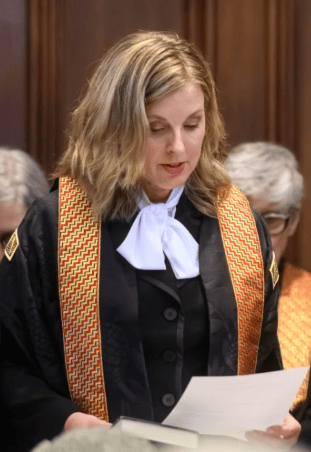
Scott Russell of Russell van Hout has been named LawFuel’s 2025 New Zealand Lawyer of the Year, recognition that arrives not for courtroom theatrics or boardroom dealmaking, but for something rarer – actually reading the fine print and having the nerve to act on it.
His achievement is stark and quantifiable. In November 2024, ASB Bank settled Russell’s class action for $135.6 million, the largest consumer class action in New Zealand history. ANZ, watching its smaller rival capitulate, now faces materially identical claims that could dwarf ASB’s payout.
Russell’s case, built on the Credit Contracts and Consumer Finance Act 2003 (CCCFA) and relates to claims for repayment of interest & fees paid by ANZ and ASB customers on their loans which it is alleged they were not liable to pay and the Banks were not entitled to receive under the CCCFA because the Banks failure to meet their disclosure obligations to their customers.
The banks attempted to have the government invoke retrospective changes to the CCCFA which would have stymied the Russell claim. They relented on that move, but only following stringent criticism of the move by leading legal voices like Rachael Reed KC raising the issue of fairness and equality before the law.
Russell decided someone ought to mention it. He wasn’t alone – the action was funded by one of the LawFuel Power List’s major powerplayers, Phil Newland’s LPF Group, along with Australian-based funder CASL. And Russell had the support of another Power Players, LawFuel List litigator Davey Salmon KC.
Nevertheless, Russell took up the cudgels and never let go.
Why This Award Matters Now
LawFuel’s recognition of Russell doesn’t celebrate the largest M&A transaction or the most billable hours. It honours impact of the kind that changes corporate behaviour and puts money back in ordinary people’s pockets.
Russell’s legal argument, detailed on bankingclassaction.com, rested on alleged breaches of disclosure obligations in section 22 of the CCCFA.
Although the arithmetic wasn’t complicated, what was missing was someone willing to build a case that could survive years of litigation against institutional defendants with infinite resources.
Russell filed proceedings in June 2021. Three years later, ASB settled without admission of liability that reliable corporate escape hatch for $135.6 million. Roughly 180,000 customers who paid excessive fees between June 2015 and November 2024 stand to receive compensation pending High Court approval.
The settlement, as Jenny Ruth reported, creates impossible optics for ANZ. If ASB’s fees were unlawful, and ANZ’s operated identically (they did), then ANZ is defending a position its competitor just paid over one hundred million dollars to abandon.
The Lawyer Behind the Numbers
Russell doesn’t fit the archetype of crusading litigator. He has no activist background, no regulatory axe to grind. A commercial disputes lawyer who looked at bank fees and concluded they violated existing law. The radical bit was following through.

With a background working for Bell Gully and the Commerce Commission in New Zealand and Virgin Media in the UK, Scott Russell is something of both a legal and actual adventurer fancying not only the tight trials of complex litigation at home, but tigher trails abroad where he has travelled by rickshaw across northern India, by mountain bike along the Camino de Santiago and bussing and trucking through South America and Africa.
Class actions remain rare in New Zealand precisely because they’re expensive, risky, and require someone willing to serve as lead plaintiff. Russell found his plaintiff and, critically, secured litigation funding—the unglamorous prerequisite for taking on institutions that can afford to litigate indefinitely.
What distinguishes this year’s award recipient is the cascading effect of his work. The ASB settlement doesn’t just compensate 180,000 customers. It changes the cost-benefit analysis for every bank contemplating similar practices. It establishes precedent that consumer protection statutes, however arcane, have teeth when someone bothers to enforce them.
More significantly, Russell’s success may embolden other consumer-facing claims where individual losses are small but aggregate harm is substantial. Telecommunications overcharges, insurance miscalculations, retail pricing practices – all are potentially vulnerable to the same treatment Russell gave bank fees.
The ANZ Equation
ANZ now occupies that special corporate purgatory reserved for defendants who must decide whether to fight or fold after their competitor has surrendered. The bank continues defending the action, insisting its fees comply with the law.
The ANZ are steadfast in their belief that their actions were legal as the class action concerns the Credit Contracts and Consumer Finance Act 2003 and alleges breaches of disclosure obligations in section 22 of that Act, all of which the ANZ Bank denies.
Russell’s firm, Russell van Hout has indicated that ANZ’s customer base and fee structure suggest a potentially large settlement, although the ANZ class involved is 17000, compared to the ASB’s 180,000.
The bank has options, none appealing necessarily, whether to settle now and control the narrative, or litigate through to judgment and risk an adverse outcome.
For Russell, the recognition as LawFuel’s 2025 Lawyer of the Year arrives while the work continues. The ASB settlement requires High Court approval. ANZ’s exposure remains unresolved and they deny liability.
What the Award Recognizes
LawFuel’s selection of Scott Russell recognizes the peculiar courage required to spend three years litigating a case most lawyers would consider commercially irrational. Class actions don’t generate the fees of corporate transactions. They don’t offer the prestige of Supreme Court appearances. They require someone willing to shoulder enormous risk for outcomes that benefit thousands of people who’ll never know the lawyer’s name.
Russell’s achievement lies in making institutional defendants answer for conduct that’s profitable precisely because it’s spread thin across millions of small victims. Banks counted on customer inertia, legal complexity, and the sheer impracticality of individuals suing over $50.
The result is a textbook demonstration of why class actions exist and why New Zealand’s legal system, historically inhospitable to such claims, desperately needs more practitioners willing to pursue them.
The Uncommon Honour
Scott Russell didn’t invent class action litigation and indeed his success has been permitted by those who have – such as LPF Group. What he did was enforce existing consumer protections as though they mattered. In a functional legal system, that shouldn’t warrant special recognition. So we are naming him Lawyer of the Year for making banks follow the law.
Perhaps that says more about institutional defendants’ expectations than Russell’s audacity. Perhaps it reflects how rarely consumer protection statutes receive muscular enforcement. Either way, LawFuel’s 2025 award honours work that’s already reshaped banking practice and may well encourage similar accountability across other industries.
The ASB settlement is final pending court approval. ANZ’s exposure remains substantial and unresolved. And Scott Russell, now officially New Zealand’s Lawyer of the Year for 2025 is sitting both on our recently released Power List in a lofty no. 11 and also helping hold to account one of the country’s most powerful, foreign owned commercial entities. Successfully. One down, one to go.