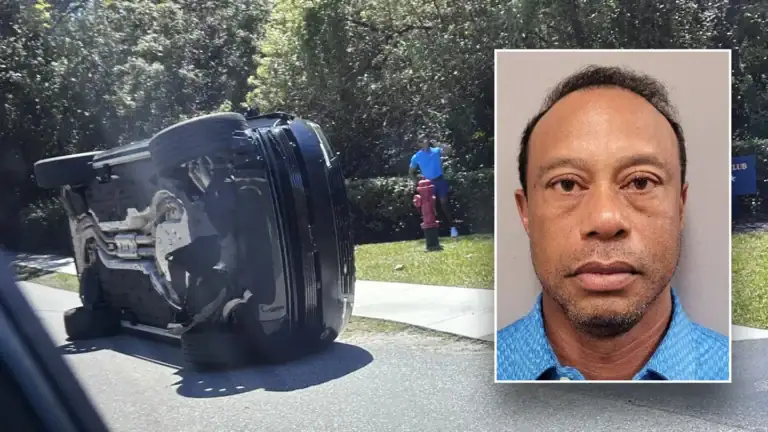
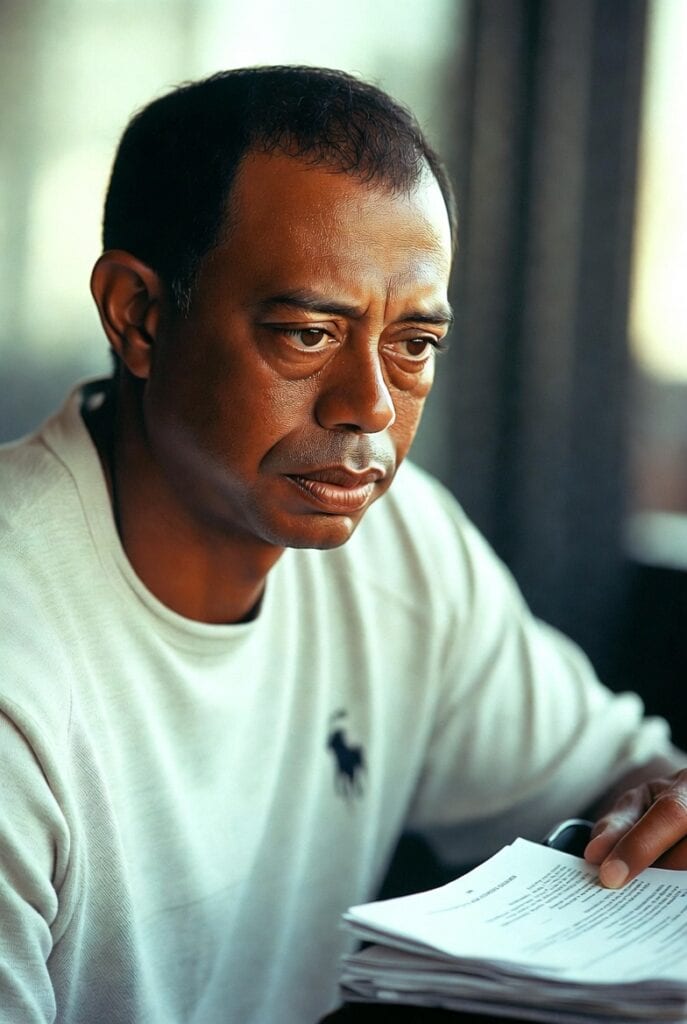
Three days after he stepped back onto a competitive golf course for the first time in nearly two years, Tiger Woods was in handcuffs.
On Friday afternoon, just before 2 p.m., the most recognisable golfer on the planet climbed out of the passenger window of his overturned Range Rover on South Beach Road in Jupiter Island — barely four miles from his $54 million home. By nightfall, his booking photo was everywhere. By morning, the legal questions had already overtaken the sports ones.
This is the story of what happens next. And, because this is Florida and because this is a medication-related DUI — the second time Woods has been down this exact road — it is a story where the quality of legal representation is not a luxury. It’s the whole ballgame.
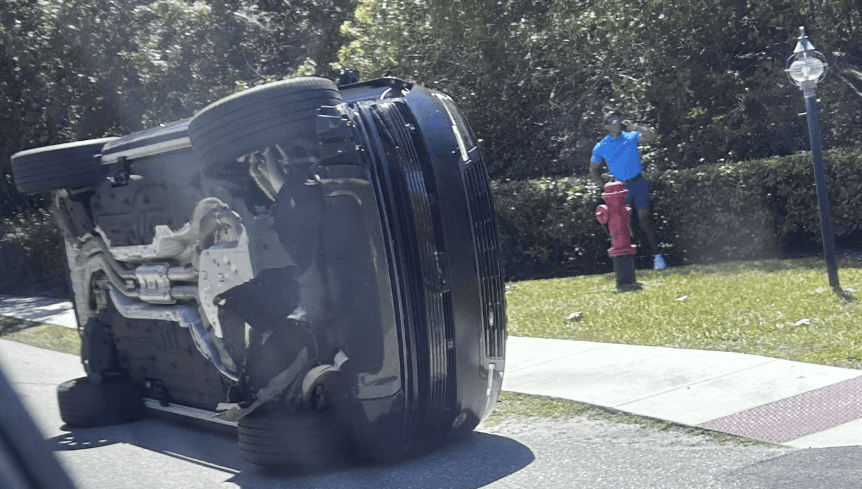
How It Happened
The facts, as laid out by Martin County Sheriff John Budensiek at a Friday evening press conference, are not in dispute.
A pickup truck towing a pressure-cleaning trailer was travelling north on the narrow, two-lane South Beach Road, slowing to turn into a driveway. Woods’ dark Land Rover came up from behind at speed. He attempted to pass. The SUV clipped the back of the trailer, tipped onto its driver’s side, and slid along the road before stopping. The truck driver was uninjured. Woods, 50, crawled out through the passenger door without physical injuries.
What came next is where the legal complexity begins. DUI investigators responded to the scene and quickly observed what Budensiek described as signs of impairment: Woods appeared “lethargic.” He offered the deputies an explanation — the back surgeries, the leg surgeries, the Achilles repair, the medications. A Breathalyzer was administered. It returned triple zeroes. No alcohol, whatsoever.
When investigators requested a urine test — the standard method for detecting prescription drugs and other substances — Woods refused. No drugs or medications were found in the vehicle.
He was arrested, charged with DUI with property damage and refusal to submit to a lawful test — both misdemeanours under Florida law — and transported to Martin County Jail, where state statute required him to be held for a minimum of eight hours. He was released just before 11 p.m., having been kept separate from the general population. Budensiek was characteristically direct: “He’ll pay the price, but he’s not going to pay the price by getting hurt in jail.”
The sheriff added, without elaboration, that the crash could have been catastrophic: “Had there been somebody moving in the opposite direction, we would not be having a conversation saying there was no injuries. This could have been a lot worse.”
President Trump, who describes Woods as a close friend and had just days earlier publicly said Woods would not play in this year’s Masters, told reporters: “I feel so badly. He’s got some difficulty. There was an accident and that’s all I know. Very close friend of mine. He’s an amazing person.”
2026 Is Not 2017. Not Even Close
Here is where any casual comparison to Woods’ previous DUI arrest runs out of road. (Remember, Tiger has a history of car crashes as well as golf wins, outlined by the NY Times).
In May 2017, Palm Beach County deputies found Woods unconscious behind the wheel of a Mercedes on Military Trail in Jupiter. When he woke up, he was barely coherent. A toxicology report later revealed five substances in his system: Vicodin, Dilaudid, Xanax, Ambien, and THC — a pharmacological catalogue of a man managing chronic pain with whatever he’d been prescribed. There was no crash. No other vehicle involved. No one was in danger except Woods himself.
He was charged with DUI. His attorney, Douglas Duncan, entered a not-guilty plea and then went to work. The outcome: prosecutors dropped the DUI charge, Woods pleaded guilty to the lesser offence of reckless driving, entered a first-time offender diversion program, paid a $250 fine, completed 50 hours of community service through his own foundation, attended a DUI victims’ impact workshop, and submitted to periodic drug testing for 12 months. He never set foot in jail overnight.
It was, in legal terms, about as clean an escape from a DUI charge as is achievable.
That blueprint is not available this time. And any competent Florida DUI attorney will tell you exactly why.
The 2026 case differs in three critical respects. First, there was an actual collision — the “property damage” charge is right there in the indictment. Second, Woods now has a documented prior record with the Palm Beach County criminal courts. He is not a first-time offender in any meaningful sense. Third — and this is the detail that will drive every prosecution and defence decision — he refused the urine test. In Florida, that refusal is itself a criminal charge, and it speaks directly to consciousness of guilt.
Golf Digest spoke to a Florida criminal defence attorney within hours of the arrest. The analysis was blunt: “A prosecutor looking at the case would typically say, ‘Well, you know, this isn’t your first brush with DUI. The first case we gave you a diversion.’ So they certainly would take it a bit more serious than someone who’s never had a DUI.”
The diversion program, available once to first-time offenders, is likely gone.
None of which means a conviction is inevitable. Not even close. But it means the game is harder, and the player standing across the courtroom is not starting from neutral.
The Context Nobody Wanted to Write
It is worth pausing on what the week looked like before this happened.
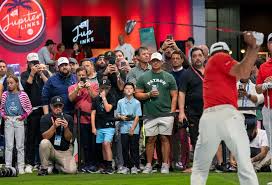
On Tuesday, March 24 — three days before the crash — Woods made his competitive return at the TGL indoor golf league finals in Palm Beach Gardens. His team, Jupiter Links Golf Club, lost 9-2 to the Los Angeles Golf Club, but Woods was hitting drives over 300 yards. For someone who had undergone Achilles surgery in March 2025 and a lumbar disc replacement in October 2025, it looked, cautiously, like a man fighting his way back.
When asked after the match about the Masters, which begins April 9 at Augusta, he said, “I’ve been trying. This body just doesn’t recover like it did when I was 24 or 25. I want to play. I love the tournament.” He didn’t say yes. He didn’t say no.
He will not be playing the Masters.
Beyond the sports calendar, there is the longer, more troubling pattern. This was the fourth vehicle incident involving Tiger Woods.
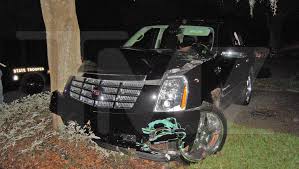
There was the 2009 incident outside his Windermere home, when a Cadillac Escalade met a fire hydrant and a tree and a marriage began to unravel. (Pictured)
There was the 2017 arrest. There was the 2021 crash in Rolling Hills Estates, California, where a Genesis SUV left the road at somewhere between 84 and 87 mph on a 45-mph coastal road. Woods shattered his tibia and fibula in multiple places. That one nearly ended his ability to walk, let alone swing a golf club.
The sheriff’s words on Friday — “this could have been a lot worse” — land differently when you catalogue the full timeline.
The Real Cost of a Florida DUI Conviction
Florida Statute § 316.193 doesn’t care who you are. It is worth reading in plain English, because the numbers matter — and because the non-legal fallout matters even more.
For a first-time DUI conviction in Florida (or a second arrest where prior diversion applies):
- Fines: Minimum $500, up to $1,000. Jumps to $1,000–$2,000 if the BAC was 0.15 or above, or a minor was present.
- Jail: Up to 6 months; up to 9 months with aggravating factors.
- Licence Suspension: Florida DHSMV minimum revocation of 180 days to one year — automatic upon arrest, with a 10-day challenge window.
- Probation: Up to 12 months.
- Community Service: 50 mandatory hours.
- DUI School: Level I course and substance-abuse evaluation, mandatory.
- Ignition Interlock Device: Required for high-BAC or repeat-adjacent cases, at the driver’s expense.
- Vehicle Impound: 10 days minimum.
The refusal-to-submit charge carries its own penalties: licence suspension, and the refusal can be used against Woods at trial as evidence of guilty knowledge. In Florida, you have a right to refuse, but there is a cost.
For the average Floridian, the numbers stop there — plus the insurance premium explosion (typically $2,500 or more over three years) and the background check damage that follows every job application, lease, and professional licence renewal for years.
For someone of Tiger Woods’ profile, the collateral damage is of a different order entirely. Endorsements. PGA Tour partnerships. The TGL league he co-founded with Rory McIlroy. His foundation. His legacy management. The Masters, and whatever competitive golf remains. A formal DUI conviction — on the record, permanent, searchable — would attach itself to every profile, every broadcast introduction, every ceremonial reference to the greatest golfer of his generation.
There is also the simple, non-glamorous reality of a Florida driving licence suspension. The man lives on Jupiter Island. He has been managing a series of debilitating injuries for the better part of a decade. Losing the legal right to drive is not a minor inconvenience.
And here is the number that gets lost in the celebrity noise: the 10-day rule. Florida gives you just ten days from the date of arrest to request a formal review hearing with the DHSMV and challenge the automatic administrative licence suspension. Miss that window, and the suspension becomes effective automatically, regardless of how the criminal case proceeds. This is the first clock that starts ticking for any competent Florida DUI defence lawyer.
The Refusal: The Most Important Detail in the Entire Case
Let’s spend a moment here, because it’s where most media coverage moves too quickly.
When investigators asked Woods to submit to a urine test, he declined. The Breathalyzer had already returned 0.00. Urine testing is the standard tool for detecting prescription medications, and it is widely understood that the results would likely have detected whatever the investigators believed was causing his impairment.
By refusing, Woods avoided providing that direct evidence. The sheriff acknowledged plainly: “We will never get definitive results with what he was impaired on.”
There are two ways to read this. One: it was a calculated legal decision, made by a man who knows exactly what he has in his system and did not want to document it. Two: it was the instinctive response of someone coached — or self-taught — in the principles of not incriminating yourself. Budensiek, to his credit, was diplomatically accurate: “He was cooperative, but he’s not trying to incriminate himself.”
For prosecutors, the refusal is a gift and a problem simultaneously. It’s a charge on its own, and it implies consciousness of guilt to a jury. But it also means there is no toxicology report tying Woods to a specific substance or quantity. Defence attorneys will note, correctly, that impairment by medication — as opposed to recreational drugs — is a nuanced and often difficult thing to prove beyond reasonable doubt.
This is exactly the kind of case where the difference between a competent defence lawyer and a great one is measured in outcomes.
Florida’s Elite DUI Defence Bar: The Lawyers Who Tiger May Call
The following is drawn from peer-reviewed rankings — Best Lawyers in America, Super Lawyers, the National College for DUI Defence (NCDD), Avvo, and Martindale-Hubbell AV Preeminent ratings.
These are not directory listings but lawyers LawFuel has obtained as Florida DUI practitioners who handle complex, high-profile, medication-impairment, and repeat-adjacent DUI cases at the highest level.
South Florida / Miami / Palm Beach
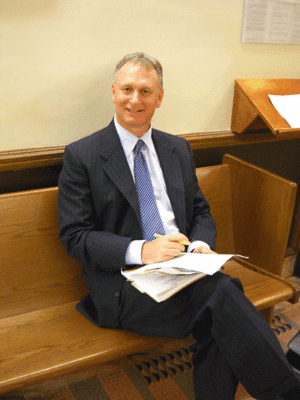
Robert S. Reiff — Law Offices of Robert S. Reiff, P.A. (Miami) (pictured) The only attorney listed in the DUI/DWI category by Best Lawyers in America for South Florida for ten consecutive years (2016–2026). Named DUI Defence Attorney of the Year by Lux Life. His practice covers exactly the jurisdiction relevant here — South Florida, Palm Beach, Martin County cases of the kind that arrive with media attention baked in. These are the cases that require a lawyer who has seen everything and anticipated the moves before the prosecution has made them. duilawoffice.com
Meltzer & Bell, P.A. (West Palm Beach) Not-guilty verdicts in Palm Beach County DUI trials. Granular local knowledge of Jupiter-area courts — a meaningful advantage when judges and prosecutors know your reputation before you walk in.
Rossen Law Firm (Fort Lauderdale) Consistent track record of DUI dismissals; recognised for strategic precision in aggravated cases where the standard playbook doesn’t apply.
Tampa Bay / Central West Coast
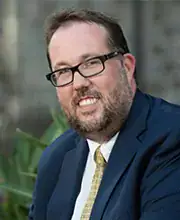
Leslie M. Sammis — Sammis Law Firm (Tampa) NCDD member with more than two decades practising exclusively in DUI defence. AV Preeminent rated. Her practice doesn’t dabble in DUI — she has built an entire career around it, in Hillsborough County and across the state.
Christopher Thomas Hersem (Tampa) Perfect 10.0 Avvo rating, multiple “Best DUI Attorney in Tampa Bay” honours from Tampa Magazine. The kind of profile built on outcomes, not marketing.
Casey Ebsary (Tampa) Board Certified Criminal Trial Specialist and former prosecutor. What separates former prosecutors who move to defence is not just knowledge of the law — it’s knowledge of how the other side thinks, what they prioritise, and where they’re prepared to deal.
Orlando / Central Florida
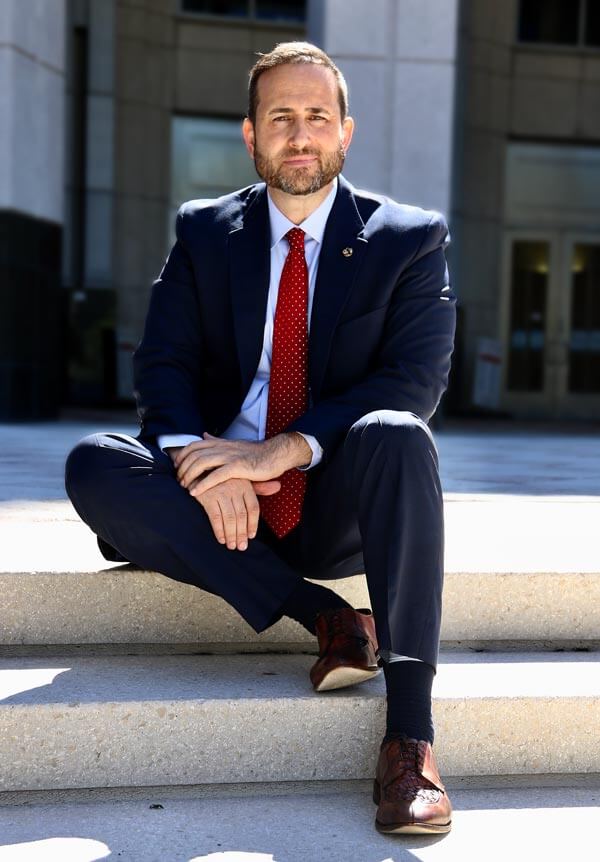
Corey Cohen — The Law Office of Corey I. Cohen & Associates (Orlando) Super Lawyers Rising Star; American Institute of DUI/DWI Attorneys “10 Best” list; former Seminole County Bar president. Combines community standing with trial depth.
Warren Lindsey & Jacob Stuart (Orlando area) Consistently ranked in the top tier for DUI/DWI defence by Super Lawyers. Reliable names in a market that attracts complex cases.
David S. Katz & James D. Phillips — Orlando Criminal Team NCDD board-certified members; the credential that signals a practitioner who has invested specifically and seriously in DUI defence as a discipline, not a sideline.
Across the State
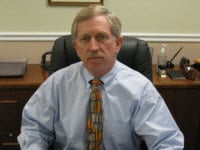
Larry Sandefer — Sandefer Law Firm (St. Petersburg) Best Lawyers honouree in DUI/DWI defence.
Curtis Murtha — R. Curtis Murtha, P.A. (Clearwater) Best Lawyers; Clearwater-area reputation built on courtroom performance.
James Fowler — Fowler Law Group (Sarasota/Bradenton) Named to the 2025 Top 50 Lawyers in America list.
Monroe Law, P.A. (Jacksonville area) Multiple “Best of the Best” and Top 10 Criminal & DUI Defence awards.
Parks & Braxton, P.A. (Fort Myers) NCDD-affiliated; AV Preeminent rated; the reference practice for complex DUI cases in Southwest Florida.
The best of these lawyers share several traits. They limit their practice specifically to DUI and criminal defence. They also invest in forensic expertise: toxicologists, Breathalyzer calibration specialists, field sobriety test methodology experts.
And they know, specifically, that medication-impairment cases live or die on a different evidentiary battleground than alcohol cases.
That battleground is where the 2026 Woods case will be fought.
What Happens Next
The short version: this will take months, possibly longer.
Woods has been charged, booked, and released. His team at Excel Sports Management had not commented as of Friday evening. No attorney has been publicly identified for the 2026 matter.
The immediate priorities will be: retaining specialised Florida DUI counsel; filing a DHSMV hearing request within ten days to contest the automatic licence suspension; reviewing the body camera footage, the arresting officers’ field notes, and the specific field sobriety tests administered; and beginning the forensic and medical analysis of whether impairment — if any — can be specifically attributed to lawfully prescribed medications taken appropriately.
That last point will be central. Woods’ medical history is extensive and well-documented. A skilled defence team will engage medical experts and potentially the prescribing physicians to build a record that contextualises whatever was in his system against the backdrop of a man who has undergone, by some counts, more than a dozen surgeries on his back, leg, and ankle over two decades.
Whether a diversion-adjacent resolution is still achievable — some form of pleading to a lesser charge without a formal DUI conviction — will depend on the Martin County State Attorney’s office and on how aggressively they read the prior 2017 case as a precedent.
As Golf Digest’s expert noted: prosecutors will take this more seriously. But “more seriously” is not the same as “impossible to defend.”
The Bigger Picture
Tiger Woods is fifty years old, recovering from a ruptured Achilles and a lumbar disc replacement, and has now been involved in four vehicle incidents, two of them resulting in criminal charges. At some point, with repeat occurrences of this behaviour, the pattern is the story, not just the individual incident.
The humanity of it is hard to separate from the legal analysis. This is a man in sustained, documented physical pain, who has been managing the wreckage of a body pushed beyond its limits for three decades, who returned to competitive golf at age 50 and hit 300-yard drives in front of thousands of fans three days before all of this happened.
The prescription-medication question is not a scandal in the tabloid sense, but it is a serious, ongoing story about what chronic pain management looks like at the elite level, and what the law does, and doesn’t, account for.
None of that removes the legal jeopardy. Two people were on that road. One of them could have been hurt.
Florida law is clear about what a DUI conviction costs. The best Florida defence lawyers are equally clear about what skilled, methodical, forensically-grounded defence can achieve.
The legal road ahead for Tiger Woods is neither predetermined nor simple. But it is, as it almost always is in cases like this, navigable — with the right representation.
LawFuel is the independent voice for the legal industry. This article is for informational purposes and draws from public records, Florida statutes, peer-recognised attorney directories, and news reports. Nothing here constitutes legal advice.