Power Briefing: Chalik & Chalik Injury Lawyers
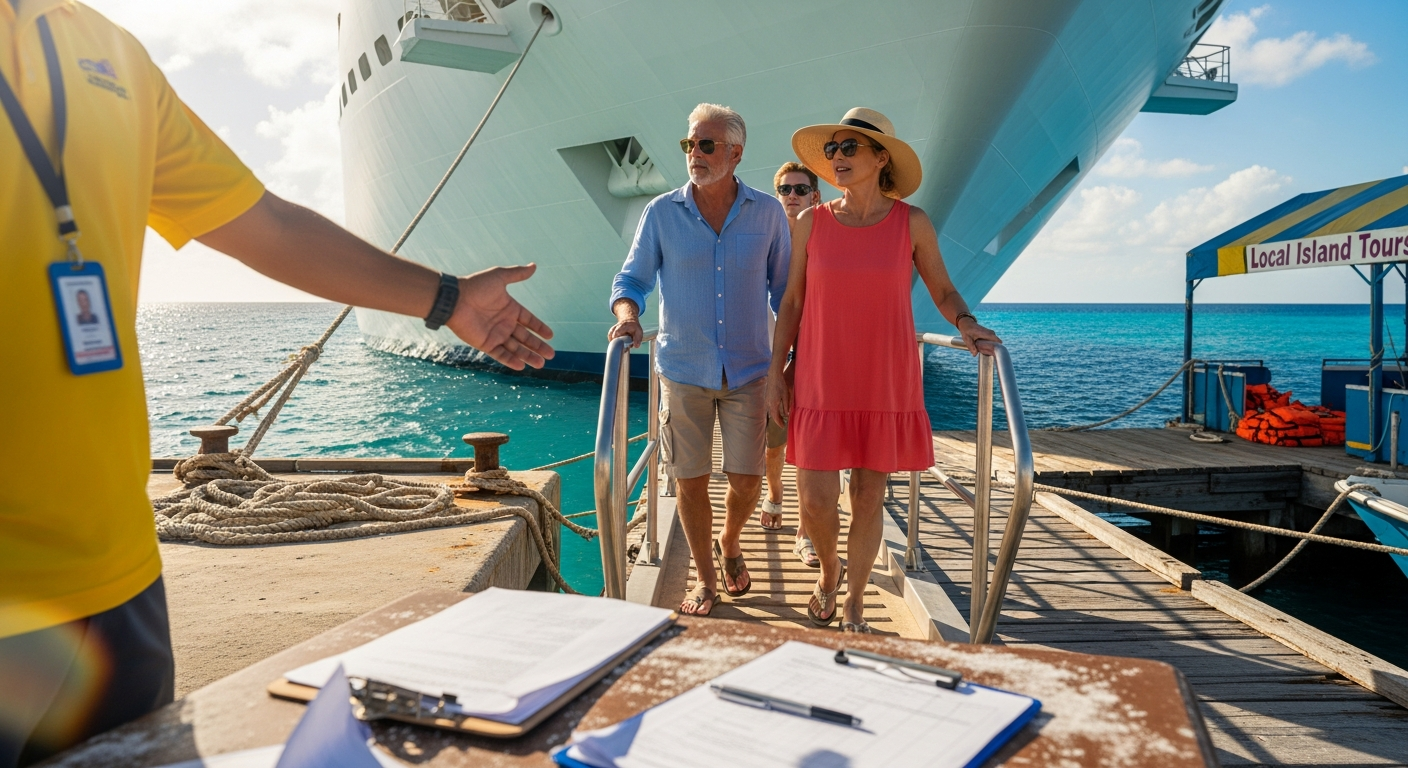
Image generated by Gemini
The Illusion of a Seamless Safety Net
Picture the scene: a much-anticipated Caribbean shore excursion, whether it’s an adrenaline-fueled zip-line tour through a lush jungle or a rugged ATV adventure across a volcanic landscape. The glossy cruise brochure sold a seamless, all-inclusive experience, and passengers naturally assume the cruise line’s umbrella of safety extends from the ship’s pool deck to the sands of a foreign port. This assumption, however, is dangerous. Contrast the idyllic marketing with the jarring reality of an accident—a faulty harness, an overturned vehicle, a sudden fall. The moment a passenger’s foot hits the gangway to go ashore, the legal landscape of liability shifts dramatically, often leaving injured travelers in a confusing and perilous legal limbo.
This isn’t a rare occurrence. A comprehensive study analyzing passenger injuries found that over 31% of all reported passenger injuries occur ashore during excursions. The same study revealed that common slips, trips, and falls account for nearly 70% of those off-ship incidents. The polished veneer of the vacation package conceals a complex legal structure designed to insulate the cruise line from the very activities it promotes and sells. When a dream vacation takes a disastrous turn abroad, it raises a critical question: Who is legally responsible for the aftermath?
The Legal Safe Harbor: Why Liability Changes at the Gangway
To understand off-ship liability, one must first understand the legal framework governing passenger safety on the vessel itself. Cruise lines operate under a well-defined legal duty, but they are also masters of contractually limiting that duty. The line between their responsibility and others’ is drawn with surgical precision at the edge of the ship, creating a legal safe harbor for the cruise operator once passengers disembark.
A Cruise Line’s Onboard “Duty of Reasonable Care”
Under general maritime law, a cruise line owes its passengers a “duty of reasonable care.” This means they must protect passengers from foreseeable risks and dangers while on the ship. This duty covers a wide range of scenarios, from preventing slip-and-falls on wet decks to ensuring that onboard attractions such as waterslides and elevators are properly maintained and safe for use. Recent lawsuits, such as those filed against Carnival for waterslide injuries, underscore that the courts take this duty seriously when an incident occurs in an environment the cruise line directly controls. However, this legal protection is often constrained by the cruise ticket itself—a complex legal contract meticulously drafted to limit liability and force any legal action into specific jurisdictions, often those most favorable to the cruise line.
The Independent Contractor Defense
The cruise line’s primary shield against liability for off-ship injuries is the “independent contractor” defense. The vast majority of shore excursion providers—from bus drivers and tour guides to scuba instructors and zip-line operators—are not employees of the cruise line. They are third-party, local businesses. By structuring these relationships this way, cruise lines argue they are merely acting as booking agents or travel agents, connecting passengers with local services for a fee. This legal distinction allows them to deflect responsibility, claiming they have no direct control over the excursion company’s safety standards, equipment, or personnel. A tragic and stark example of this was the 2017 tour bus accident in Mexico, where 12 passengers from Royal Caribbean and Celebrity cruises were killed while traveling with a third-party operator to a Mayan ruins excursion.
Piercing the Veil: When Cruise Lines Are Liable for Excursion Accidents
While the independent contractor defense is powerful, it is not absolute. Injured passengers are not always left without recourse against the multi-billion-dollar corporation that sold them the ticket. Courts have established critical exceptions that can pierce this corporate veil, imposing liability on the cruise line for the negligence of its third-party partners. These exceptions hinge not on the actions of the tour operator, but on the actions—or inactions—of the cruise line itself.
The Four Pillars of Cruise Line Negligence
A cruise line can be held liable for an off-ship accident if the injured party can prove negligence on the part of the cruise operator in one of four key areas:
- Negligent Selection or Vetting: A cruise line has a duty to conduct a reasonable background check on the tour operators it recommends and sells. If it hires a company with a known history of safety violations, inadequate insurance, or general incompetence, and a passenger is injured as a result, the cruise line can be held liable for its negligent choice.
- Failure to Warn of Known Dangers: If a cruise line is aware of, or should have been aware of, specific and foreseeable dangers associated with an excursion or a particular port of call, it has a duty to warn its passengers. This could include high crime rates in a tour area, consistently unsafe equipment used by an operator, or dangerous environmental conditions. Carnival’s recent decision to suspend some Mexican shore excursions due to security concerns is a real-world example of a cruise line exercising its duty to avoid liability.
- Misrepresentation and Marketing: When a cruise line presents an excursion as its own by using its branding, logos, and staff uniforms, it creates an “apparent agency.” In such cases, a passenger can reasonably assume the tour is being run by the cruise line itself. If an injury occurs, a court may hold the cruise line responsible because it created the impression of control and ownership, regardless of the operator’s independent status.
- Joint Venture: In rare circumstances, a cruise line and a tour operator may be so financially and operationally intertwined that they function as a single enterprise. If the cruise line shares in the profits and losses and exerts significant control over the tour’s operations, a court may find them to be in a joint venture, making the cruise line directly liable for the operator’s negligence.
Differentiating Liability: A Clear Comparison
The following table provides a clear visual breakdown of when the cruise line is likely liable versus when the third-party operator bears the primary responsibility.
| Incident Scenario | Likely Liable Party | Key Determining Factor |
|---|---|---|
| Slip and fall on a wet pool deck on the ship. | Cruise Line | Premises liability; failure to maintain a safe onboard environment. |
| Food poisoning from a beachside restaurant during a self-guided port visit. | Third-Party Restaurant | The passenger acted independently; no direct link to the cruise line’s duty. |
| Injury from faulty zip-line equipment on a cruise-booked excursion. | Third-Party Operator (Primarily) | The operator is an independent contractor responsible for their own equipment. |
| Same zip-line injury, but the cruise line knew the operator had prior safety violations. | Cruise Line (Potentially) | Negligent selection; failure to vet the operator or warn of known dangers. |
| Injury on a tender boat transporting passengers from the ship to the shore. | Cruise Line | The tender is considered an extension of the vessel and its services. |
Untangling the Web: How to Determine Liability and Pursue a Claim
Proving that a cruise line is liable for an off-ship accident is a formidable challenge. The legal hurdles are high, obtaining evidence from foreign operators can be difficult, and the cruise lines have immense legal resources dedicated to defending these claims. The complexity of these cases makes understanding the process and seeking expert help essential for any chance of success.
The Challenge of Maritime Law and Complex Claims
Cruise passenger injury claims are not governed by standard state personal injury laws. Instead, they fall under a complex web of general maritime law, international treaties, and the terms of the cruise ticket contract. These are subject to strict statutes of limitations, often giving a passenger just one year from the incident date to file a lawsuit. The fine print on the ticket also dictates the specific federal court where the lawsuit must be filed, regardless of where the passenger lives or where the injury occurred. Understanding these procedural traps is just as important as breaking down car accident liability, as a simple misstep can result in a valid claim being dismissed entirely.
Why Expert Legal Counsel is Non-Negotiable
Successfully holding a cruise line accountable requires a deep investigation into its relationship with the third-party operator. This is not something an individual can do alone. Investigating these incidents requires a profound understanding of maritime statutes and the defensive tactics cruise lines employ. Firms with experienced cruise ship shore excursion accident attorneys specialize in dissecting these complex liability issues. They have the resources to determine if a cruise line failed in its duty to properly vet a third-party tour operator or failed to warn of known dangers. These legal experts can help clients navigate the stringent requirements of maritime law to pursue fair compensation for their injuries.
Navigating Murky Waters: Tender Boats and Private Islands
Not all off-ship experiences are created equal. Two specific scenarios—transport via tender boats and visits to cruise-line-owned private islands—represent significant grey areas where the cruise line’s liability shield is much weaker and its direct responsibility much stronger.
The Tender Boat Trap
In many ports, a cruise ship is too large to dock directly at the pier. In these situations, smaller vessels known as tender boats are used to ferry passengers to and from the shore. A common misconception is that these boats are operated by the local port authority, but they are typically operated by the cruise line. A recent lawsuit filed against Carnival highlights this issue perfectly, where passengers were injured on a rough tender ride after the bench they were sitting on became unbolted from the floor. Courts generally view these tenders as an extension of the cruise ship itself. Therefore, the cruise line’s duty of “reasonable care” applies directly to the operation, maintenance, and safety of these vessels.
The “Private Island” Exception
Many major cruise lines now own and operate exclusive private islands in the Caribbean, such as Royal Caribbean’s CocoCay or Disney’s Castaway Cay. When an accident happens in these highly controlled environments, the independent contractor defense often evaporates. Because the cruise line owns, operates, and maintains the entire island—from the beaches and waterslides to the food service and transportation—its liability is far more direct. They are responsible for the safety of the premises, staff training, and the maintenance of all equipment, making it much more difficult to shift blame to a third party.
The Passenger’s Burden: Vigilance is Your Best Defense
The glossy brochures and upbeat marketing sell a single, seamless vacation experience, but the legal reality is a fractured landscape of liability. The protective duty of care that exists onboard a cruise ship does not automatically follow a passenger onto a tour bus in Cozumel or a zip-line platform in Jamaica. The system is intentionally designed to protect the cruise operator first, shifting the burden of risk onto local tour companies and passengers.
However, this protection is not impenetrable. While cruise lines are masters of insulating themselves through carefully worded contracts and the use of third-party operators, the exceptions for negligence provide a critical path to justice for those injured due to a cruise line’s failure to properly vet an operator or warn of known dangers. For the modern traveler in 2026, understanding these legal distinctions isn’t just academic. It’s an essential part of navigating the real risks of adventure at sea and ashore. Ignoring them could have devastating consequences.