

When the Crown finds itself steering through politically radioactive terrain, the playbook remains remarkably consistent: call in the legal adults in the room to sort the wheat from the political and bureaucratic chaff. When doing so, the government is fishing in a relatively shallow pool, but the go to operators remain consistently capable of rising to the occasion.
Take the current brouhaha over Human Rights Commissioner Stephen Rainbow – call in Kristy McDonald. Or the scandal over the MBIE immigration mess – qjuick call to Michael Heron.
There are others, of course, but they’re few in number. Think Maria Dew (of both National and Labour-linked inquiries) or Chris Finlayson, for constitutional and Maori matters.
Quietly powerful operators like Madeleine Laracy, now deputy Solicitor General, are removed from contention and the handful of inquiry‑friendly KCs and small cluster of public‑sector‑heavy firms, (Russell McVeagh, Bell Gully and Simpson Grierson spring to mind although operators with the necessary investigative nous may be lacking) the government’s “go‑to” list for integrity crises and governance repairs is remarkably short.
With bullying apparently on the rise to a point where it will be assembling its own substantial body of tort law, possibly combined with a rash of skin-thinning operators who are brought up on a protein-rich diet of diversity initiatives and identity political thoughts, the ground is rich with inquiry possibilities foxused on bullying.
Corruptions and related travesties are, of course, another story.
As former Privacy Commissioner John Edwards, whose apparently rich choice of inappropriate words lead to him falling on his sword, the world of the profile appointments to various oversight bodies is fraught with risk. Edwards resigned not because of his unwise use of ‘vulgar and sexualised language’ as Liz Kendall alleged, but rather becsuse he was not wishing to become “a distraction to the ICO’s important work.” Which was noble.
McDonald KC to Probe Human Rights Chief
Justice Minister Paul Goldsmith confirmed that Kristy McDonald KC to investigate “alleged conduct concerns” relating to Chief Human Rights Commissioner Dr Stephen Rainbow.

The concerns were raised directly with Goldsmith in his capacity as the minister responsible for the Human Rights Commission, prompting advice from the Ministry of Justice and the decision to appoint an independent King’s Counsel.
The specifics of thecomplaints remains under wraps, in the interests of fair process and natural justice, but the political backdrop is already fraught.
Rainbow’s tenure, which began in 2024, has been shadowed by a High Court ruling that found Goldsmith acted unlawfully in appointing both Rainbow and Race Relations Commissioner Melissa Derby, after he applied the wrong legal test and failed to consider relevant factors.
David Gendall held that the unlawfulness lay with the minister, and the appointments themselves were left in place.
Kristy McDonald’s decades of fronting heavyweight reviews, is a résumé that includes leading ministerial and organisational reviews, serving as Deputy Chair of the Electoral Commission, and conducting major investigations for central agencies and regulators.
She is well used to high level government and organisation inquiries and reviews
Heron KC mobilised for immigration IT scrutiny
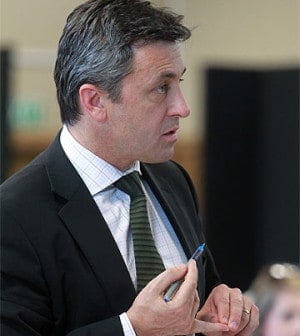
While McDonald untangles matters at the Human Rights Commission, Public Service Commissioner Sir Brian Roche has deployed senior LawFuel Power List member Michael Heron KC to lead a more interesting and potentially explosive inquiry into officials at the Ministry of Business, Innovation and Employment (MBIE).
Heron, assisted by barrister Jane Barrow, has been asked to examime whether MBIE officials withheld information and misled ministers over Immigration New Zealand’s failed Biometric Capability Update (BCU) project, a multi‑million‑dollar technology upgrade that was quietly abandoned after tens of millions had been spent.
Immigration Minister Erica Stanford has already publicly alleged that ministers were repeatedly misled, concerns were sidelined, and creative accounting used to keep the project within political and fiscal bounds.
Heron’s job is not simply to put a number on the loss, around $33 million was spent on the project before it was pulled, but to decide whether MBIE’s conduct met the standards required. integrity, transparency and accountability standards expected of the modern public service. ‘Creative accounting’ and whistleblower warnings about poor performance and political agendas are included in that review.
The inquiry will run under powers in the Public Service Act, and Roche has reserved the option of invoking the Inquiries Act to compel witnesses and documents where necessary.
Employment consequences will sit with MBIE and other employers, but the report itself is expected to set the tone for how future multi‑million‑dollar IT failures are scrutinised, both by ministers and by the public.
This is an area that seems almost congenitally preset for budget blowouts and failure, as the long-suffering public have seen in a rollcall of disasters. Recall the Police INCIS blowout in the 1990s, (a mere $82 million loss to the taxpayere), the Ministry of Education NOVOPAY disaster in 2014 (a $24 million cost, resulting in a new expensive state-owned enterprise to take over the pay role), the 2009 Customs’ Joint Border Management System showing a $28 million blowout . . and so it goes.
Lifting the hood on how the state service operates when it collides with political and performance issues will doubtless reinforce the fact that none of us are surprised by the fact that when the state become embroiled in complex software projects, the contractors – and perhaps even the public law bar – rub their hands together with barely concealed glee as they ask ‘what can go wrong’.
Actually, everything.





https://chatgpt.com/s/m_6a39d509b99081919fde83a16e377fd1