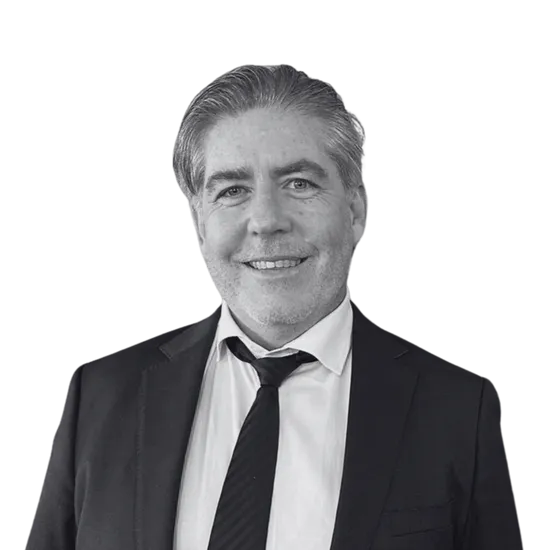
After 17 years climbing Quinn Emanuel’s litigation ranks and building the first dedicated AI practice at a major US firm along the way New York trial lawyer Christopher Kercher has walked out to test a heretical proposition: that the Big Law pyramid is now the wrong shape for the job.
Kercher, founder of Quinn Emanuel’s AI & Data Analytics Group and the man the legal press took to calling the firm’s “AI evangelist,” has launched Kercher Law PLLC, a Manhattan litigation boutique built for the generative-AI era, touted as a “high stakes litigation” specialist, in true Quinn Emanuel style.
Kercher’s business model denies the concept of battalions of junior associates feeding a thin layer of partners stops making sense once machines can handle much of the production-layer grunt work faster, cheaper, and in places better than a first-year billing north of $500 an hour.
This is not a man who wandered into AI last quarter. Kercher spent three years turning his Quinn practice into a laboratory, taught AI classes at Stanford Law and his alma mater NYU, and picked up The American Lawyer‘s 2025 innovation recognition for the first documented AI-enabled trial work at a major firm.
He is, in short, exactly the kind of insider whose exit is worth reading closely.
The Disney-queue origin story
The founding scene is very 2026. According to Business Insider, Kercher began sketching out the new firm while standing in line for a ride at Walt Disney World, using Anthropic’s Claude on his phone to grind through the start-up logistics that normally make hanging out a shingle a multi-month slog.
Five years ago, he says, that organisational friction alone might have kept him inside the machine. Now consumer-grade AI has stripped out enough of the hassle to make going solo not just feasible but tempting which is, of course, precisely the disruption thesis, applied to his own career.
Killing the pyramid — hello, “obelisk”
For generations, elite firms have been steep pyramids: juniors at the base sifting documents and drafting; progressively thinner layers of seniors and partners reviewing above them. Every hand-off adds judgment and also delay, duplication and a fresh line on the bill.
Kercher’s model is deliberately different: an “obelisk”, being narrow from bottom to top, with senior expertise concentrated at the apex and plugged directly into AI systems that handle discovery, chronology-building and first drafts.
At launch he is the sole trial lawyer, backed by a compact operations and technology team, and BI reports he expects to top out at only “low double digits” of attorneys a rounding error against the hundreds of litigators he left behind at Quinn while still chasing the bet-the-company corporate-control, M&A and financial-markets disputes that defined his old practice.
What the AI actually does
Kercher built his litigation platform on Claude himself “with virtually no coding background,” as he told Fortune because he needed it for a live trial.
The breakthrough, in his telling, was treating the model like a member of the case team: onboarding it with the chronology, key excerpts and themes the way you’d brief a partner joining mid-case.
In practice, the AI sits at the production layer. It turns sprawling email sets, contracts and records into structured timelines and case chronologies; distils the key actors, claims, defences and critical documents into a knowledge base that mirrors how experienced litigators actually think — the approach behind his proprietary “kerchbench” system and the “Kerch specs” he writes to direct both software and humans.
For document review specifically, he has pointed to Syllo AI. Drafts of briefs, memos and correspondence are generated and iterated by machine, then edited and owned by human counsel.
Flipping the risk
The billing model is where the pyramid economics really wobble. Historically, clients paid armies of expensive lawyers for what Kercher calls “context assembly”, pulling all the documents, facts and research together.
Hourly billing suited firms because it insulated them so that if a matter blew up, more hours simply meant more revenue, and the client wore the risk.
But context assembly, in Kercher’s words, “has been largely de-risked” it can now be done primarily, and far more cheaply, by compute rather than associates. We have reported the major changes occurring with the law firm billing model repeatedly.
So he is leaning into fixed fee by phase, letting clients see the cost to reach each next stage and step off the treadmill whenever they like.
He calls it “flipping the risk”: the firm now carries the downside, but AI caps how badly a runaway matter can hurt. The wrinkle he’ll happily concede is that a firm can still, occasionally, get punched in the face on a fixed fee and the smart ones will price better next time.
“It’s just going to be called litigation”
For all the futurism, Kercher’s view of the actual job is stubbornly old-fashioned — and he’s sceptical of the very label the industry keeps slapping on shops like his. “‘AI-native’ is a term you see thrown around a lot, especially on the transactional side,” he says.
On the litigation side, he reckons, “it’s just going to be called litigation” litigation done by people who understand how to extend themselves with the tools.
“The robots are not coming,” he adds, “at least not for lawyers who can stand up in court and persuade a judge, persuade a jury, and win the case.”
The most protected work in law, on his account, is the endpoint: the advocacy, the negotiation, the standing up. “What’s left is human disputes. Human disputes are not going anywhere.”
The regulatory small print
The experiment isn’t risk-free. Bar regulators and legal-ethics commentators have been clear that the duty of competence now extends to understanding and appropriately deploying AI, while the duties of confidentiality, supervision and candour to the court remain as non-negotiable as ever.
Kercher has consistently flagged the obvious pressure points such as hallucination risk, data security and client consent but a one-lawyer firm leaning hard on machines will be a live test of how those duties hold up when there’s no army of associates doing the checking.
The future of Big Law, or a very clever niche?
Strip away the breathless “AI will replace lawyers” noise and the Kercher experiment poses a key question about the shape of the firms that employ them.
Quinn Emanuel, like most global firms, has spent three years building an internal AI culture, and Kercher sat at the centre of it. That he had to leave to see what a genuinely AI-first practice looks like is itself the data point: the most radical experiments may increasingly happen outside the traditional partnership, not within it.
Whether the obelisk scales beyond a carefully engineered boutique and whether corporate clients will swap the reassuring bulk of a familiar pyramid for a lean, AI-augmented tower with one name on the door is now among the more interesting open questions in the future-of-law debate.
Kercher is betting the answer is yes. The rest of Big Law will be watching the billing statements.