KEY TAKEAWAY: While law firms spend heroic sums teaching partners to build a “personal brand”, Massachusetts defence lawyer Kevin Reddington has stumbled on a simpler formula. Be very good in court, be unmistakably yourself, and let TikTok do the rest.
Kevin Reddington is not the obvious prototype for a legal influencer.
He is 75. He took his law degree from Suffolk University in 1975, after Boston College, and has spent half a century as a criminal defence lawyer in Massachusetts. His client list runs from former Red Sox slugger Mo Vaughn to Catherine Greig, the longtime partner of Boston gangster Whitey Bulger.
He may be America’s least likely lawyer-influencer and perhaps the most famed criminal defense attorney from Boston since the days of F Lee Bailey.
16,500 TikToks And Counting
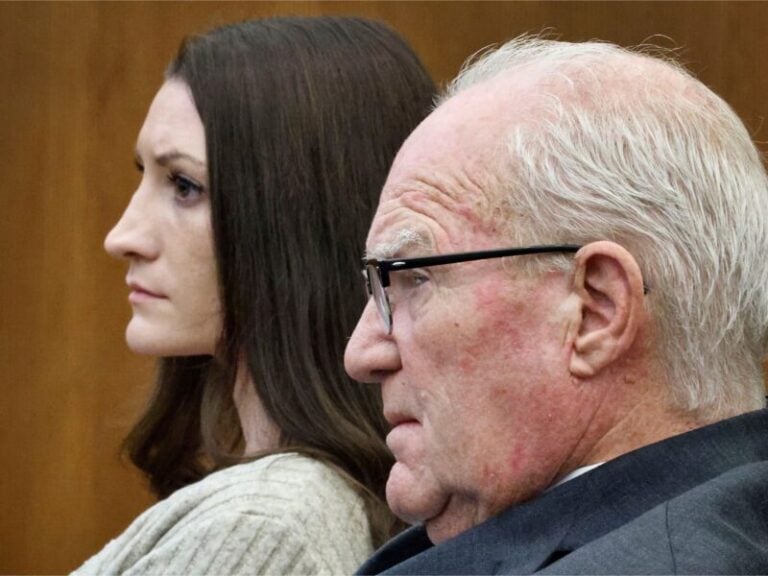
Reddington became the breakout figure of the intensely watched Lindsay Clancy murder trial in Plymouth, Massachusetts.
More than 16,500 TikTok videos now carry the #kevinreddington hashtag. Admirers have handed him titles the Bar Association would never confer, chiefly “Big Redd” and “Shreddington”. Commenters dissect his Boston accent and his courtroom sass, and “Better Call Kevin” merchandise has surfaced online.
Not bad for a man whose apparent social media strategy consists of turning up to court and doing his job.
A Grim Case Beneath The Memes
Behind the internet entertainment sits an exceptionally dark case, featuring in every news site pretty well everywhere.
Lindsay Clancy, a 36-year-old former labour and delivery nurse, was charged with murdering her three children, Cora, 5, Dawson, 3, and eight-month-old Callan, at the family home in Duxbury on January 24, 2023. She attempted suicide the same night and was left paralysed.
Clancy did not dispute that she killed the children.
Reddington’s case was that she was not criminally responsible because she was suffering from postpartum psychosis and had been overmedicated.
Prosecutors said she planned the killings and knew right from wrong.
After more than five weeks of testimony and seven days of deliberations, Judge William Sullivan declared a mistrial on September 4 when the jury could not reach a unanimous verdict.
The Strange Making Of A Legal Celebrity

Something else happened during those five weeks. Reddington, the solo lawyer, became famous.
Several hundred supporters in pink shirts gathered outside the courthouse on August 20 to cheer him. Reporters and livestreamers trailed him in and out of court. The fascination grew pronounced enough for the New York Times to publish a profile asking why he had become a hero to Clancy’s supporters.
He has been asked how he likes his burgers, what the white sweets on the defence table are, and where he printed his oversized trial exhibits. The answers are plain, cinnamon Altoids, and Staples.
It is an extraordinary piece of personal branding, chiefly because almost none of it appears to have been personal branding.
There were no LinkedIn sermons on “five things cross-examination taught me about leadership”. There was no carefully positioned coffee cup, and no airport lounge photograph with 900 words on resilience.
Audiences simply watched a lawyer practising law.
Fifty Years Of Courtroom Mileage
The Reddington phenomenon also makes an unfashionable point about legal marketing: experience is compelling.
This is a lawyer who, in 1981, became one of the first in Massachusetts to win an acquittal by arguing that battered woman syndrome could amount to temporary insanity.
He persuaded a jury that Mo Vaughn’s failed sobriety tests reflected crash shock, a bad knee and off-season weight gain rather than alcohol. He has spent decades on cases where severe mental illness and violent crime collide. He is also a member of the American College of Trial Lawyers.
His courtroom persona was not assembled by a communications consultant. It is what half a century in front of judges and juries produces, and the public appears to know the difference.
The Pardon Request
Reddington has hardly gone quiet since the mistrial. On Good Morning America on September 8, he asked President Donald Trump to consider pardoning Clancy.
There was one substantial constitutional inconvenience. Clancy faces Massachusetts state charges, and a US president’s pardon power reaches only federal offences.
Reddington later told WBZ-TV that he knew this. His aim was to catch the President’s attention, in the hope that Trump might contact Plymouth County District Attorney Timothy Cruz, a fellow Republican.
Trump’s verdict came on September 13 as he left Ireland: “It’s actually a state situation.” He added that Reddington is “a good attorney”, which is at least a review most lawyers would frame.
The request was either unconventional advocacy or a very effective way of keeping the case in the national conversation. Possibly both.
The Case Isn’t Finished
Reddington is now attempting something more influential and has filed a renewed motion under Rule 25 of the Massachusetts Rules of Criminal Procedure. It asks Judge Sullivan to enter findings of not guilty by reason of lack of criminal responsibility on each charge. If granted, that would operate as an acquittal and bar a retrial.
The jury’s reported 11-1 split looms in the background. The foreperson’s note described 11 jurors prepared to find Clancy not criminally responsible and one who was not, and several jurors have since spoken publicly about a lone holdout. Reddington insists, however, that the motion rests on the evidence rather than the vote count. His argument is that all six forensic experts, including the prosecution’s, agreed Clancy was seriously mentally ill, so the Commonwealth could not prove beyond reasonable doubt that she retained criminal responsibility.
He has also signalled a separate double jeopardy challenge, arguing there was no “manifest necessity” to declare a mistrial.
The fact is that such motions are routine and rarely succeed. Prosecutors maintain that Clancy knew what she was doing, and DA Cruz has not said whether he will retry the case.
The motion is due to be argued at a September 29 hearing. Reddington’s fame may yet have another chapter.
Influence Without The Influencing
There is something deliciously backward about the whole affair.
Law firms are obsessed with visibility and we hear how partners are told to become thought leaders as marketing teams draft LinkedIn calendars and consultants lecture on authenticity, video engagement and the personal brand.
Then along comes Kevin Reddington. He is 75, with fifty years at the Bar, a Massachusetts accent that has never been focus-grouped, “NG” on his licence plate, and no visible interest in being an influencer or significant ‘thought leader’ beyond barracking very successfully in court for his clients.
But of course the internet does what it always does and has made him an influencer anyway.
There is a serious point underneath. His following did not grow because of what he said about himself. It grew because people watched how he behaved as a lawyer: how he questioned witnesses, protected his client, handled reporters and carried an emotionally brutal case.
For firms spending millions trying to manufacture authenticity, that is the uncomfortable lesson. The most powerful lawyer brand is still the oldest one and it is really all about being an effective lawyer who is worth watching.