Weil Gotshal’s extraordinary partner exodus is exposing an uncomfortable truth about the world’s richest law firms – they have spent years creating superstar rainmakers whose commercial power can sometimes rival the firms employing them.
If a firm’s biggest rainmakers can walk away with their teams, expertise and potentially their clients, what exactly does the partnership own?

That is the Michael Aiello (below) problem that Weil now faces as reports emerge that rival firms are looking to capitalise on the raft of departures, which became even more confusing with the announcement that leading lawyer Peter Feist, a former Weil lawyer who left for Cravaths in 2023, was returning to his old firm.
And Debra Sinclair this month announced her return to the firm also.
The craziness and big time lateral moves continue, with Weil being front-and-center with the current merry-go-round of big name moves.
But it is a problem that extends well beyond Weil Gotshal who are fighting back against the departures and the negative PR.
The Weil ‘crisis’ as the Financial Times recently reported.
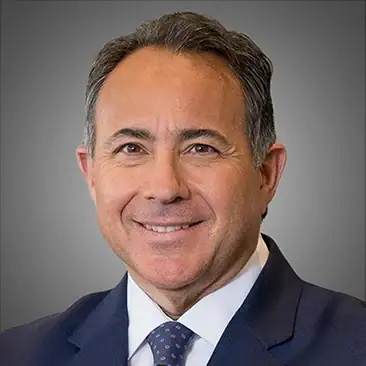
When Aiello left Weil, Gotshal & Manges for Cravath, Swaine & Moore, the departure was dramatic enough on its own. He had chaired Weil’s roughly 600-lawyer corporate department and was its largest revenue generator and The Wall Street Journal reported that he was earning north of $20 million a year.
But he was not leaving alone and was joined by five other Weil M&A partners joined the move: Matthew Gilroy, Eoghan Keenan, Amanda Fenster, Michelle Sargent and Megan Pendleton. Gilroy had co-led Weil’s M&A practice.
But the more interesting question is not why Cravath wanted them but what it says about the biglaw business model that produced them.
The $20 Million Man Walks Out
Aiello was not simply another expensive partner but was a great deal more for Weil Gotshal.
He advised major corporations including Goldman Sachs, Dow and Sanofi, headed Weil’s enormous corporate department and had also been placed at the centre of the firm’s future strategy.
In February 2025, Weil created a Global Leadership and Strategy Committee to help drive strategy and growth as the firm prepared for the eventual retirement of longtime executive partner Barry Wolf and it was Michael Aiello who was appointed to chair it.
His departure for Cravaths less than two years later was just part of a wider talent drain.
Nearly 30 Weil partners have reportedly left during 2026, including senior private equity, funds and transactional lawyers.
In London, M&A leader David Avery-Gee (left) and partner Sarah Flaherty departed for Sullivan & Cromwell.
Bloomberg subsequently reported that Weil had been examining strategic options, potentially including a combination with another firm. Weil responded firmly to discount that rumor, saying:
“Weil is not engaged in merger discussions with any firm.”
Reuters reported that the firm was nevertheless canvassing partners and considering strategic hires and promotions as it assessed its future.
All of which might suggest a firm in financial trouble.
Except that is where the Weil story gets considerably more interesting.
The Strange Crisis of a Rich Law Firm
Weil is not some tottering partnership wondering how to make payroll but a formidable legal powerhouse with 2024 revenue exceeded $2 billion and profit per equity partner of around $5.4 million (give or take). More recent reporting says Weil expects record revenue and profitability in 2026.
So this is very clearly not a story about a failing law firm. But it is a story of how an enormously profitable law firm can nevertheless become strategically vulnerable when the market value of particular partners rises faster than the institutional glue holding the partnership together. The competitive benchmark has changed.
Revenue can rise. Profits can rise. Partners can still be paid millions. But the firm can also find that its rivals are prepared to pay considerably more for the people generating the most valuable business.
All of which makes the Weil issue a different kind of crisis.
When the Rainmaker Becomes the Business
The economics behind this are increasingly brutal.
Reuters recently examined whether BigLaw is simply paying too much for star partners, reporting that packages exceeding $20 million have become part of the battle for elite talent.
More remarkably, the economics of lateral hiring are hardly foolproof.
Legal industry advisers cited by Reuters estimated that only 20 to 30 percent of lateral hires meet their financial projections within one or two years, while separate research found more than half leave their new firms within five years.
Some superstar lawyers are now reportedly attracting guaranteed packages in the $20 million to $40 million range.
The attraction of major rainmakers is the possibility of hundreds of millions of dollars of future matters, access to corporate boards and private equity sponsors, an established team and a halo capable of attracting still more lawyers and clients.
But there is an obvious flaw in this particular arms race. A firm competing aggressively to acquire another partnership’s rainmakers must live with the possibility that somebody else will eventually make an equally aggressive offer for its own.
BigLaw has effectively created a market in which its most valuable assets are also among its most mobile.
Weil Is Fighting Back
None of this means Weil is finished. It is an institution that has hired more than 50 lateral partners since the beginning of 2025 and nearly 90 since 2023. On September 24 it announced the return of restructuring partner Debra Sinclair, the seventh former Weil lawyer to return during 2026 and the 22nd since 2023.
It has also announced German private equity partner Olga Stürmer and appointed Kyle Krpata and Michael Lubowitz as co-chairs of the corporate department.
That makes Weil a more useful case study than a straightforward tale of decline. The firm is simultaneously losing major partners and recruiting major partners.
It is being raided while conducting raids of its own.
The Succession Problem Arrives Early
There is another complication.
Weil was already undergoing a carefully planned leadership transition before the departures accelerated.

In March, the firm announced that private equity partner Ramona Nee (left) would succeed Barry Wolf as executive partner from January 1, 2027. Wolf, who has led Weil for 16 years, is scheduled to remain chair of the management committee through 2027 before retiring from the partnership at year-end.
The lengthy overlap was deliberately designed to provide an orderly transition.
Instead, Nee will inherit a firm facing one of the more consequential competitive tests in its recent history.
And there is an irony here too.
Nee is herself an accomplished private equity lawyer with longstanding sponsor relationships. In other words, the person charged with making the institution less dependent upon individual rainmakers is herself precisely the kind of highly valuable relationship partner rival firms spend fortunes trying to recruit.
That is not a criticism of Weil.
It is the structural problem.
Cravath and the New Economics of Loyalty

There is an additional irony in Aiello’s move to Cravaths, who helped define the traditional BigLaw lockstep model, built around seniority, institutional loyalty and developing lawyers internally rather than buying stars from competitors.
That world has been disappearing.
Cravath has increasingly embraced high-profile lateral recruitment as competition for elite lawyers has intensified, and Aiello’s arrival represents a substantial reinforcement of its public-company M&A capability.
The firm associated more than almost any other with institutional loyalty has become an active participant in the market for portable stars.
For decades, the conventional BigLaw bargain was relatively straightforward as partners built the firm and they were rewarded accordingly.
Today the most commercially successful partners possess considerably more leverage and their client relationships can attract rival firms willing to make equally extraordinary investments.
And institutional prestige no longer necessarily guarantees institutional loyalty.
What Is a Law Firm Worth Without Its Biggest Partners?
Law firms are different from ordinary corporate buyouts because many of their most valuable assets consist of personal relationships, individual reputations and teams whose continued participation cannot simply be locked inside the building.
And clients will make up their own minds about the counsel they instruct. And when a rainmaker leave there are some significant issues that arise, including these three –
1. The Compensation Trap
A firm paying extraordinary sums to attract elite partners may have to reconsider the compensation of its existing rainmakers. The law firms have an obvious question – ‘what would another firm pay me?’
Matching the external market protects talent but increases compensation pressure across the partnership and refusing to match it risks departures – which makes neither option attractive.
2. The Succession Problem
What happens when a partner responsible for substantial client relationships retires or leaves?
Ideally, firms institutionalise those relationships across teams and generations but with the massive compensation structures that reward individuals, the opposite incentive can apply and the rainmaker who makes a firm so profitable may also be creating a succession issue at the same time.
3. The Merger Illusion
Combining two major law firms can produce magnificent headline numbers but it doesn’t necessarily result in a more stable or better business.
Indeed, merger uncertainty can encourage valuable partners to examine their alternatives, particularly where they anticipate client conflicts, compensation changes or diminished influence.
The meaningful number therefore isn’t simply the revenue of Firm A plus the revenue of Firm B, it is how much of that revenue remains after several hundred ambitious partners have examined the new pay system and taken calls from recruiters.
Did Weil’s Problem Really Begin This Year?
The Weil departures exploded into public view this year, but Weil’s experience also raises a broader question about how even a financial powerhouse like Weil Gotshal can lose ground to a competitor that is growing faster and paying more aggressively.
The problem currently in the big law market is not necessarily about a law firm become unsuccessful, but remaining successful as the whole market around them changes.
It is remaining successful while the definition of success changes around you.
Kirkland, Latham, Paul Weiss, Cravath and other aggressive competitors have demonstrated what enormous financial resources combined with a willingness to buy elite talent can accomplish.
The result is a market in which yesterday’s extraordinary profitability can become tomorrow’s minimum admission price.
Why Weil’s Next Move Matters

Weil still possesses a formidable global platform, approximately 1,200 lawyers and elite M&A, private equity and restructuring practices.
It also has the financial strength to recruit aggressively and the opportunity, following Aiello’s departure, to distribute responsibility and client relationships across a new generation of partners.
In fact, some reporting suggests precisely that opportunity exists because removing one exceptionally powerful rainmaker can sometimes create room for others to build businesses rather than weaken the institution. The vacuum is filled. Hopefully.
So the lesson from Weil is not that superstar partners are bad, but rather that elite law firms need elite lawyers.
The more vexed issue for those biglaw firms is whether the firms have allowed the economic value of individual stars to grow faster than the institutional value of the partnerships around them.
Law firm revenue and PEP tell only part of the story. Managing partners also need to know how concentrated revenue is, how deeply clients are connected across practices, whether younger partners can continue relationships and what happens when the firm’s biggest rainmakers depart.
BigLaw has spent the past decade creating a marketplace in which individual lawyers can command $20 million, $30 million or even $40 million packages. The wealth is extraordinary, as is the mobility that comes with those packages.
So while some lawyers are becoming bigger than the firms that they work with, the modern law firms money cannot always buy institutional loyalty. Weil Gothal just happen to be at the vanguard of that critical debate right now.