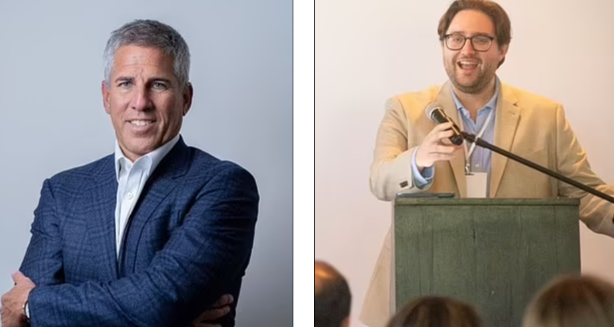
The London law firm behind Britain’s biggest group litigation is preparing to rebrand after co-founder Harris Pogust demanded the removal of his name. But the fight over its identity is only one part of an increasingly bitter struggle for control of the Mariana dam disaster litigation.
A law firm losing its founding partners is hardly unusual. Losing both founders, fighting to retain hundreds of thousands of clients and facing demands to remove its name is rather more exceptional.
That is the extraordinary position confronting London litigation firm Pogust Goodhead, which has confirmed plans to change its name following a public intervention by its American co-founder, Harris Pogust.
The dispute comes amid an increasingly contentious battle over the £36 billion Mariana dam litigation against mining giant BHP, a case that has become a defining test of mass litigation, third-party funding and law firm governance.
The firm’s problems now extend considerably beyond the question of what name appears on its letterhead.
The founder Who Wants his Name back
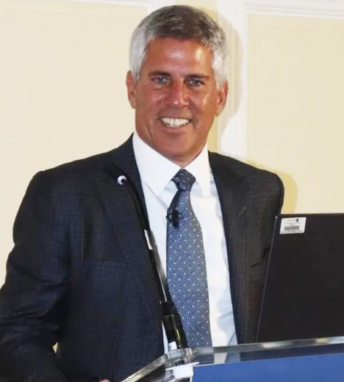
Harris Pogust, (above) who established the firm with British lawyer Tom Goodhead in 2018, has publicly condemned his former firm’s decision to initiate proceedings involving a committee representing victims of the Mariana disaster.
Pogust has issued notice demanding that the firm stop using his surname. His objection is not merely about branding but concerns the firm’s decision to bring legal proceedings against representatives of the very claimants whose interests it is seeking to protect.
In a LinkedIn post he wrote – ‘When a firm, which still has your name associated with it, files a claim form which named the firm’s clients as defendants and demands that they pay the firms costs and expenses if they switch firms, which [by the way] they have every right to do, the “I have had enough of this nonsense” meter erupts. I have never in my 39-year career sued a client. The thought has actually never crossed my mind. I was embarrassed to have my name anywhere on that document.’
The dispute follows an attempt by a committee representing more than 400,000 Brazilian claimants to replace Pogust Goodhead with a legal team involving US firm Bailey Glasser International and Hausfeld.
Pogust Goodhead disputes the committee’s authority to terminate representation agreements on behalf of individual claimants. It has taken the matter to the English High Court, arguing that the committee cannot unilaterally transfer hundreds of thousands of claims.
Pogust, meanwhile, has questioned how the firm can pursue legal relief against people it simultaneously wishes to continue representing.
He has also indicated support for the rival legal team.
Pogust Goodhead confirms it will change its name
The firm’s response makes clear that its rebranding plans are real.
A spokesperson confirmed that Pogust Goodhead intends to abandon its existing name, observing that neither of its original founders remains involved in running the business.

Pogust has been absent from the firm’s management for approximately three years, according to the spokesperson. Tom Goodhead, the firm’s former chief executive, was removed from his position in 2025 with claims of extravagant spending and other claims made against him prior to his departure.
Goodhead has subsequently become involved with the rival team seeking to take over representation of the Mariana claimants.
The result is a particularly unusual situation. The two lawyers whose names built the firm’s identity are now outside the business, while its former chief executive is involved in a competing effort to take control of its defining litigation.
The £36bn case behind the legal civil war

The litigation arises from the catastrophic collapse of the Fundão tailings dam in Brazil in November 2015.
The dam was operated by Samarco, a joint venture between BHP and Vale. Its collapse killed 19 people and released approximately 40 million cubic metres of mining waste, devastating communities and waterways.
More than 600,000 claimants originally pursued proceedings against BHP in England.
In November 2025, the English High Court found BHP liable under Brazilian environmental and civil law. The decision was a major development for the claimants, although questions of causation, compensation and the validity of individual claims remain significant.
BHP has indicated that it intends to appeal the liability judgment. It also maintains that extensive compensation and remediation have already taken place in Brazil, including under a US$32 billion agreement reached in 2024. And the English High Court has refused to stay the proceeding.
The litigation’s next stages are concerned with causation and damages, but the dispute over legal representation has introduced another layer of uncertainty.
Quinn Emanuel enters the battle
The struggle over the Mariana litigation has also drawn in some of the biggest names in international disputes.
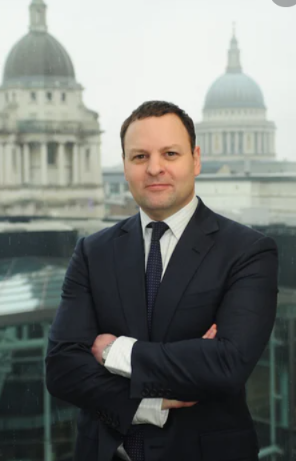
As LawFuel reported on September 22 Quinn Emanuel has deployed Richard East, the founding and senior partner of its London office, to reinforce its team working on the case.
East joins fellow Quinn Emanuel partner Justin Michaelson in the litigation following the firm’s strategic partnership with Pogust Goodhead.
The competing group, involving Bailey Glasser International and Hausfeld, has the support of the claimant committee seeking to change legal representation.
An important High Court hearing concerning the representation dispute is scheduled for October 5 and 6.
Bailey Glasser said this month that Goodhead had joined the firm and UK litigation boutique Hausfeld are also reported to be acting on the lawsuit. Litigation funder NorthWall Capital, whichalso invested in the litigation with Gramercy, is providing financing for the rival legal team, according to a Financial Times report.
The litigation funding question
There is another issue behind the fight over the Mariana litigation: money, and considerable amounts of it.
The Financial Times reported in September that litigation funder Gramercy had urged Tom Goodhead to settle the case following an approximately $1.4 billion offer from BHP and Vale.
Goodhead reportedly considered the offer inadequate. Gramercy subsequently supported his removal from the firm’s leadership.
Gramercy has alleged financial misconduct by Goodhead, which he denies. The competing legal teams have also secured backing from different litigation funders.
Although third-party litigation funding allows claimants to pursue expensive proceedings they might otherwise be unable to afford,the Mariana case illustrates the tensions that can arise when lawyers, funders and clients disagree over litigation strategy, settlement or representation.
The crucial distinction is between a funder’s legitimate financial interests and the lawyer’s professional obligations to the client.
Pogust Goodhead has previously rejected suggestions that its funders direct its legal strategy, maintaining that the firm remains independent.
Who owns a £36bn lawsuit?
Perhaps the most consequential question is not what Pogust Goodhead calls itself next, but who has the authority to determine the future of litigation involving hundreds of thousands of individual clients.
The claimant committee argues for a change of representation. Pogust Goodhead maintains that the committee cannot override individual retainers and its former chief executive is now involved with the rival legal team, while its other co-founder has publicly challenged its conduct.
Meanwhile, BHP continues to contest aspects of the underlying litigation, and the victims of the Mariana disaster are still awaiting final resolution of their claims.
The dispute has become a test of the relationship between litigation funders, law firms and the clients whose claims ultimately give these enormous proceedings their value.
Changing the firm’s name may be relatively straightforward but a bunch of other questions around the litigation and the lawyers are considerably less straightforward.