The Oligarch Lost Under California’s Anti-SLAPP Law. So He Came Here
Key Points:
>>A SLAPP is not a case you lose, but one that nobody ever gets to win. The point is the legal process rather than the merit of the case – the letter, the interlocutory application, the costs order, the settlement.
>>New Zealand has no anti-SLAPP law, and the Defamation Act 1992 is substantively unchanged since it was passed. Damage is presumed, the burden sits with the defendant, the multiple publication rule means anything readable here is published here, and the only real filter is a strike-out application the defendant has to fund.
>>Mark Hanna’s new study screened 218 reported judgments from 2014 to 2024 and found four likely SLAPPs. Three had foreign plaintiffs with thin local connections. Three targeted citizen journalists or small publishers. All four were defamation claims.
>>LawFuel is ‘Claim B’. A Russian businessman who had lost an anti-SLAPP ruling in California came here instead, obtained pre-commencement discovery of our sources, and extracted an apology, a gagging undertaking and costs. He never filed a defamation claim at all.
Disclosure: LawFuel is the publisher discussed below. As publisher I was the defendant.
Mark Hanna, Senior Lecturer in Private Law at Canterbury, (pictured below) has published the first proper socio-legal study of strategic lawsuits against public participation in New Zealand, in the Journal of Media Law in May. He screened 218 reported judgments from 2014 to 2024, adding interviews, official records and pre-action correspondence.
Four survived as more likely than not to display SLAPP characteristics. Under two per cent, which sounds reassuring until you read them. Three had foreign plaintiffs with tenuous local connections. Three targeted citizen journalists or small publishers, like LawFuel.

Hanna anonymised all four, partly because one carries a live non-publication order, partly because New Zealand gives academics no statutory protection when they write about people who sue.
LawFuel is ‘Claim B’.
What IS a SLAPP And Why Is New Zealand Exposed?
The acronym comes from two University of Denver academics who noticed in the late 1980s that a particular kind of civil claim kept turning up: one filed not to win, but to convert a political argument into a private tort and bankrupt the other side on the way through. Strategic lawsuits against public participation.
The modern formulation is broader and blunter. Powerful people using the cost, delay and sheer psychological grind of litigation to make criticism stop.
The tell is not that the claim is weak. Plenty are perfectly arguable. The tell is that the plaintiff has no evident interest in a trial, and every interest in the year of expensive procedure that precedes one.
Much of the common law world has decided this is a problem. Ontario legislated in 2015. The EU adopted an Anti-SLAPP Directive in 2024. England and Wales brought targeted provisions in the Economic Crime and Corporate Transparency Act 2023 into force in June 2025, on top of a serious harm threshold and a jurisdictional bar against libel tourism that have been in place since 2013.
New Zealand has done none of it. Our Defamation Act turns thirty-four next year and remains, in substance, the Act that was passed. Damage is presumed. Truth is the defendant’s burden. The multiple publication rule means every click counts as a fresh publication, which is a gift to anyone shopping for a forum.
Section 45 deems a defamation proceeding vexatious where the plaintiff has no intention of taking it to trial, which sounds useful until you notice it does nothing at all about a plaintiff who never files, and says nothing about pre-action demands, where most of the damage is done. As Ursula Cheer has observed, improper purpose remains extremely difficult to establish at the point where establishing it would help.
Hanna’s paper refers to the threatened litigation tactice as being nothing new in New Zeland, referencing Nicky Hager’s first-hand account of defamation being used as a political weapon in Crosby v Hager in 2009. And Sir Bob Jones sued a filmmaker over a petition to strip his knighthood in 2018, seeking a declaration and solicitor-client costs, then discontinued in 2020 and paid costs.
What Happened in Grishin?

From April 2020 LawFuel reported on Russian businessman Sergey Grishin (above) and his Californian litigation, using court documents, international coverage and people connected to the proceedings. The articles did not identify those women as sources, although one was the author of the offending articles and a friend of Grishin’s former wife. Anna Fedoseeva.
Grishin had already sued the ex-wife’s friend for defamation over Facebook posts alleging that he had stalked, harassed, threatened and terrorised the women. Hanna records that a California District Court struck that claim out under the state’s anti-SLAPP statute, noting the women had obtained a restraining order, finding Grishin a public figure on account of his online activity, and holding that he had not established actual malice.
The federal docket is consistent: an anti-SLAPP special motion to strike, judgment in 2020, a Ninth Circuit appeal voluntarily dismissed that December, and a fee application by the defendant immediately afterwards.
Having lost in a jurisdiction with anti-SLAPP protections, he came to one without any.
The letter to myself from Simpson Grierson arrived in late 2020 with requests to remove everything, retract, apologise in terms he approved, delist from search, contribute to Grishin’s costs, identify everyone involved in publication. It named the suspicion that the two women were sources.
I denied liability, then took the articles down as the pressure did what pressure does to a one-person operation. The demands continued, having shifted from take it down to tell us who told you. Section 68 of the Evidence Act was invoked.
On 18 December 2020, with the articles long gone, Grishin applied for pre-commencement discovery under rule 8.20, from California, where he stayed. The schedule reached past the publisher and into correspondence with the two women, their American attorneys, a Russian lawyer and a PR agency.
What the Court Did
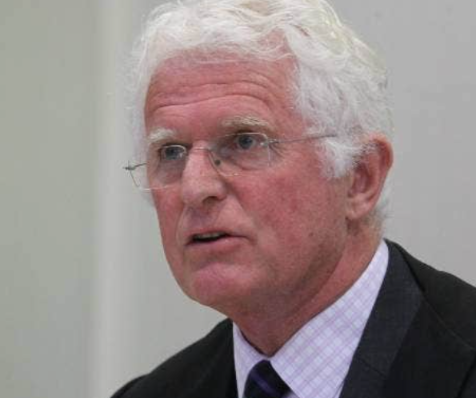
Gendall J (pictured above) granted it. Grishin v Bowie [2021] NZHC 1204, with myself as respondent appearing in person against senior counsel, Willie Akel and Simpson Grierson partner Jania Baigent .
He found an arguable claim, found it impracticable to plead without knowing who stood behind the bylines of the offending articles, and rejected the section 68 privilege because no sworn evidence of confidentiality had been filed. Costs orders followed. When I sought to have them reserved, that was dismissed as entirely lacking merit, with the observation that the exercise was simply about determining who was involved in a chain of publication and had nothing to do with protection of sources as commonly understood.
Then it ended. Not at trial, but in settlement with an apology displayed for four months, an undertaking not to republish, $10,000 in costs, and an agreement to cease all contact with the two women.
No defamation proceeding was ever filed. No claim was brought against the sources once disclosed. Grishin later died in Russia in circumstances that were never clear, although it did not involve a balcony fall. Every objective the original letter demanded was achieved, and not one allegation was ever tested. That is Hanna’s thesis in a sentence – The merits of Grishin’s claims were not defeated but were bypassed.
What the court Did Not Do
Four things were not done by Gendall J, and each has an authority behind it, which is what separates a criticism from a complaint.
It never asked what the discovery was for.
The judgment’s entire abuse analysis is that this was not fishing and not a vendetta. Hanna’s observation is that ruling out one improper motive is not the same as considering the others, such as intimidating sources, exhausting a small publisher, or extracting compliance without ever going near a courtroom.
The authorities, such as Ashworth Hospital Authority v MGN , Financial Times v Interbrew, Rugby Football Union v Consolidated Information Services ask for considerably more. The UK Supreme Court in said the essential purpose of the remedy is to do justice, but Hanna’s paper indicates that one of that reasoning appears anywhere in the judgment of Gendall J. Rule 8.20(4) also requires the court to be satisfied the order is necessary at the time it is made. Necessity is not examined, with the reasoning proceeding instead from the general desirability of a level playing field, which is an argument for discovery in every case and therefore an argument for it in none.
It never asked whether disclosure was needed to plead.
The court had found the intended claim genuinely arguable. New Zealand’s pleading threshold in defamation is famously low. Hetherington Ltd v Carpenter holds that impossible or impracticable means an inability to plead in accordance with the rules, and that pre-commencement discovery must be limited to what is required to plead the intended claim properly. What was left that required identifying two women in California and their lawyers?
It stopped at the first stage of section 68 and never reached the second.
Section 68(1) says a journalist cannot be compelled to disclose an informant. Section 68(2) permits override only where the public interest in disclosure outweighs both the likely harm to the informant and the public interest in the media’s access to sources.
Counsel argued that writers under assumed names, used to avoid reference to the writer who had sustained harassment issues from Grishin, are not informants within section 68 at all. The Judge accepted it in a sentence.
The byline issue
One byline, ‘LA Correspondent’ was author, source or both was the fact the discovery existed to establish. The court adopted the applicant’s characterisation of an unknown person used in the by-lines in order to defeat the privilege protecting that person, but then ordered disclosure of who they were.
Hanna notes that on this logic, any publisher not attaching a named human to every piece of copy has put its whole chain of publication outside section 68.
Having found the threshold unmet for want of an affidavit, the court never conducted the balancing exercise at all. Hanna notes that there is no weighing of harm to the two women, no weighing of the public interest in newsgathering, and no reference to section 14 of the Bill of Rights Act relating to freedom of expression anywhere in the judgment.
Gendall J followed Slater v Blomfield, which puts the onus on the journalist. Hanna argues that line misreads the scheme: when the Law Commission proposed the reform it said explicitly that a privilege placing the onus on the party seeking disclosure was preferable to a general discretion. Police v Campbell, although not a defamation case but rather one of protecting journalist sources, requires the courts to start from the presumption of protection. MediaWorks TV v Staples requires an applicant to articulate the public interest in disclosure first. That conflict in the cases is why Hanna’s proposed fix is to codify the presumption rather than wait for a court to resolve it.
The fact is that an informant’s identity cannot be un-disclosed. Deciding the question by pleading default is deciding it permanently.
The Judgment touched Jameel and let go.
The court’s consideration of the Jameel principle, based on Jameel v Dow Jones is a rule allowing courts to strike out a defamation claim as an abuse of process if the publication caused negligible harm, reached very few people, or would yield only nominal damages ran to one line in Gendall’s judment, suggesting more than minor harm which subjected myself to local jursidiction, notwithstanding that it was clearly Grishin’s international reputation at issue.
Hanna notes that Grishin was virtually unknown here and had no business interests here but the jurisdictional hook was that the I lived in New Zealand and that LawFuel could be read here. The site also has a sizeable audience of US lawyers. Meanwhile the correspondence ran the striking argument that the editor would have to prove Grishin lacked a New Zealand reputation, while simultaneously maintaining that the Californian proceedings were of no public interest to New Zealanders.
Asserting jurisdiction on publication here while denying any public interest in the substance here is a paradox, and it went unexamined. The UK Supreme Court in Mueen-Uddin has since made the proper question clear, which is whether the claim genuinely serve the legitimate purpose of protecting reputation, and does that interest carry enough weight to justify interfering with free expression?
The Gender Issue

Hanna is blunt about the gender question as the allegations were of domestic abuse, harassment and cyberstalking. The two women had a restraining order against Grishin. The order handed their identities to the man they had accused. The court did not consider the harm to them, the risk of re-traumatisation, or the effect on future disclosures of gender-based violence.
Hanna’s paper draws on warnings from Ursula Cheer (pictured) warning that courts must be alive to the special issues in defamation cases with a gender dimension, and on Rebecca Moosavian and Peter Coe’s argument that these cases are a neglected category of SLAPPs. Of Hanna’s four case studies, three concerned economic crime. The LawFuel claim alone was about gender-based harm.
The uncomfortable qualification, from our side of the file, is that the court was never properly asked the ‘gender question’.
A Moscow lawyer’s declaration regarding the threat to the women was filed and rejected. Nothing else framed the risk to those women in evidence.
Hanna noted that in the same judgment, the Judge observed that the sting of the articles simply cannot be justified nor regarded as expressions of opinion.
That observation was said on an interlocutory application, on the papers, against a litigant in person, before any statement of claim had been filed, and without any trial of justification. Truth was the defence signalled. The same judgment says elsewhere that the probability of the claim succeeding is a matter for trial. Hanna observed that both cannot be true.
What needs fixing
Hanna’s list is short and mostly achievable without new legislation. A jurisdictional threshold along the lines of section 9 of the Defamation Act 2013 in England and Wales, putting the burden on claimants to show this is clearly the most appropriate forum.
Codified source protection, with the presumption and the applicant’s onus written into section 68, and rule 8.20 orders confined to cases where pleadings genuinely cannot be framed without disclosure. And early disposal that actually happens, since across all four case studies not one defendant applied for dismissal under rule 15.1.
A full anti-SLAPP statute would be the comprehensive answer. Hanna leaves its design for another day but notes that it is not the truth that will necessary beat you, because it will often not be examined. It is the other factors – in our case, the bylines, the non-filed affidavit, the costs orders.
Being slapped by costs orders can be the ultimate SLAPP in these actions. We know. We endured the process.