
Training Tomorrow’s Lawyers to Code, Counsel, and Not Hallucinate
Sonia Hickey, LawFuel contributor
Back in 2022, US powerhouse Orrick decided its UK company setup process was about as efficient as a horse-drawn carriage in rush hour. So, they sicced a squad of lawyers on it, birthing a snazzy digital form via Orrick Labs, their in-house tech wizardry arm.
But here’s the surrprise – they roped in two fresh-faced associates to rub elbows with the geeks, all in the name of molding the “lawyer of the future” into a triple-threat: part esquire, part biz whisperer, part code cracker.

“We envision the future lawyer as this unholy trifecta,” says Kate Orr, (pictured) Orrick’s Washington-based innovation guru. Last year, they gave the process another glow-up, just one of many tech gigs tossed to associates like hot potatoes. “It’s a mash-up of legal smarts, user-friendly flair, and good old process tinkering,” Orr adds, proving that lawyers and techies can play nice without anyone getting sued.
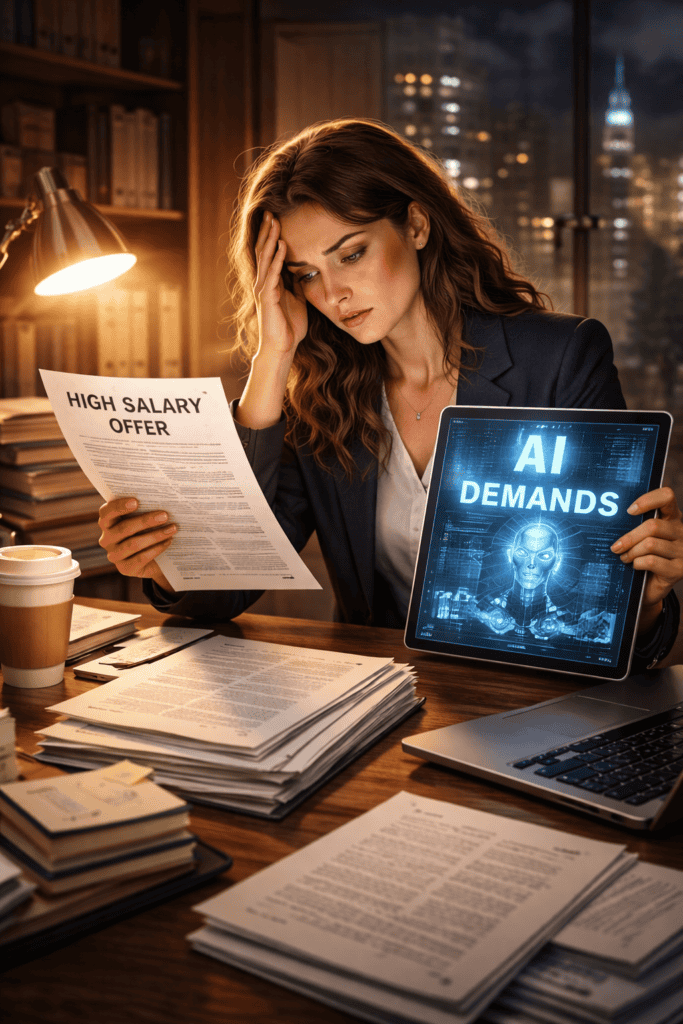
Fast-forward to today, where generative AI is crashing the legal career party in a major way. Law firms and schools are scrambling to tech-up the next gen, because let’s face it, ignoring AI is like pretending email never happened.
Wrangling Legal Talent
Orrick’s not just navel-gazing; they’re peeking into law school kitchens too. “We snoop on how they’re prepping kids so we know what we’re getting,” says Danielle Van Wert, Orrick’s talent wrangler. They even team up with outfits like Berkeley’s Law and Tech Center for boot camps that show students the gritty side of tech-infused lawyering.
A fresh ABA poll of 29 US law schools shows eighty-three percent are dishing out “clinics” for AI dabbling – because nothing says “future-proof” like hands-on hallucination hunting.
Jeff Ward, Duke Law’s tech center honcho and Orrick’s resident scholar, isn’t ripping up his syllabus every TikTok cycle, but he’s tweaking it relentlessly. Core skills like critical thinking and ethics? Still king. But now, apply them to the AI Wild West, where lawyers must “responsibly tango with machines.”
Ward’s golden rule is not to chase every shiny tool but rather, build a brain framework to vet them through legal and moral X-rays. “Human smarts and bot brains? They’re basically BFFs now.”
Linklaters’ AI Camp
Over at Linklaters, they’re importing academics to school their troops on their homegrown AI chatbot, Laila. They offer a mandatory firm-wide AI boot camp and elite squad training from King’s College London’s Dickson Poon School.

George Casey, (pictured) Linklaters’ corporate bigwig and Penn Carey Law adjunct, knows the drill from both sides.
“Grasping large language models? Table stakes for newbies,” he says. But hold the champagne because junior lawyers won’t be buried in doc mountains anymore. They’ll babysit AI doing the grunt work. “Interact, analyze, and judge like your career depends on it, because it does.”
This year, he’s demoing ChatGPT o3 on securities law to students. Spoiler: It’s slick, but no sub for classroom grind. “AI sharpens you, but only if you spot its blind spots first.”
At Dickson Poon, Dean Dan Hunter’s crew is dissecting AI’s dark side: hallucinations, biases, regs, power guzzling, and boot-licking sycophancy.
“Students fret AI will eat jobs? Tough luck, that’s not in your control,” Hunter says. “But mastering these beasts? That’s your ticket to a bulletproof persona.” Expect teams blending old-school law with tech wizardry, especially in high-stakes transactional turf ripe for disruption.
Megan Carpenter, dean at UNH Franklin Pierce Law, says tech hype demands amping up those squishy “soft skills”, spotting BS, adapting on the fly, grilling analytically, schmoozing, and building alliances.
“We’re not just cramming knowledge; we’re forging creative problem-solvers,” she says. “Those evergreen talents? They’ll shine brighter in our gadget-glutted future.”