
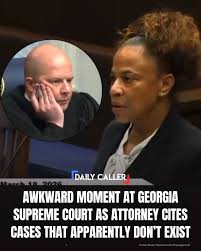
A Georgia prosecutor is facing serious professional scrutiny after a court filing attributed to her office contained fabricated case citations, a hallmark of AI-generated “hallucinations”, in what has become one of the most-watched courtroom moments of the year.
Deborah Leslie of the Clayton County District Attorney’s Office was publicly challenged during oral argument before the Georgia Supreme Court by Chief Justice Nels Peterson. The Chief Justice identified at least five citations to nonexistent cases, five citations to cases that didn’t support the propositions cited, and three fabricated quotations — all appearing in a prosecution-drafted order denying a motion for new trial.
The exchange, captured on camera and posted to X by legal journalist Anna Bower, has now been viewed more than five million times.

When pressed, Leslie acknowledged drafting the proposed order but suggested it had been revised by the trial judge, Judge Jewel Scott, before issuance. Chief Justice Peterson shut that down quickly: the nonexistent citations appeared in Leslie’s original brief, before any judicial involvement.
A subsequent Court TV comparison of the 37-page prosecution draft and the 33-page final order confirmed the citations matched. Judge Scott is not entirely in the clear either, having apparently adopted the prosecution’s citations without independent verification.
AI tools are increasingly useful but they are increasingly detectable when they fail. Lawyers who attempt to deflect or deny AI-related errors do themselves no favours.