By Sebastian Niles is a former M&A lawyer and current President and Chief Legal Officer at Salesforce
Law is a noble profession, and it’s a business. Today, AI is no longer a future capability — it’s the enabler and catalyst for a fundamental shift in how law and professional services firms create value, drive top-line growth, manage risks, and earn client trust.
Best-in-class legal advisory and execution has always lived at the intersection of professional duty and commercial realities. As we enter this new era, the immense value firms will unlock through agentic transformation should translate into better outcomes, deeper insights, and superior service for clients, resulting in growth for the firm.
The gains must also of course be shared with clients through savings, cost-efficiencies, and new business models; with associates and partners through expanded fluency, capacity, and development; and with communities through expanded pro bono impact, strengthening the profession’s public standing.
We must be candid: Companies have become more sophisticated in how they purchase — and evaluate — legal services than ever before. While many law firms continue to rely on traditional models, we’re watching Clayton Christensen’s “The Innovator’s Dilemma” play out in real-time within the legal sector, just as it is for the broader professional service firm industry.
Firms that embrace transformation are responding to this new era with digital sophistication, competing on outcomes and setting a new global standard. Meanwhile, professional service advisory firms worldwide have set their sights on legal services as ripe for reimagination.
The era of the AI pilot is over. Heightened effectiveness and efficiency gains from AI, shared with clients, are no longer optional nice-to-haves; they’re prerequisites for staying competitive and seizing revenue opportunities. The gap is widening, and the time to bridge it is now.
At Salesforce, we’re building an AI-native, trust-first, agentic legal function that holds the promise of defining the best of human-AI collaboration. That transformation is fundamentally changing how we operate, how we govern technology, and how we partner with outside counsel. This journey has made one thing clear: The firms that thrive in this next era — across geographies and across practice areas — won’t simply use AI; they’ll lead with it swiftly, responsibly, and fully to realize the promise of agentic AI and serve clients in a whole new way.
Three Realities for the Modern Legal Firm
To lead in this landscape, there are three realities every firm leader must understand:
- Competition is intensifying: The barrier to entry for high-level legal work is shifting. Firms that don’t integrate best-in-class commercial solutions and AI will find themselves outpaced by leaner, more agile competitors.
- Those that lead with AI will overcome the innovator’s dilemma, finding a unique opportunity to grow revenue and capture market share from legacy players who refuse to adapt. In doing so, they will also capture the best talent, positioning themselves as the definitive employer of choice for an AI-native generation.
- Client expectations will reshape the market: Clients are no longer asking whether firms use AI. Rather, they’re expecting to see the benefits of that transformation passed directly to them. They expect more for less but are not simply seeking lower costs – they want more insight, more speed, and more value for every dollar of their budget.
- And law firms, which operate at the center of data, ethics, and risk, have outsized influence over the structure and deployment of trusted AI across all industries. Some clients, like Salesforce, are even creating agentic tools to improve the law firm’s experience when working with clients.
- For example, our new LCAi Outside Counsel Support Agent empowers law firms by delivering scalable, consistent support and smoothing out the legal e-billing process. It cuts down on administrative friction and keeps our relationships with firms strong.
- Of course, this trust is fragile, as evidenced by the near-daily reports of judicial sanctions against law firms or partners who commit the cardinal and avoidable sin of inventing citations and hallucinating precedents through lack of rigor, guardrails, and human oversight.
- Unified client intelligence is at the heart of legal strategy: To take new ground and unlock significant revenue expansion through deeper cross-practice integration, law firms must move beyond point solutions to establish a single source of unified client intelligence. By becoming “client zero” — expertly deploying a foundation for using AI in-house — firms can create a strategic client relationship vantage point, grounding their client strategy and service in collaboration, data, and operational AI fluency. Tools like Slackbot make this possible in practice — giving legal teams a single conversational layer to query client intelligence, coordinate across practice areas, and act on insights instantly, all within the tools they already use every day.
Indeed, as we have seen in our own Customer Zero journey, the firms that master AI internally will also be the firms clients trust to govern AI externally.
The New Mandate: Trusted Agentics as a Competitive Advantage
Agentic AI introduces a new reality: Systems that act, decide, and execute independently at scale require more than models. They require four interconnected systems — engagement, agency, work, and context— all working together to create a truly Agentic Enterprise.
To operate a truly agentic law firm, intelligence must be embedded within four critical layers:
- System of Engagement: The secure, unified interfaces where partners, associates, and clients collaborate seamlessly. This is the connective tissue that replaces fragmented touchpoints with real-time, cross-channel communication.
- System of Agency: In the legal sector, intelligence without compliance is a liability. You need AI behavior that is understood, legally and ethically sound, and defensible.
- This requires an integrated ecosystem where agents (1) augment how lawyers uphold law as a noble profession, (2) reimagine how legal services are delivered as a business and (3) scale firm capacity to deliver elevated standards of zealous advocacy and execution, all under a strict framework of human and agent governance.
- System of Work: A trusted, enterprise-grade platform suitable for the rigorous demands of professional services. It must seamlessly integrate the applications your firm relies on daily and understand your workflows.
- System of Context: Without unified client intelligence, your firm operates in a vacuum. To deliver strategic counsel, firms must have a 360-degree view of the client’s business and matter history. This context must be grounded in your firm’s secure system of record, ensuring every action is informed by accurate data, protected by strict confidentiality guardrails, and architected to preserve attorney-client privilege and work-product protections.
These technologies do more than automate tasks in the practice of law; they unlock institutional intelligence. The most competitive firms will use integrated AI, Data 360, and application platforms to connect the dots and unlock insights firmwide.
But without trust, these systems fail. With trust, they become a strategic competitive advantage. In this new era, we’re advancing trusted agentics — the discipline of designing intelligent systems that act with integrity, transparency, and aligned human purpose. It’s an agentic trust framework for governance, ethical assurance, and legal resilience in the age of intelligent systems that provides the flexibility to navigate a complex and uncertain terrain.
For law firms, this is the competitive advantage — allowing firms to expand offerings, provide deeper strategic value, and serve clients more efficiently than ever before.
The Eleventh Hour: When Trust Becomes the Closer
We know the pressure you face, because we are in the trenches with you. Recently, at the eleventh hour of a major customer engagement, we faced a list of new demands. The customer asked the hard questions: How do we ensure auditable agent behavior? How do we defend regulated workflows? Where are the traceable decision paths?
They didn’t just need promises; they needed assurance and protection. By meeting these concerns head-on with our trusted AI foundation and Agentic Enterprise architecture, we didn’t just mitigate risk — we unlocked a significant revenue and growth opportunity by delivering customer success.
We led with trust and a willingness to engage and address their concerns head-on, transforming a potential deal-blocker into a catalyst for growth and learning. Such a framework isn’t exclusive to that one engagement. It’s the universal playbook for winning and scaling business in every industry where compliance and trust are nonnegotiable.

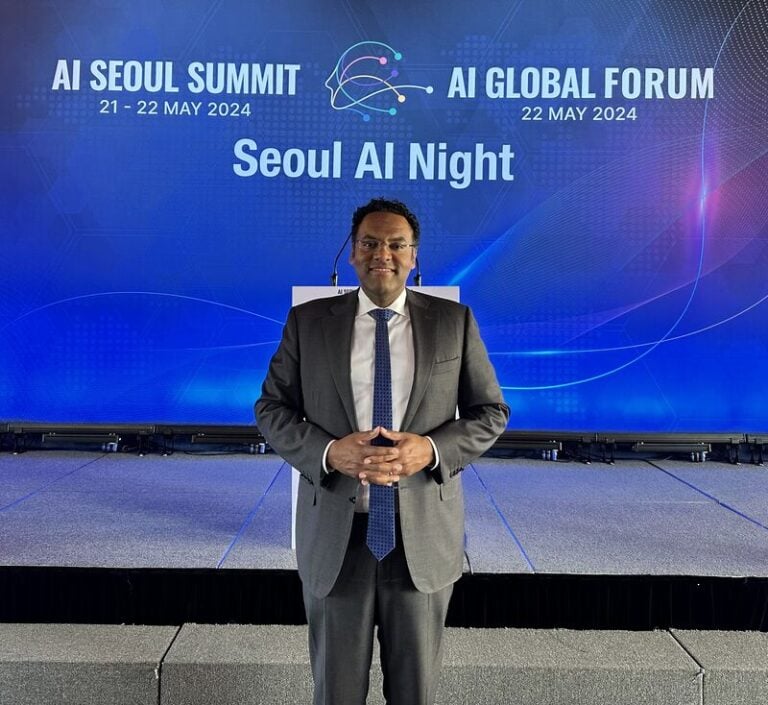
Sabastian Niles is the President and Chief Legal Officer at Salesforce, based in San Francisco, overseeing global legal affairs, government affairs, and responsible AI. He is a former Wachtell Lipton M&A partner.