
Former Bell Gully Chair Roger Partridge has come out swinging again over the ‘stealth’ activities of the Supreme Court as they steal law-making power in a ‘coup’ that has lawyers either ignorant of what is occurring, or deciding that silence is the best option.
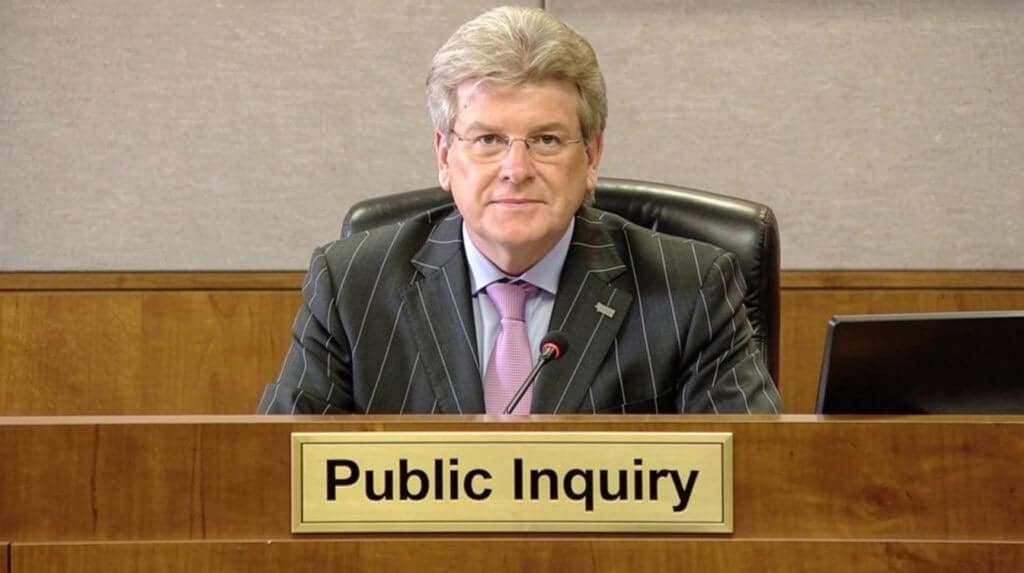
Writing in his Substack column Partridge, (pictured) who a former litigator with Bell Gully and current Chair and Senior Fellow at The New Zealand Initiative, as well as being an Honorary Fellow of the Legal Research Foundation, is also a former New Zealand Law Society Council member and a strong opponent of moves he sees as threatening liberal democracy in New Zealand.
“Most politicians are not experts in constitutional doctrine. They take cues from those who are. When the profession remains silent, that silence is read as assent – or at least as evidence that the problem is not serious enough to demand attention.“ Roger Partridge
He claims that New Zealand’s constitutional order is quietly unravelling – not through dramatic rupture, but through incremental judicial overreach that few inside the profession will name aloud.

He wrote previouisly about the issue in the widely read report Who Makes the Law? Reining in the Supreme Court with a foreword by Oxford’s Richard Ekins KC (pictured)
The Supreme Court has abandoned traditional restraint. It now remakes the common law to reflect judges’ own perceptions of “changing social values” (the “revolutionary” shift in Ellis v R [2022], per Emeritus Professor Peter Watts KC).
It stretches or ignores clear parliamentary text in statutory interpretation, including rewriting sentencing under the Bill of Rights guise (Fitzgerald v R [2021]), reading tikanga back into statutes Parliament deliberately excluded it from (Re Edwards [2024]), turning charities registration into a judicial values test (Family First [2022]), extending “beneficial ownership” to the dead (Nikora v Kruger [2024]), and – most recently – imposing mandatory climate considerations on ministers where the statute is silent (Climate Clinic Aotearoa [2025]).
Witness the gang-patch forfeiture case where “forfeited to the Crown” became tikanga-discretionary and the property was returned. – Roger Partridge
Aggressive Judicial Review
Aggressive judicial review completes the picture. The result: a slow transfer of legislative power from elected, accountable Parliament to unelected, irremovable judges.
Practising lawyers feel the fallout daily. Lower courts and tribunals descend into uncertainty. Witness the gang-patch forfeiture case where “forfeited to the Crown” became tikanga-discretionary and the property was returned.
“. . the Supreme Court’s approach to statutory interpretation stretches or ignores clear legislative commands. In Fitzgerald v R [2021] NZSC 131, the Court rewrote sentencing law under the guise of the New Zealand Bill of Rights Act. In Re Edwards [2024] NZSC 164, it read tikanga back into a statutory test from which Parliament had conspicuously excluded it.” Roger Partridge
Statutes no longer mean what they say; client advice, contracts, investments and planning lose all predictability. The rule of law frays, and with it the certainty that has sustained New Zealand’s prosperity and freedom.
The Silent Profession
Yet the profession remains largely silent. In a small, repeat-player jurisdiction, barristers appear before the same judges constantly. Silk, judicial office and public appointments turn on collegiality, temperament and reputation.
Speaking out carries asymmetric risk – judges rarely answer criticism, but the critic pays a price in future briefs, briefs and goodwill.
Rule 13.2 permits reasoned critique; the real restraint is cultural deference, not law, he writes.
The Mute Assent
This muteness is read as assent, Partridge writes. Politicians, seldom constitutional experts, take their cue from the bar. Without vocal alarm from those who see the doctrinal shift clearest, parliamentary correction – the targeted reforms to the Senior Courts Act and the long proposed Legislation Act stalls.
Each judicial innovation becomes precedent and precedent hardens into principle; the original settlement fades.
The cost of speaking is modest for those with established careers or retired from active practice. But he writes that the cost of silence is borne by everyone and compounds irreversibly.
He cals on senior practitioners, academics and former judges – in other words anyone no longer captive to the daily calculus of caution – must now say publicly what many acknowledge privately: the balance is tipping, the change matters, and something fundamental is at stake.
For lawyers who values accountable law-making over judicial preference, this is important, if not uncomfortable, reading.