Daniel Kamensky Allegedly Extorted a Rival Bidder to Abandon a Higher Bid and Engaged in Obstruction of Justice by Asking the Rival Bidder to Cover Up the Crime
Audrey Strauss, the Acting United States Attorney for the Southern District of New York, and William F. Sweeney Jr., the Assistant Director-in-Charge of the New York Field Office of the Federal Bureau of Investigation (“FBI”), announced today that DANIEL KAMENSKY, the founder and manager of New York-based hedge fund Marble Ridge Capital (“Marble Ridge”), was charged in a Complaint in Manhattan federal court with securities fraud, wire fraud, extortion, and obstruction of justice. KAMENSKY’s alleged criminal acts occurred in connection with his scheme to pressure a rival bidder to abandon its higher bid for assets in connection with Neiman Marcus’s bankruptcy proceedings so that Marble Ridge could obtain those assets for a lower price. KAMENSKY then attempted to persuade the rival bidder to cover up the scheme. KAMENSKY was arrested today and is expected to be presented before Magistrate Judge James L. Cott this afternoon.
Acting Manhattan U.S. Attorney Audrey Strauss said: “As alleged, Daniel Kamensky disregarded his fiduciary responsibility to unsecured creditors of Neiman Marcus – and broke the law – when he attempted to coerce a competitor to withdraw a higher bid for assets of the bankruptcy estate. As further alleged, acknowledging the illegality of his actions, Kamensky then attempted to obstruct an investigation by trying to persuade the competitor to change his account of the coercion, telling the competitor that otherwise ‘this is going to the U.S. Attorney’s Office.’ As today’s charges show, Kamensky was right about that.”
FBI Assistant Director-in-Charge William F. Sweeney said: “As alleged, Kamensky intentionally violated his fiduciary duty as a member of the Official Committee of Unsecured Creditors in the Neiman Marcus bankruptcy by preventing the sale of securities to an investment bank so he could acquire the same securities at a significantly lower price for his own fund. In a conversation with an employee of the investment bank, Kamensky went as far as to say, ‘Maybe I should go to jail.’ Today, we’ve removed the ‘maybe,’ and forced him to answer for his conduct.”
As alleged in the Complaint unsealed today in Manhattan federal court:[1]
DANIEL KAMENSKY was the principal of Marble Ridge, a hedge fund with assets under management of more than $1 billion that invested in securities in distressed situations, including bankruptcies. Prior to opening Marble Ridge, KAMENSKY worked for many years as a bankruptcy attorney at a well-known international law firm, and as a distressed debt investor at prominent financial institutions.
The Neiman Marcus Bankruptcy
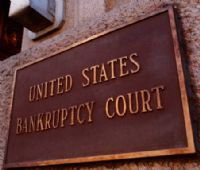
Neiman Marcus, an American chain of luxury department stores with stores located across the United States, filed for Chapter 11 bankruptcy protection in the United States Bankruptcy Court for the Southern District of Texas (the “Bankruptcy Court”) in May 2020. At the outset of the bankruptcy, Marble Ridge, through KAMENSKY, applied to be on the Official Committee of Unsecured Creditors (the “Committee”) and was thereafter appointed to be a member of the Committee. As a member of the Committee, KAMENSKY had a fiduciary duty to represent the interests of all unsecured creditors as a group.
During the bankruptcy process, the Committee had negotiated with the owners of Neiman Marcus to obtain certain securities, known as MyTheresa Series B Shares (the “MYT Securities”), and ultimately, the Committee was successful in coming to a settlement to obtain 140 million shares of MYT Securities for the benefit of certain unsecured creditors of the bankruptcy estate. In July 2020, KAMENSKY was negotiating with the Committee for Marble Ridge to offer 20 cents per share to purchase MYT Securities from any unsecured creditor who preferred to receive cash, rather than MYT Securities, as part of that settlement.
KAMENSKY’s Fraudulent Scheme
On July 31, 2020, KAMENSKY learned that a diversified financial services company headquartered in New York, New York (the “Investment Bank”) had informed the Committee that it was interested in bidding a price between 30 and 40 cents per share – substantially higher than KAMENSKY’s bid – to purchase the MYT Securities from any unsecured creditor who was interested in receiving cash.
That afternoon, KAMENSKY sent messages to a senior trader at the Investment Bank (“IB Employee-1”) telling him not to place a bid, and followed those messages up with a phone call with IB Employee-1 and a senior analyst of the Investment Bank (“IB Employee-2,” and collectively the “Employees”). During that call, KAMENSKY asserted that Marble Ridge should have the exclusive right to purchase MYT Securities, and threatened to use his official role as co-chair of the Committee to prevent the Investment Bank from acquiring the MYT Securities. KAMENSKY also stated that Marble Ridge had been a client of the Investment Bank in the past but that if the Investment Bank moved forward with its bid, then Marble Ridge would cease doing business with the Investment Bank.
The Investment Bank thereafter decided to not make a bid to purchase MYT Securities, and informed the legal adviser to the Committee of its decision. The Investment Bank further told the legal adviser they made that decision because KAMENSKY – a client of the Investment Bank – had asked them not to.
Advisers to the Committee informed counsel for Marble Ridge of their call with the Employees, and after speaking with KAMENSKY, counsel for Marble Ridge falsely informed the advisers that KAMENSKY had not asked the Employees not to bid, but instead had told them to place a bid only if they were serious. Later that evening, KAMENSKY contacted IB Employee-1 and attempted to influence what IB Employee-1 would tell others, including the Committee and law enforcement, about KAMENSKY’s attempt to block the Investment Bank’s bid for the MYT Securities. KAMENSKY said at the outset of the call, in substance, “this conversation never happened.” During the call, KAMENSKY asked IB Employee-1 to falsely say that IB Employee-1 had been mistaken and that KAMENSKY had actually suggested that the Investment Bank bid only if it were serious, and made comments including the following: “Do you understand…I can go to jail?” “I pray you tell them that it was a huge misunderstanding, okay, and I’m going to invite you to bid and be part of the process.” “But I’m telling you…this is going to the U.S. Attorney’s Office. This is going to go to the court.” “[I]f you’re going to continue to tell them what you just told me, I’m going to jail, okay? Because they’re going to say that I abused my position as a fiduciary, which I probably did, right? Maybe I should go to jail. But I’m asking you not to put me in jail.”
During a subsequent interview with the Office of the United States Trustee, which was conducted under oath and in the presence of counsel, KAMENSKY stated that his calls to IB Employee-1 were a “terrible mistake” and “profound errors in lapses of judgment.”
After this series of events, Marble Ridge resigned from the Committee and has advised its investors that it intended to begin winding down operations and returning investor capital.
* * *
KAMENSKY, 47, of Roslyn, New York, is charged with one count of fraud in the offer or sale of securities, which carries a maximum sentence of five years in prison, one count of wire fraud, which carries a maximum sentence of 20 years in prison, one count of extortion and bribery in connection with a bankruptcy, which carries a maximum sentence of five years in prison, and one count of obstruction of justice, which carries a maximum sentence of 20 years in prison. The maximum potential sentences in this case are prescribed by Congress and are provided here for informational purposes only, as any sentencing of the defendant will be determined by the judge.
Ms. Strauss praised the work of the FBI. Ms. Strauss further thanked the Office of United States Trustee and the Securities and Exchange Commission for their cooperation and assistance in this investigation. She added that the FBI’s investigation is ongoing.
This case is being handled by the Office’s Securities and Commodities Fraud Task Force. Assistant U.S. Attorneys Richard Cooper and Daniel Tracer are in charge of the prosecution.
The allegations contained in the Complaint are merely accusations, and the defendant is presumed innocent unless and until proven guilty.
____________________________________
[1] As the introductory phrase signifies, the entirety of the text of the Complaint, and the description of the Complaint set forth herein, constitute only allegations, and every fact described should be treated as an allegation.
- Cahill Blinks First -Two Months Later, BigLaw Finally Has a Milbank Bonus Match


- BigLaw Is Hiring Engineers While Cutting Junior Lawyers

- The $20 Million Partner Problem BigLaw Created With Rainmakers Bigger Than Their Firms

- Law Technology – New Chief Legal Officer At Luminance

- The INTERPOL Procedure Most People Do Not Know They Can Use Themselves

20-186