Private Equity And Big Law Moves
Paul Weiss, Quinn Emanuel and Proskauer have reportedly held preliminary conversations about outside capital, providing a key signal that private equity has found the back-office door into American law.
LawFuel has been tracking that door since private equity first began eyeing Big Law and top firms started opening it.
The names are what make this development startling. These are not distressed law firms looking for a lifeline, but are instead among the most profitable partnerships in the world.
The Financial Times reported that all three have had conversations with private-equity groups or advisers about structures that could bring in external investment.
Quinn Emanuel is reported to have spoken with Guggenheim Securities to understand how such a structure might work. White & Case has a group of senior lawyers studying the model. None of them has launched a formal sale process, and that gap between “exploring” and “doing” is the whole story.
So the interesting question is not whether BigLaw partners have suddenly decided they want a leveraged buyout. It is rather which firm decides first that a private-equity-backed management services organisation is worth the governance headache, and on the current evidence that firm is not on the Financial Times list at all.
How an MSO Doges the Ownership Rules?
The MSO works by permitting the lawyers to keep full ownership of the entity that gives legal advice, an investor-backed management services organisation owns everything around it (the technology, billing, marketing, real estate and data), and the firm pays the MSO a fee for those services.
ABA Model Rule 5.4 still bars non-lawyers from owning a law practice, so on paper nobody breaks it. Private equity does not buy the law firm but instead buys everything around the law firm and takes the infrastructure fee in the process of doing it.
The structure is now available and known, the elite law firms know it, and the question that now intrigues the legal market is who uses it first. We set out how the MSO actually works, where it is legally vulnerable, and how the US route compares with the UK ownership rules in our full guide to private equity in law firms.
Who is actually most likely to move first?
The honest answer: not the marquee corporate names. Here is the credible watch-list, and what’s still uncertain about each.
| Firm / group | Why it’s a credible watch | What remains uncertain |
|---|---|---|
| Morgan & Morgan | Hired JPMorgan to explore a minority stake sale that could raise more than $1bn and set up an eventual IPO. The clearest publicly reported US capital-raising process to date. | John Morgan calls it “purely exploratory,” with no timeline, and says the firm doesn’t need the money. |
| McDermott Will & Schulte | First reported in November 2025 as exploring a private equity deal; has kept meeting investors and advisers, with a newly combined platform post-merger. | Still “far from a decision.” No formal process announced. |
| White & Case | Has a group of senior lawyers actively studying the MSO concept. | Studying is not a mandate. No announced process or transaction. |
| Specialist plaintiffs’ firms | Repeatable workflow, huge marketing spend, high-volume claims and heavy back-office operations make the MSO maths far easier to model than a conflicts-heavy global corporate firm. Deals are already happening (see below). | Fee-sharing, litigation-finance-style scrutiny and regulatory compliance remain live. |
| UK regional consolidators | Where PE already works in plain sight: scaled platforms buy regional firms, centralise shared services and bolt on more. | The next target usually isn’t identifiable until the deal is nearly done. |
The best call for the next headline-grabbing US transaction is therefore Morgan & Morgan, not Paul Weiss, Quinn Emanuel or Proskauer. With $2.4bn in annual revenue, a consumer-facing operation built on billboards and contingency fees, and reported IPO logic, it fits the private-equity narrative far more naturally than a lockstep corporate partnership ever could.
And the plaintiffs’ side is not theoretical: Trive Capital has taken a stake in Massumi + Consoli, and Orion Legal has bought into Dudley DeBosier, both using the separated-services model the elite firms are only reading about.
The deal machinery is already humming at volume: Holland & Knight’s MSO team alone closed more than 15 firm transactions in six months, with roughly 100 more in the pipeline, even as legislators in California and Illinois move to tighten the rules on investor influence over legal practices.
For the corporate elite, expect something far less cinematic than “BigLaw sells to PE”: a strategic review, an MSO feasibility team, a carved-out technology or legal-operations vehicle, or a minority investment in a non-legal affiliate. Less dramatic. Much more plausible.
Britain isn’t Waiting for a Workaround

The UK doesn’t need the MSO contortion, because it legalised the outcome years ago. Alternative Business Structures, created by the Legal Services Act 2007, permit non-lawyer ownership and investment subject to regulatory authorisation.
The SRA reports that the share of firms holding an ABS licence rose from 7% in 2016/17 to 13% in 2022/23, and around a third of the personal-injury market’s turnover already runs through ABSs.
Private equity has taken the invitation. Acquira’s research puts PE investment at nearly £1.2bn between 2019 and 2024, including a record £534m in 2024, and deal volume has kept climbing even as headline investment cooled, with Acquira’s tracker logging 15 PE-backed legal transactions by early May 2026.
The buy-and-build playbook is now familiar: centralise infrastructure, acquire specialist or regional firms, sell a larger platform on. The active platforms read like a roll-call: Lawfront (Blixt), Fletchers (Sun European Partners), Express Solicitors (Ufenau Capital Partners), Orwins (Aliter Capital, formerly BBS Law) and Adeptio (Horizon Capital, built on FBC Manby Bowdler).
A note of proportion, though, because the numbers flatter the narrative. Against a UK legal market worth £40bn-plus, even the most generous tally of PE capital is closer to a footnote than a takeover, and PE has pointedly not conquered City law.
It has bypassed the parts that were never really for sale and consolidated the parts that were: scalable, process-driven, regional firms with succession pressure and defensible revenue.
So the UK prediction is unglamorous but reliable: the next deals will be mid-market regional, claimant, employment, private-client, conveyancing and insurance practices, all recurring work, definable processes and a ready acquisition pipeline.
The bolt-ons keep coming. PE-backed Adeptio has already closed its second acquisition in five months, and that is the pattern to watch. Not a Magic Circle buyout. Another bolt-on.
The Bottom Line
Paul Weiss, Quinn Emanuel and Proskauer are not confirmed PE deals. They are reported exploratory conversations about an MSO-style structure, and no US firm has begun a formal sale process.
But the direction of travel is real, and it doesn’t require anyone to sell the partnership. PE doesn’t need to own the law firm, it just needs to own the technology, collections, marketing, finance, data and premises around it, and take the fee.
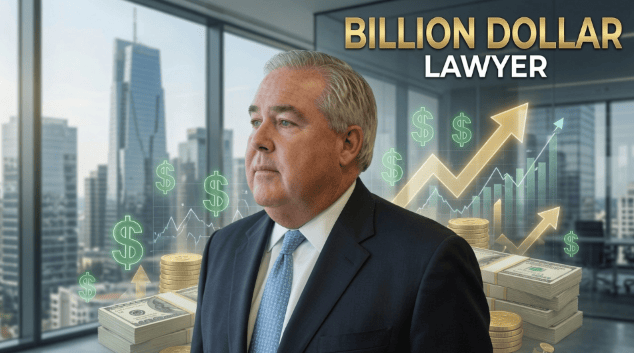
Watch Morgan & Morgan’s John Morgan for the next serious US headline, as we have previously reported. And also watch the UK regional consolidators for the next actual deal involving law firms. And watch the elite corporate names do the least dramatic thing of all: commission the feasibility study, and wait for someone else to go first.
Related LawFuel Coverage: Private Equity and Law Firms

- Private Equity Eyes Big Law And Top Firms Are Opening the Door: the backgrounder on why private capital is circling US partnerships, from Kirkland’s economics to the Arizona ABS route.
- Private Equity MSO Deal Lawyers: Holland & Knight Closing 15+ Law Firm Transactions in Six Months: how fast the US MSO market is actually moving, and the compliance pressure building in California and Illinois.
- America’s Biggest Personal Injury Firm Eyes a Billion-Dollar Private Equity Deal and a Future IPO: the Morgan & Morgan / JPMorgan process in full.
- Private Equity’s Legal Buying Spree Continues With Second Acquisition: the UK consolidator playbook in action, via Adeptio and FBC Manby Bowdler.