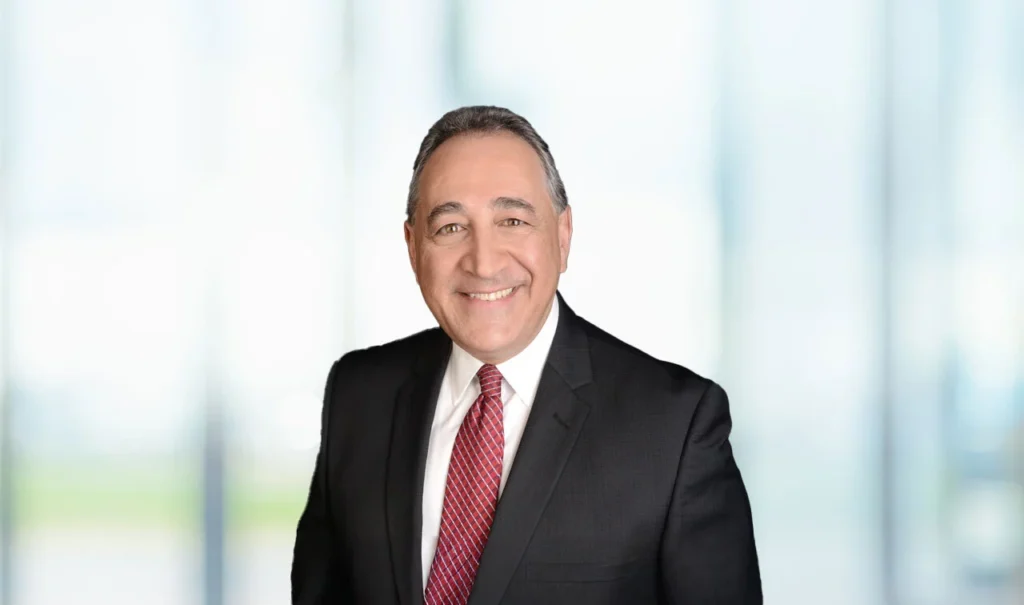
The retired Supreme Court judge would be the second New Zealander on Hong Kong’s overseas bench. Critics say the seat comes with a reputational invoice.
Move over, dairy and manuka honey. New Zealand’s newest export to China is the retired Supreme Court judge, shipped to Hong Kong where demand for respectable common-law names has never been higher, mainly because the British stopped supplying them.
Hong Kong has found that Sir Terence Arnold answered the phone at Thorndon Chambers to decide to take his distinguished judicial and legal career for a final spin in the former colony.
A risky business, albeit a lucrative one, to bookend his career in a move preceeded by former Supreme Court Justice-for-Hire Sir Willie Young who moved
On 16 October, Chief Executive John Lee accepted a recommendation to appoint Sir Terence Arnold, 79, as a non-permanent judge from another common law jurisdiction. Sir Terence is a former Solicitor-General and Supreme Court justice and although the appointment still needs Legislative Council endorsement, that stamp is not exactly a cliffhanger.
If confirmed, Sir Terence joins fellow New Zealander Sir William Young, taking the court’s overseas contingent from five to six.
Not everyone is sending flowers. Newsroom reports that a pro-democracy charity has urged Arnold to “salvage his reputation” by declining the job.
The Young problem
Sir Terence arrives carrying criticism originally aimed at his colleague Sir William, who took his seat in June 2025, just as other overseas judges were heading for the exits.

In February, Human Rights First president Uzra Zeya (pictured) used a New Zealand Herald op-ed to call on Young to stand down. “Sometimes, standing up for what is right means walking away from injustice.”
She also quoted an exiled Hong Kong lawyer, unnamed for fear of reprisals against family: “Young is being used by the authorities to whitewash a repressive, anti-democratic regime. No judge should be proud to be part of that.”
That fire was aimed at Sir William, but Sir Terence is next up for the firing line on this argument.
At 79, Sir Terence Arnold has little left to prove and, critics would say, rather a lot left to lose. His proposed seat on the Hong Kong court is either a final act of judicial public service or an expensive retirement gig, rather like aging rock stars making one world tour too often.
The ones who left
The sharpest critics for these appointments have been former members of the court.
UK Supreme Court president Lord Reed and Lord Hodge withdrew in March 2022. Reed said Supreme Court judges could not keep sitting without “appearing to endorse an administration which has departed from values of political freedom, and freedom of expression”.
Lord Sumption followed in June 2024, alongside Lord Collins.

Writing in the Financial Times, Sumption said Hong Kong was “slowly becoming a totalitarian state”.
Former Australian chief justice Robert French resigned in April 2025, calling the overseas judges’ role “increasingly anachronistic and arguably cosmetic”, while stressing his respect for the integrity of his former colleagues. It was a polite resignation, but a resignation all the same.
The Dubai precedent
Critics point to an awkward bit of the Willlie Young’s résumé. In 2022 he was sworn in to Dubai’s DIFC Courts, then resigned within a fortnight. Two Irish colleagues had already quit over the UAE’s human rights record, and Young said that criticism and “the concerns that underlie that criticism” changed his mind.
On Hong Kong, his test was more economical. He told The Post he “would not accept appointment to that Court unless satisfied that it was proper” to do so. Evidently it was.
Hong Kong’s answer
The government’s line is that overseas judges prove the system’s health rather than mask its decline.
When Sir William Young was appointed, Lee called their presence “a manifestation of the independence of the Judiciary”. He has made the same point about Sir Terence, saying his participation shows high confidence in the system.
The judiciary’s own pitch is more modest, saying a sixth overseas judge gives it more flexibility in scheduling cases.
No one is questioning the kiwi judges’ legal credentials. The question is what Hong Kong gains from another respected foreign name on its letterhead, and what the judge pays for lending it.