The largest-ever study of lawyer mental health has delivered its verdict on the wellness decade. Firms will not enjoy reading it.
After a decade of wellness programs, EAP reminders, lunchtime mindfulness sessions and “we care about you” emails from the managing partner the numbers on lawyer wellness have produced little by way of notable results and – in some cases – the numbers are even worse.
The US study, When Demands Equal Distress, was published in the Journal of Affective Disorders in September.

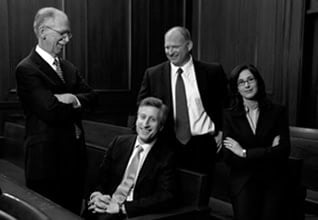
Patrick Krill (left) and Justin Anker wrote it with the ABA’s Commission on Lawyer Assistance Programs, and it is the largest study of US lawyer mental health ever conducted. More than 39,000 lawyers across 28 jurisdictions responded. About 37,000 responses were analysed and weighted to match the profession’s demographics.
Here are the figures –
- 47.4% screened positive for high burnout, and 15.6% met the threshold for severe burnout.
- Roughly one in five showed moderate-to-extremely severe symptoms of depression (21.7%), anxiety (20.4%) and stress (18.9%).
- 41.1% said time in the profession has been detrimental to their mental health, and 27% have considered leaving because of it.
- More than 41% screened positive for risky drinking on the standard clinical measure.
Krill also co-authored the 2016 benchmark study. Compared with that study, the share of lawyers reporting at least mild symptoms has risen on all three measures: depression from 28% to 32.7%, anxiety from 19% to 26.9%, and stress from 23% to 30.2%. Krill told Reuters: “The levels of distress were higher than we knew.”
The one number that moved
FOn the stricter cutoff used in 2016, hazardous drinking has fallen by about ten points, to 26.3% but the study still finds more than 41% of lawyers screening positive for risky drinking, well above general-population benchmarks.
It’s progress, of a sort.
Another note to the figures is thast there is no 2016 burnout figure to compare with. This is the first national estimate of lawyer burnout in the US – an issue incidentally faced by lawyers in just about every jurisdiction – using a validated measure. All that can be said with confidence about lawyer burnout is that we now know how bad it is, and that is bad enough.
The hours worked issue
Then there are the hours. Compared with lawyers working 40 hours a week, those working 71 or more are roughly three times as likely to report high stress: 42.7% against 13.7%. Two-thirds of them (67.1%) are highly burned out. Litigators working extreme hours are the most exposed group in the entire dataset.
Work–family conflict compounds the problem with more than a third of lawyers (35.9%) reporting high or very high conflict between their professional and personal lives. Among the most burned-out tenth, that conflict adds another 15.5 percentage points to the risk of stress.
Few lawyers need a randomised controlled trial to grasp what a 71-hour week does to a person. The defining demands of the job, which are adversarial work, near-zero tolerance for error and heavy responsibility, have not been redesigned. They have been supplemented with webinars. No meditation app fixes a 71-hour week.
Why lawyers still won’t ask for help
Lawyers know where the help is with 75% being aware of their state’s lawyer assistance program. The reason they stay away is confidentiality concerns (53.3%) and fear of harm to their reputation or career (49.2%) not to mention a lack of time (34.5%).
Only 39.1% believe their employer is doing enough for lawyer well-being. Just 25.3% think the profession as a whole is. Lawyers sell discretion for a living, yet most of them don’t trust it when they are the ones who need help, it seems.
This is a risk-committee problem now
Nearly half of lawyers are highly burned out, and more than a quarter have thought about leaving. In a market already defined by lateral movement and rainmaker risk, that amounts to a major retention and succession problem as well as a major wellness issue.
It is also a liability problem. Nearly a third of lawyers (31%) say that in the past year they worked alongside a colleague whose well-being raised fitness-to-practice concerns, and 57% have seen mental health or substance use problems among colleagues. That is malpractice exposure waiting for a plaintiff, made worse by a culture that still treats seeking help as a career risk.
The AI twist
Firms are busy celebrating AI tools that promise to strip out junior grunt work and free lawyers for higher-value judgment. Krill’s own release flags the uncertainty AI is bringing to the profession, which in turn leads to some other concerns.
The grunt work being automated is the apprenticeship that used to build that judgment. Second, BigLaw has a long habit of turning efficiency gains into more billable work, not shorter days. If AI saves an associate ten hours a week and the firm fills them, the 71-hour lawyer stays a 71-hour lawyer, and the burnout numbers stay where they are.
Wellness programs have not visibly moved the numbers. There is little reason to think efficiency gains will either, unless the underlying demands change.
The next benchmark study is presumably due around 2036. On current form, firms have a decade to decide whether it records reform or just another round of webinars.