
Class Action Hits Peak
Tom Borman, Lawfuel contributor
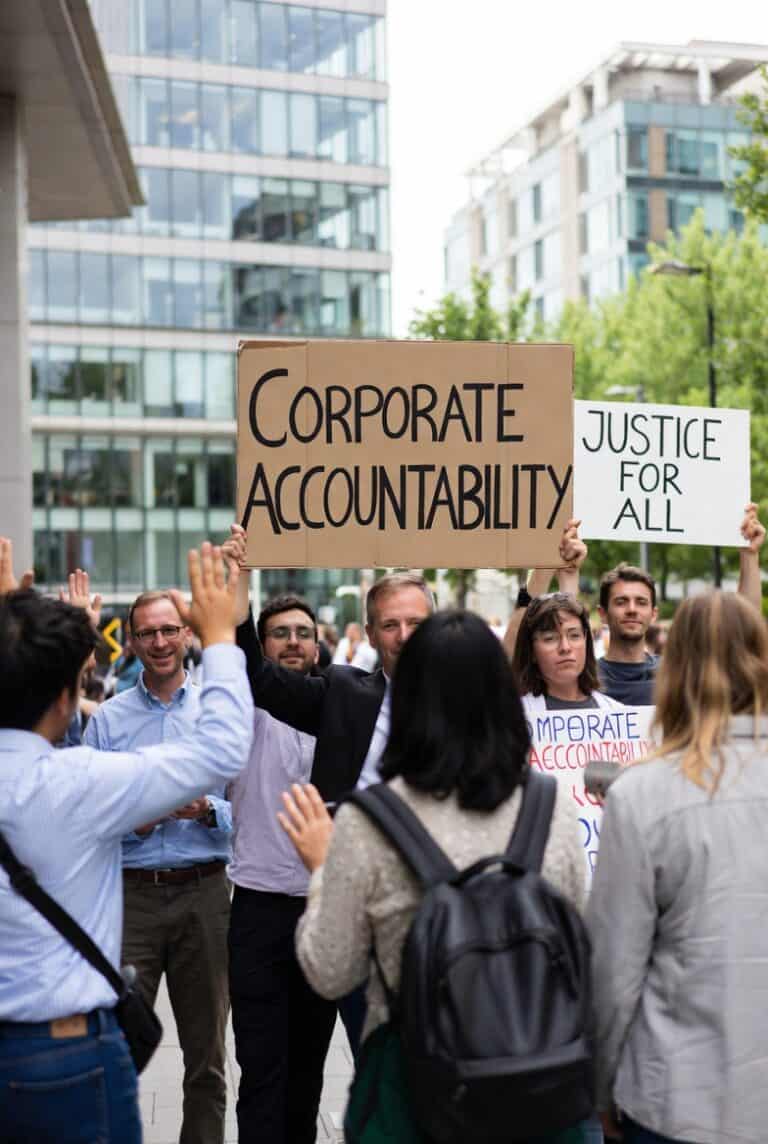
The British public have developed rather a taste for watching corporations squirm in court. Portland’s latest Reputation and Accountability report reveals that awareness of class actions has reached its highest level since 2020. The citizenry are increasingly keen to see litigation deployed as a cudgel against corporate misbehaviour.
Based on a poll of nearly 2,000 UK adults, the study shows 27 percent now report high awareness of class actions, up from 24 percent last year. This is despite the Competition Appeal Tribunal experiencing a slight dip in filings during 2024. The public, as Portland drily observes, is starting to notice.
Vengeance, Not Merely Lucre
What’s particularly striking is the shift in motivation. Those joining class actions are no longer primarily interested in padding their bank accounts. Compensation now ranks a mere third among reasons for participation.
The chief driver is the altogether more visceral belief that the company did something wrong. Sixty-five percent say they’d sign up to a class action if offered the chance. Some 69 percent would consider boycotting an offending firm and 70 percent would switch utility providers. Hell hath no fury like a consumer scorned.
This appetite for accountability emerges just as political debate intensifies around litigation funding and transparency.
The public seems broadly supportive of disclosure requirements. Some 65 percent believe class representatives should reveal their funders and where the money originates. Yet paradox abounds.
While most people see class actions as effective instruments of corporate discipline, a rather telling 68 percent suspect the real beneficiaries are lawyers and litigation funders. Cynicism need not preclude enthusiasm.
Where the Public Want Action
The sectors attracting the most public ire are predictable enough. Health care tops the list at 54%, followed closely by finance at 53% and energy at 50%. Technology trails at 45%. Interestingly, health care is also the sector most likely to be forgiven should wrongdoing be admitted and proper redress offered.
Some 54percent of those surveyed say they wouldn’t trust a company that coughed up compensation to avoid going to court whilst denying culpability. As Portland notes with admirable understatement, performative gestures without genuine accountability may backfire.
The Funder Question
Awareness of litigation funders has improved. It’s starting from what can charitably be described as a very low base.
Around 51 percent still report minimal or no awareness, down from 62 percent last year. Public attitudes toward funder remuneration prove surprisingly nuanced.
Some 71 percent prefer percentage based arrangements over upfront fees. And 44 percent reckon it fair enough if a funder doubles their investment, provided claimants receive meaningful compensation.
Yet there’s a clear hierarchy of trust. Given the choice, 53 percent would rather join an action backed by a law firm than one financed by third party funders.
This reflects greater trust in established legal institutions and no win no fee models. Or, to put it less charitably, a lingering suspicion that third party funders are rather too keen on making hay.
ESG: The Backlash That Wasn’t
One of the report’s more revealing findings concerns environmental and social governance claims. Nearly three quarters believe CEOs owe a duty to manage climate risks properly. That figure rises to 85 among business leaders themselves.
Scepticism about green marketing remains robust. Some 62 percnt say they never or only sometimes trust corporate sustainability claims. And 54 percent would join a class action over greenwashing if they’d purchased a product based on misleading environmental assertions.
Despite political handwringing in both Britain and America about ESG fatigue, Portland finds no statistically significant difference in sentiment from last year. Public expectations for corporate environmental and social responsibility remain steady and high.
Shareholder Activism Ascendant
Investor behaviour is evolving too. Among direct shareholders and fund investors, 68% now view shareholder activism positively.
That’s up from 53 percent last year. More than half would consider divesting from a company found to have contributed disproportionately to climate change. And 72 percent believe shareholders should be able to sue firms that fail to provide accurate information on climate impact or human rights.
The overall message is that people trust the legal system to deliver outcomes. They regard litigation as a legitimate mechanism for holding power to account. Whether this faith in the courts will survive sustained contact with the glacial pace of actual proceedings remains to be seen.
For now, the public seem remarkably confident that justice delayed need not mean justice denied.