
The BigLaw Merger’s Real Story: Cadwalader – Hogan Lovells
Ben Thomson, LawFuel contributing editor
Cadwalader’s planned merger with Hogan Lovells is less a love story and more a rescue mission with excellent branding, creating a 3,100‑lawyer, US$3.6 billion outfit that will instantly sit in the global top five by revenue.
For Hogan Lovells, it is scale and New York depth; for Cadwalader, it is survival with dignity and a new logo.
What the Deal Does
The combined Hogan Lovells Cadwalader will have about 3,100 lawyers and more than US$3.6 billion in annual revenue based on 2024 figures, making it the world’s fifth‑largest firm by revenue and one of the largest law firm mergers ever attempted.
Offices and client coverage will be heavily concentrated across the Americas, EMEA and APAC, with an emphasis on the Washington–New York–London–continental Europe financial corridor that both firms have been publicly courting for years.
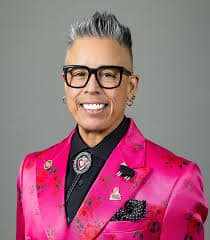
Hogan Lovells’ CEO Miguel Zaldivar (pictured) will run the combined firm, while Cadwalader co‑managing partners Pat Quinn and Wes Misson get international management roles focused on client/practice integration and finance respectively.
All Cadwalader lawyers and staff are expected to be absorbed absent conflicts, underlining that this is a full‑scale consolidation, not a cherry‑picking raid dressed up as a merger.
Why Hogan Lovells says “Yes”
Hogan Lovells posted around US$2.96–3.0 billion in 2024 revenue, with revenue per lawyer near US$1.1 million and profits per equity partner cresting US$3 million, after a year of double‑digit or near double‑digit growth.
The firm fell just short of its internal “magic number” US$3 billion target but remains in the small club of global firms at that scale and has made clear its strategic obsession with being perceived as deeply embedded in the New York market.
Cadwalader brings exactly what Hogan Lovells has been missing – a historically Wall Street‑anchored finance, fund finance and structured products platform in New York and Charlotte, plus long‑standing relationships in the capital markets that would take a decade and a fortune to build organically.
For Hogan, this is a premium‑priced way to buy RPL and PEP accretion in a single stroke; Cadwalader’s higher revenue per lawyer and higher average partner profits mean the combination looks flattering in the league tables if integration doesn’t blow up the cost base.
The Cadwalader Position

Cadwalader, founded in 1792 and long marketed as Wall Street’s oldest firm, has bled talent. At least 33 partner departures this year alone and a 37‑lawyer structured finance team decamping to Orrick, including 10 partners across London, Washington and Charlotte.
Those exits followed a politically radioactive US$100 million pro bono pledge to the Trump administration, which triggered high‑profile partner departures in white‑collar and investigations and client discomfort with the firm’s perceived willingness to “capitulate”.
While Cadwalader has insisted publicly that financial performance in 2024 and early 2025 was “record” and “even stronger”, the basic math is unforgiving in a market where scale, tech spend and rate pressure all tilt against midsize legacy Wall Street shops.
A merger process that reportedly once involved Alston & Bird has now landed on Hogan Lovells, giving Cadwalader a path to remain relevant in big‑ticket global finance rather than sliding into the comfortable but crowded world of niche boutique respectability.
The Uncomfortable News
The spin is what we expect from media releases of this type – all about “historic combination” and “global elite platform”, but the subtext is restructuring. Hogan Lovells recently boosted partner profits in part by shrinking the equity tier while growing the non‑equity ranks, a playbook that tends to feel less inspiring inside the building than it does in PowerPoints.
The firm barely missed its US$3 billion revenue goal, and the merger conveniently vaults it over that psychological line via combination rather than organic growth, allowing leadership to claim strategic victory while quietly grappling with inflated personnel costs and integration headaches.
On Cadwalader’s side, there is reputational detox – a firm that took a political gamble by aligning itself with the Trump White House has discovered that some clients and partners prefer their BigLaw providers a little less conspicuously transactional in their public commitments.
Folding into Hogan Lovells lets that controversy be re‑filed as “legacy history” inside a new brand, even as the combined firm inherits the relationship, conflict and culture management burden that comes with a politically polarized client base in a Trump‑again Washington.
Signal for Law Marketing, Talent and AI
For law firm marketers, the message is binary. If a 233‑year‑old Wall Street brand can decide it is too small, then any sub‑US$1 billion shop in high‑cost markets is now fair game for merger speculation unless it can tell a very convincing specialization story.
The combined firm will sell itself to clients as a “single global solution” on financial regulation, cross‑border disputes and deals, putting pressure on mid‑tier and regional firms to either double down on sector focus, deploy tech and AI more aggressively, or accept life as feeder firms into mega‑platforms.
On the talent front, 3,100 lawyers inside a global platform will mean even more stratification: lucrative finance and investigations work at the apex, a widened mid‑tier of leveraged associates, and a lot of quiet anxiety among non‑equity partners about which side of the profitability line they fall on after integration.
With a near‑US$3.6 billion budget, investments in AI and process optimization will become both a selling point and a control mechanism, enabling further de‑leveraging of mid‑career lawyers and intensifying the arms race in legal tech spend among the top 20 global firms.