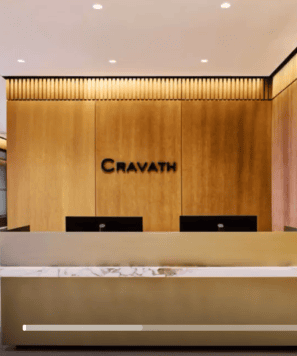
The Cravath Effect And Why Every Law Firm Wants to Be Them (But Few Can)

Cravath2

The $10 Million Partner: How Cravath Created the Legal Industry’s Most Exclusive Club

Tom Borman, Contributing editor

In the rarified air of elite law firms, one name continues to set the standard by which all others are measured: Cravath, Swaine & Moore. Founded in 1819, this Wall Street so-called ‘white shoe’ law firm has maintained its position at the pinnacle of legal practice for over two centuries. It also, coincidentally, sits atop LawFuel’s own (about to be revised) Most Prestigious Law Firm List.

But as global law firms increasingly chase Cravath-level profits, a fascinating industry-wide identity crisis is emerging.

The Exclusive Club

“Not every firm can be Cravath,” notes legal industry analyst Paul Hodkinson.

Hodkinson’s statement captures one of the fundamental challenges facing international law firms today.

The Cravath model—characterized by selective hiring, intensive associate training, lockstep compensation, and extraordinary attention to detail—has created an elite club with membership requirements few can meet.

The name itself conjures images of prestige and success. The Cravath Scale remains a benchmark for legal pay rates. The ‘big boutique’ nature of this Big Law firm continues to cast a long shadow in the legal world.

The firm’s prestige is matched by its profitability.

Along with peers like Wachtell Lipton Rosen & Katz, Paul Weiss Rifkind Wharton & Garrison, and Kirkland & Ellis, Cravath commands premium rates that translate into partner compensation that leaves competitors in awe.

The most recent figures show top firms approaching an astounding $7-8 million in average profit per equity partner (PEP), with industry insiders speculating that Wachtell and Kirkland may soon cross the $10 million threshold.

But the pursuit of Cravath-level profits is creating a peculiar homogenization across the legal landscape.

Going Global vs. Staying Elite

Cravath

The Cravath model thrives on focus. The firm maintains a relatively small footprint with offices only in New York, Washington DC, and London.

This streamlined approach stands in stark contrast to global giants like White & Case (operating in approximately 30 countries), Linklaters, Dentons and newly merged A&O Shearman.

“For global firms, geographic expansion presents a profit dilemma,” explains former Cravath partner and legal consultant Sarah Reynolds. “Many international markets generate significantly lower revenue per lawyer than New York or London, yet the costs remain substantial. This inevitably dilutes profitability.”

The tension is evident in recent strategic decisions. Herbert Smith Freehills is pursuing a merger with America’s Kramer Levin while simultaneously questioning the profitability of its Asia presence.

White & Case recently ended its Indonesian association. Linklaters appears to be exiting Poland. Both A&O Shearman and Hogan Lovells closed multiple international offices last year in pursuit of stronger financial results.

Even Germany, Europe’s largest economy, is facing a law firm exodus. UK-based Pinsent Masons recently cut 14 equity partners there, with one law firm leader bluntly stating that “law firm economics don’t work well there.”

The American Profit Engine

For firms chasing elite profitability, all roads lead to America. Freshfields has aggressively expanded its US presence, rebranding itself and recently doubled its Washington DC office space. The most profitable practices increasingly center on high-end corporate work in New York, Silicon Valley, and DC.

White & Case’s 2024 financial results highlight this trend, with PEP up 27 percent to over $4 million. Cadwalader saw an even more impressive 33 percent PEP increase. Meanwhile, Milbank’s PEP now approaches $7 million—a figure that was unimaginable just a decade ago.

“What’s driving these astronomical numbers is client willingness to pay,” says legal pricing expert Michael Johnson.

“Some firms are raising rates by 10 percent annually, and clients continue to pay. This is fueling unprecedented profitability, particularly for firms with specialized practices in key US markets.”

Although there are pressures on the all-equity pay scale used by Cravaths to pay partners and there have been rumors of change to the way the firm structures its pay for partners and associates, the standardized pay system currently remains.

The Cravath Way

While many firms focus exclusively on the profit element of the Cravath model, true Cravath-style operation encompasses much more than just the money (difficult though that may appear to some).

Some unique aspects to Cravath’s helps give them the magic that propels both work satisfaction, culture and profits.

  1. The Cravath System of Training: Associates rotate through different practice groups rather than specializing immediately, creating lawyers with broad expertise and helping to define their interests and specialities.
  2. Lockstep Compensation: Partners are paid based on seniority rather than business generation, fostering collaboration over competition, which has become a hot button issue at a time when many firms are playing with their pay structures, their ‘black box’ remuneration and other models.
  3. Client Selectivity: The firm chooses clients carefully, preferring deep long-term relationships over transactional engagements, which may seem counter-intuitive to some.
  4. Meticulous Work Product: The legendary attention to detail and insistence on excellence remains a hallmark and cannot be understated.
  5. Firm-First Culture: Individual stars are less important than institutional excellence. And it is the institutional ‘branding’ of the Cravath name that helps to build its credibility and trustworthiness.

Finding Uniqueness in a Homogenized Market

As major firms abandon global strategies in pursuit of Cravath-level profits, a troubling question emerges: is anyone unique anymore?

The risk is a homogenized industry where differentiation disappears, leaving numerous firms chasing essentially the same clients with similar services in identical markets.

“Clients don’t need another decent, fairly-profitable, full-service firm scattered across the US and Europe. That market is oversaturated,” says Hodkinson in his American Lawyer article.

Some firms are choosing a different path. Pinsent Masons recently raised eyebrows by launching another office in Mainland China—a move against industry trends that could prove either visionary or foolhardy. Most law firms have been catching early flights out of the country.

The Identity Crisis Continues

As the legal industry evolves, firms face an existential choice: chase Cravath-level profits by narrowing focus and geographic scope, or embrace differentiation through unique offerings, even if it means accepting lower profitability.

The irony is that in striving to join the Cravath club, many firms are abandoning the very elements that made them unique. Yet true membership in that exclusive group will likely remain elusive for all but a select few.

For Cravath itself, this imitation is the sincerest form of flattery—and a testament to a business model that has remained remarkably resilient through two centuries of legal industry evolution.

Whether other firms can successfully adapt that model to their own circumstances remains one of the most fascinating questions in the legal market today.

Read More –

16 thoughts on “The Cravath Effect And Why Every Law Firm Wants to Be Them (But Few Can)”

  1. Really interesting to see how Cravath keeps itself exclusive in an era where everybody’s trying to go big global. They’ve got something special if they can ignore the siren calls and stick to their guns. Shows you don’t need to be everywhere to be a big deal.

  2. Does the Cravath model suggest that specialization and a narrow focus are more sustainable for law firms seeking to maintain high levels of profitability? Wondering how this strategy impacts their talent acquisition.

    1. good question sam, i’ve been thinking the same. but also, does this make it harder for new lawyers to join them?

    2. In my view, Cravath’s model inherently limits their talent pool to only the most elite, which can be both an advantage and a limitation. It’s a strategy that demands constant excellence.

  3. Everyone seems to be on the Cravath bandwagon, but is their model really sustainable in the long term? Seems like they’re just one big market shift away from a rude awakening.

  4. Loved reading about how Cravath stays true to its roots and keeps its elite status. It’s not just about the money; it’s about building a legacy. Inspiring for someone just starting out!

  5. This article provides a clear snapshot of the challenges and strategies facing top law firms today. Curious to see if Cravath’s model will continue to set the industry standard or if a new approach will emerge.

    1. The legal industry is notorious for being slow to adapt. Cravath’s success is a testament to their strategy, but as JD2023 points out, the future might require even more flexibility.

  6. Curious to know how Cravath’s model, focusing heavily on America for profit, affects their global legal influence. Do they risk narrowing their vision too much?

    1. That’s an insightful question. Their model prioritizes profit over global presence, which might limit their international influence but ensures financial stability.

  7. can’t help but wonder if chasing Cravath-level profits compromises the quality of service. Profit shouldnt be the only metric for success, right?

  8. So, joining Cravath is the legal world equivalent of getting into Hogwarts? Guess you need a magic wand (or a law degree from Harvard) to get in!

    1. Quite the analogy! Though, perhaps it’s more about talent and hard work than magic. A prestigious degree helps, but so does exceptional lawyering.

    2. Love the humor! Yet behind every joke lies truth. Cravath does indeed set a high bar, blending talent and educational pedigree in their hiring practices.

  9. Wow, Cravath really knows how to keep it exclusive. Wonder if they’ve got a secret handshake or a club ring. Elitism, much?

  10. It’s fascinating how the Cravath model emphasizes both selectivity in their case work and their hiring process. This exclusivity clearly contributes to their reputation and success. However, it raises the question, LawFuel Editors, whether this model is sustainable in the long term, especially with evolving legal challenges and a push for greater inclusivity in the industry.

Comments are closed.

Scroll to Top