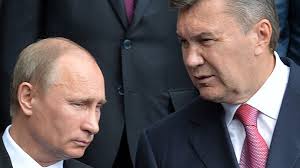
The situation with the creeping takeover of Crimea by Russia has many worried. But is it a flagrant violation of international law or not? Ashley Deeks joined the University of Virginia Law School in 2012 as an associate professor of law after two years as an academic fellow at Columbia Law School. She served for ten years in the Legal Adviser’s Office at the State Department, most recently as the Assistant Legal Adviser for Political-Military Affairs. In 2007-08 she held an International Affairs Fellowship from the Council on Foreign Relations.
Russian forces have seized control of Crimea and reportedly are digging trenches in the land bridge that connects Crimea with the rest of Ukraine.
Is this a flagrant violation of international law regulating the use of force, or does Russia have some credible justification for what it’s done? Bottom Line Up Front (as DOD would say): It appears to be an unjustifiable armed attack on Ukraine, which means that under international law, Ukraine may use force in self-defense against Russia. Here’s the analysis, broken down into steps.
First, Article 2(4) of the U.N. Charter prohibits states from engaging in any threats or uses of force against other states. Although this clause has engendered untold hours of debate about its meaning, the transfer of one state’s armed forces into another state in significant numbers without consent almost certainly falls within Article 2(4)’s prohibition. Although the number of Russian forces in Crimea is hard to determine, Russia seems to have sent at a minimum hundreds of troops, ten troop trucks, and five armored vehicles—and there are unconfirmed reports that Russian ships bearing additional troops are landing in eastern Crimea.
As the Times reports, Russian troops “swarmed the major thoroughfares of Crimea on Saturday, encircled government buildings, closed the main airport and seized communication hubs, solidifying what began on Friday as a covert effort to control the largely pro-Russian region.” Russia’s goal appears to be to deprive the new Ukrainian leadership in Kiev and Ukrainian government and military officials in Crimea of any control over a significant portion of Ukraine.
Second, even if one state undertakes a use of force against another state, most states and scholars believe that a use of force alone may not trigger the harmed state’s right of self-defense. That requires a particular type of force: an armed attack. Article 51 of the Charter states, “Nothing in the present Charter [i.e., the prohibition on the use of force] shall impair the inherent right of self-defense if an armed attack occurs . . . .” The archetypal case of an armed attack is when one state bombs another. Some might ask: Since Russia’s takeover of Crimea seems to have been effected without a shot fired, can we really call this an armed attack? Consider Russia’s show of force, its takeover of a part of another state’s territory against the stated will of the latter’s new leadership, the patent willingness of Russia to use force (considering the level of weaponry that Russia has sent into Crimea), and the way President Putin framed his request to the Duma for permission to use force on the territory of Ukraine.
Most importantly, consider the implications for the Charter if the answer were that this were not an armed attack: Ukraine could not lawfully use force against Russian troops to protect territory that undisputedly is part of Ukraine.
Third, if this otherwise would constitute an armed attack, does Russia have any international law justification for what it has done? There are three cases in which one state may use force in or against another state: when the Security Council authorizes it under Chapter VII; when the territorial state consents; or when it is acting in self-defense against the territorial state. Russia has proffered one version of a self-defense argument, though oddly it seems to have steered clear of arguing that it has the consent of the lawful government of Ukraine.
Self-defense
Russia’s most prominent justification for sending troops into Crimea is to protect Russian citizens. International law generally recognizes a “defense of nationals” concept, under which one state may enter another state without consent in order to protect its nationals against an imminent threat, at least where the territorial state is unwilling or unable to protect those nationals itself. States have invoked this justification in three general situations: where their nationals have been taken hostage (U.S. Embassy in Tehran); where their nationals are under actual attack; and where their nationals face a more generic threatening situation (U.S. in Grenada; UK in Libya in 2011). The more tangible the threat to the nationals and the lower the concern about pretextual intervention, the more likely it is that the intervening states are able to avoid condemnation.
In this case, I haven’t been able to find any news reports suggesting that Russian nationals (or even pro-Russian Ukrainians in Crimea) have been subject to any uses or even threats of force. Further, Sky News reports that Russia has issued Russian passports to 143,000 Ukrainians, making it much easier for Russia to point to sizeable numbers of “Russian citizens” who might come under threat. In short, these purported threats to Russian citizens in Crimea seem thin and nebulous, and the issuance of Russian passports further supports the idea that the defense of nationals claim is pretextual. This situation is the type in which states most often have rejected a “defense of nationals” justification.
(Note that this was the same argument that Russia used in defending its intervention in Georgia in 2008: Russia claimed it needed to defend Russian citizens living in Georgia’s South Ossetia region. In that case, South Ossetian paramilitaries bombarded Georgian villages. In response, Georgia sent troops into the region. The next day, Russia invaded Georgia, claiming it needed to defend Russian citizens living in South Ossetia.)
See: The New Republic