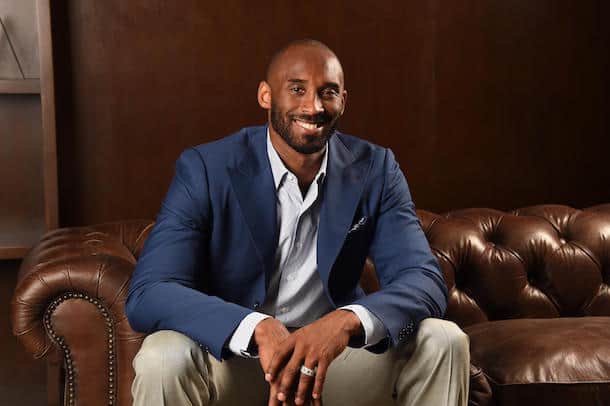
Kobe Bryant & The Sex Assault Case Headlines

Tom Berner – No sooner was the world learning of the tragic death of sporting legend Kobe Bryant when the LA Times ask the question no-one was requesting to be answered: ‘What happened to Kobe Bryant’s sex assault case?

Bryant’s death in a helicopter crash created headlines everywhere. What happened in mid 2003 did something similar when the Lakers star was charged over an alleged rape of a desk clerk working in the Rocky Mountains town of Edwards, Colo.

The trial moved slowly with a not guilty plea and a weakened resolve from the accuser who added the libel attorney Lin Wood to her team. Wood advised that a trial may not end well for her and after a mock trial prior to jury selection did not go well for her.

In addition, there was the repeated publication of her name and the emailing to media outlets of a closed hearing relating to DNA evidence.

The case took 14 months before it was resolved with the accuser deciding not to proceed and the prosecution of Bryant was stopped.A civil suit brought by the accuser in August 2004 was settled out of court on March 2, 2005.

Kobe Bryant had retained one of Colorado’s leading criminal and white collar attorneys in Hal Haddon of Haddon Morgan Forman.

As LawFuel reported in 2006 “It was as though they (the charges) had never been lodged – everything swept away but the messy recriminations and the second-guessing that are likely to haunt the district attorney’s offices in Eagle County, Colo., for years to come.”

But the Kobe Bryant headlines today are immeasurably more sad.

Recent Posts on LawFuel

  • Anthropic’s Legal AI Plugin Triggers ‘SaaSpocalypse’ — $50B Wiped from Legal Tech Stocks
    Anthropic’s Legal AI Plugin Exposes the Vulnerability of the Legal Tech Emperor’s Wardrobe The legal… Read more: Anthropic’s Legal AI Plugin Triggers ‘SaaSpocalypse’ — $50B Wiped from Legal Tech Stocks
  • Legal AI’s First Reality Check: What the Claude Shock Means for Law Firms
    AI-driven software stocks have slumped as investors suddenly re-price the risks and disruption posed by legal-focused models like Anthropic’s Claude. But for law firms, this is a reset, not a retreat, in the legal AI market. The money is shifting from “AI at any price” to “AI that can survive the coming copyright and compliance storm”—and that is clearly where serious firms should now be focusing. What Actually Happened in Markets The numbers are staggering. On 3 February 2026, a Goldman Sachs basket of US software stocks sank 6% in a single session—its biggest one-day decline since April’s tariff-fueled selloff. A parallel index of financial services firms tumbled almost 7%. The Nasdaq 100 Index fell as much as 2.4%. The trigger? Anthropic released new AI automation capabilities targeting legal, sales, marketing, and data analytics—sectors previously thought insulated from AI disruption. The carnage was immediate and global:
  • Why Was Jeffrey Epstein Trying to Get BigLaw’s Brad Karp Into Augusta National?
    The Augusta Connection: Why Did Jeffrey Epstein Want to Get Brad Karp Into America’s Most… Read more: Why Was Jeffrey Epstein Trying to Get BigLaw’s Brad Karp Into Augusta National?
  • BigLaw Pay – Taylor Wessing’s Top Rainmaker Banks the Legal Equivalent of a Premier League Salary
    Taylor Wessing’s highest-earning partner managed to haul in a whopping £200,000 a week in the latest financial year — that’s roughly the same as a Premier League striker on a good bonus season. It highlights just how ludicrous top-end pay has become in London’s legal market. According to Law Society Gazette, the top-paid LLP member at Taylor Wessing managed to net that £200k-a-week haul as profits were dished out across the partnership. That kind of pay packet makes even the notorious Cravath scale seem almost modest. Sure, mid-market firms can cry “but we’re all about work-life balance,” but when your top partner’s annual take amounts to north of £10m, it’s hard not to feel the sting of disparity.
  • California Draws a Line on Legal AI And Lawyers Need to Pay Attention
    For years, lawyers have been quietly experimenting with generative AI while publicly pretending it was all very theoretical. That luxury just expired however has expired as the California passes a first-of-its kind bill that will doubtless be replicated in other jurisdictions. The California Senate has passed SB 574 aimed squarely at how lawyers use artificial intelligence in legal practice. If it becomes law, California will be the first major jurisdiction to formally regulate AI use by lawyers, not with vague principles, but with obligations that cut straight to competence, ethics, and liability. In short: lawyers can use AI, but they own the consequences. And that’s something many will find daunting given the hallucinations and legal repercussions of legal AI’s misuse.
  • Winston & Strawn and Taylor Wessing Partners Greenlight £1.2bn Transatlantic Law Merger
    Partners at Winston & Strawn and Taylor Wessing have voted decisively in favour of their landmark transatlantic merger, clearing the path for the creation of Winston Taylor—a new legal powerhouse set to launch in May 2026. The combination, reported last month, will create a firm with more than 1,400 lawyers worldwide and combined revenue exceeding $1.75 billion, positioning the newly-formed entity just outside the Global 200’s top 40 firms. The merger responds to increasing client demand for seamlessly integrated US–UK–EU counsel for the businesses, people, and markets driving capital and innovation.
  • Brabners’ Eight-Year Growth Streak Powers London Expansion: What Regional Firms Can Learn
    While London’s legal market dominates headlines with US firms driving salary wars and Magic Circle mergers, Brabners’ consistent growth story offers a compelling counter-narrative. The firm’s eight consecutive years of profitable expansion demonstrates that sustainable growth doesn’t require a City postcode—it requires strategic vision, client focus, and calculated expansion timing. And leadership from people like managing partner Nik White (Pictured), who the firm described as the ‘driving force’ behind its growth. At a time when UK law firms collectively generated £37 billion in revenue, with more than half posting double-digit increases, Brabners’ measured approach to London expansion represents a textbook case of regional strength leveraging metropolitan opportunity. Log in to read the rest . .
  • Four Thousand an Hour Arrives in US Big Law Billing
    Reuters reports the new top line for Susman Godfrey’s trial stars and sets it against peers where rates already crossed three thousand last year. Public filings and prior coverage show Latham partners at just over three thousand and Quinn Emanuel partners near that mark, with associates at some shops topping one thousand six hundred. Four thousand is not only a flex, but also one that needs to be ‘sold’ to clients. If law firms want this price to clear, they must show time saved, risk shifted and outcomes earned. Log in to read . . .
Scroll to Top