
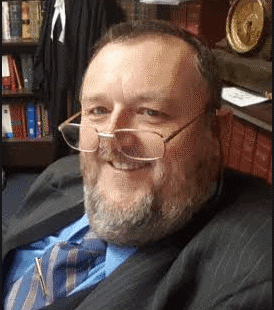
They may be relics these days, but for barrister Ray Broomhall, the collection of wigs is part of a desire to retain a slice of legal history. But at the same time this barrister has successfully fought against something far more modern than the wigs of old.
As wigs are now part of legal history in most of both Australian and New Zealand courts, the Tasmanian barrister recognises that they also represent the legal characters who wore them.
Mr Broomhall said he would like to get his hands on former justice of the High Court Michael Kirby’s wig.
“I’d love to have one of his wigs — whether his barrister wig or one that he wore in the High Court. That would be to me the ultimate,” he said.
He would not put a price on how much he has spent on his unusual collection.
“It’s not the wig itself — it’s the people behind the wig,” he said.
“The story behind each wig is absolutely amazing, and they’re priceless when you think of the stories behind them.”
Taking pride of place in his collection is the wig worn by Thomas Strangman when he successfully prosecuted Indian civil rights leader Mahatma Gandhi for sedition in 1922.
“There was actually a big court case that said you can’t trade in human body parts, so barristers were walking around with human-hair wigs and they found they had to go to horsehair,” Mr Broomhall said.
While the more modern wigs follow a pattern which includes a set guide of the number of side curls for barristers and back curls for judges, each wig is subtly different.
The wigs’ individual quirks give a special insight into the wearer.
Full-bottomed wigs for judges have been phased out — even for ceremonial occasions — in Tasmania.
The now-retired wigs are still housed at the Supreme Court of Tasmania in Hobart. Registrar Jim Connolly is the keeper of Supreme Court of Tasmania judges’ wigs.
“They’re part of our legal history,” Mr Connolly said.
“These wigs are handmade. They are made of horsehair and they are fitted to the particular judge’s head that they need to adorn.
The Barrister’s Fight Against 5G
Barrister Broomhall is not just about collecting and retaining a slice of legal history however. He has also spearheaded a successful legal fight against the introduction of the 5G network in Australia with his ‘Say No’ campaign.
The basis for the Broomhall opposition to 5G is the dangers alleged to emanate from magnetic fields and he has spoken widely across Australia about the dangers and the opposition to the implementation of the 5G network.
Source: ABC
Other Law News
- Built By Barristers, Australia’s New AI Tool Takes On Legal Research Giants
- The Office Romance Has Changed But Here’s Why Law Firms Need To Rethink Who Holds The Power
- Lawyer Trades the Bar for the Beach at 42
- Norton Rose Add Leading Health & M&A Lawyer From Baker McKenzie in Sydney
- Bishop to Judicial Pawns – Your Move
- 5 Key Differences between a Criminal Defence Barrister and a Criminal Defence Solicitor
- KPMG Crisis – KPMG General Counsel & HR Chief Exit Firm Days Before Scandal Hearing
- Barrister Discovers That Bowing To The Judge Is Not Entirely Optional
- Burnout, Billing And ‘Broken Promises’ See1 In 4 NZ Lawyers Plan To Quit”
- NZ Law – Women in Law Borrin Foundation Awards
- McGuireWoods Bolsters Commercial Litigation Prowess With Jeff Golimowski and Jeremy Baker
- Listed Legal Disrupter Completes Second Major Law Firm Acquisition
- Texas Trial Powerhouse McKool Smith Joins the Milbank Pay Scale (With a Delayed Start)
- Slater and Gordon to represent one of the women involved in Sydney Swans players alleged sexual assault in civil claim



This article is inaccurate. There is no legal precedent against emitters of EME in Australia. The first case tested the Maroochydore magistrates court Jan-20
was dismissed by the judge who referred to the “method” as “incompetent”.
This method did also not stop the TPG roll-out in Australia. It was halted due to the Huawei ban and the ACCC initially blocking the merger between TPG and VHA. Now that the merger can proceed, the rollout of small cells will resume.
I did a workshop with Ray having heard about his loss in the courts in Queensland. I am disappointed as I can’t see how any of the methodologys he suggested could be used. Am i right.? This question relates to 5G
That’s right – it’s giving those concerned false hope