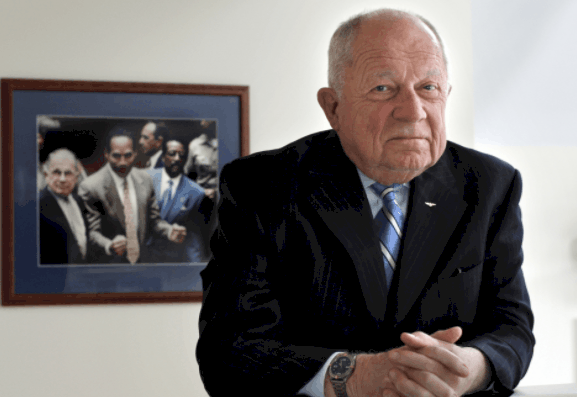
Lawyer for the Boston Strangler, Patty Hearst, OJ Simpson worked with theatrical flair
The New York Times report that celebrity lawyer F. Lee Bailey, the criminal lawyer who invited juries into the twilight zone of reasonable doubt in defense of Patricia Hearst, O.J. Simpson, the Boston Strangler, the army commander at the My Lai Massacre in Vietnam and other notorious cases, died on Thursday in Atlanta. He was 87.
His son Bendrix confirmed the death, in hospice care, but did not specify the cause. He said his father had been in poor health in recent years and living in Georgia to be near another son, Scott.
Bailey flew warplanes, sailed yachts, dropped out of Harvard, wrote books, touted himself on television, was profiled in countless newspapers, ran a detective agency, married four times, carried a gun, took on seemingly hopeless cases and courted trouble, including professionally.
During his career, he was charged with perjury and contempt of court. He was disbarred in Florida in 2001 and in Massachusetts two years later. In 2016 he filed for bankruptcy in Maine.
Bailey became a true legendary lawyer to an entire generation. He had a colorful life and added a drama to his courtroom presentation – an audacious, larger-than-life defender in the traditions of Clarence Darrow and Edward Bennett Williams, producing lawyerly entertainment long before Court TV or reality television shows, The Times reported.
As part of the ‘dream team’ representing footballer OJ Simpson in a trial that held America and much of the Western world spellbound.
His cross-examination of a Los Angeles detective who investigated the murder of Simpson’s wife was seen as a key factor in securing a not guilty verdict. Mr Bailey argued without success that the detective had planted a crucial piece of evidence, a bloodstained glove.
However, he undermined the detective’s credibility with recordings that destroyed his claim not to have used racial slurs.
Headline Cases
But his lengthy career involved numerous major cases that made headlines.
In 1971, Bailey successfully defended Capt Ernest Medina, who was court-martialled over the massacre of 104 people in the village of My Lai, in what was then South Vietnam.
He took on the case of Patricia Hearst, a newspaper heiress who was kidnapped in 1974, when she was just 19 years old, by a violent far-left group calling itself the Symbionese Liberation Army.
Hearst ended up taking part in armed robberies organised by the group – Bailey argued that she had been brainwashed. Although convicted and imprisoned she was subsequently pardoned by President Jimmy Carter.
First the Founders, Now the Name: Pogust Goodhead’s £36bn Civil War
The London law firm behind Britain’s biggest group litigation is preparing to rebrand after co-founder…
Buchalter Welcomes Bankruptcy and Restructuring Partner Bill Smelko to San Diego Office
Buchalter is pleased to announce that Bill Smelko has joined the firm as Partner in…

‘Smart Rings’ CEO Found Guilty of Running $2 Million Ponzi Scheme
SANTA ANA, California – The CEO of a wearable technology company has been found guilty by…

AI Meets Access to Justice And New Zealand Firm Tika Launches a Different Kind of Law Firm
New Zealand has a new legal technology venture, but this one is not promising to…

Peeling Back the PR: What Doyle’s 2026 New Zealand Rankings Actually Say
>> new role; new organisation – General Counsel & Company Secretary Doyle’s Guide builds its…