The future belongs to lawyers who embrace technology, work smarter, and never forget that relationships drive business.
Steve Fretzin*. Steve Fretzin is an internationally recognized legal business development coach and author
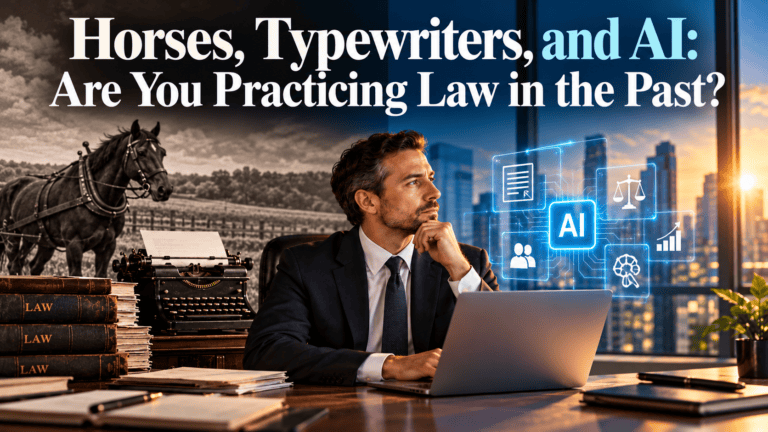
There was a time when farmers relied on horses to plow their fields. Writers used pens before typewriters, and typewriters before computers. Every advancement changed how people worked, and those who embraced the improvements generally became more productive than those who resisted them.
Can you imagine an attorney today insisting on using a typewriter instead of a computer? It would be absurd. Yet, that’s essentially what’s happening with lawyers who refuse to embrace artificial intelligence.
AI is changing the legal profession at an extraordinary pace, and I believe we’re approaching a point where lawyers who aren’t learning to use it will find themselves falling behind. The question isn’t whether AI will change how you practice law. It already has. The bigger question is whether you’re prepared to use it to become a more efficient, productive, and successful attorney.
It’s About More Than Practicing Law
Let me clarify something. I’m not an AI technology specialist teaching lawyers how to review contracts, conduct legal research, or draft complex legal documents using the latest platforms. My expertise is helping attorneys build thriving books of business through better marketing, branding, relationships, and time management.
And that’s where I see an incredible opportunity.
Most lawyers I coach are already overwhelmed with billable hours, client demands, administrative responsibilities, and the ongoing challenge of finding new business. They know they should be developing relationships, creating content, and building their personal brands, but there never seems to be enough time.
AI has the potential to change that equation dramatically.
Imagine reducing the time you spend managing emails, preparing for meetings, developing marketing content, and organizing follow-up activities. What would you do with an extra five or even ten hours each week?
You could bill more, build more business, or perhaps enjoy something lawyers seem to have forgotten exists: a personal life.
AI Won’t Build Your Brand. You Still Have to Do That.

One of the biggest mistakes lawyers make with AI is expecting it to do their thinking for them.
Your personal brand is about understanding who you serve, the problems you solve, and what makes you different from the thousands of other attorneys competing for the same clients.
AI can help you clarify that message, but it can’t determine your value without your input.
For example, I encourage lawyers to use AI to interview them about their practice, ideal clients, experience, and differentiators. From there, it can help create a compelling 30-second introduction, improve a LinkedIn profile, or develop content that showcases their expertise.
The key is making sure the final product sounds like you, not like every other lawyer using ChatGPT.
I use AI regularly in my own business. I’ve taken podcast conversations, turned them into transcripts, developed articles, and ultimately leveraged that content into books. What once required enormous amounts of time and effort can now be accomplished much more efficiently.
The expertise is still mine. The technology simply helps me share it with more people.
That’s the mindset lawyers need to embrace. Use AI to extract your expertise, not invent it.
Relationships Still Win the Game
Here’s something AI isn’t going to replace anytime soon: the trust developed between two people.
Lawyers don’t typically win their best clients because they have the most impressive website or publish the most LinkedIn posts. They win because someone trusts them, remembers them, and believes they can solve an important problem.
My Sales-Free Selling® methodology has always focused on asking better questions, understanding people’s needs, and helping them make informed buying decisions without pitching or convincing.
AI can actually make that process easier.
Before meeting with a prospective client or referral partner, use AI to research their company, industry, and potential challenges. Ask it to suggest thoughtful questions that might uncover opportunities. Following the meeting, dictate your notes and have AI help identify next steps, draft a personalized follow-up email, or organize reminders for future conversations.
Instead of spending 30 minutes writing an email, perhaps you spend five minutes reviewing and personalizing a draft.
The relationship remains human. The administrative friction disappears.
Of course, attorneys must use approved tools, protect confidential information, verify outputs, and apply their own professional judgment throughout the process.
Stop Being a Slave to Your Inbox

One of my favorite opportunities for AI involves something almost every attorney complains about: email.
Some lawyers spend four to six hours a day reading, responding to, organizing, and revisiting emails. It’s astonishing how much valuable time disappears into the inbox.
What if AI helped you identify repetitive communications, summarize lengthy threads, draft responses based on your previous writing, and organize messages requiring your attention?
Even saving an hour a day creates five additional hours a week. That’s time you can invest in meeting referral sources, reconnecting with clients, producing valuable content, or simply getting home earlier.
However, there’s an important catch. Saving time doesn’t automatically mean you’re using time wisely.
If AI gives you five hours back and you fill them with five more hours of meaningless activity, what have you really accomplished?
The goal should be to intentionally reinvest that time into activities that move your practice and your life forward.
The Cost of Standing Still
I believe lawyers have a professional responsibility to stay current with technology that can materially improve their ability to serve clients.
I’m not suggesting that failing to use ChatGPT constitutes malpractice. However, technological competence, efficiency, confidentiality, and quality of representation are already important professional obligations.
As reliable AI tools become more integrated into legal practice, ignoring their capabilities may create increasingly serious risks.
There’s also the competitive reality.
If two attorneys deliver equally strong legal work, but one can communicate faster, operate more efficiently, maintain stronger relationships, and provide greater value, which lawyer do you think will have the advantage?
We’re not going back to typewriters, and we’re certainly not going back to horses and plows.
The lawyers who thrive in the coming years won’t necessarily be those who know the most about AI. They’ll be the ones who figure out how to integrate it into their daily routines without sacrificing their judgment, authenticity, or relationships.
My advice is to start small. Identify one repetitive task, one branding opportunity, and one business development activity where AI can make you more effective. Build the habit, measure the improvement, and expand from there.
Remember, AI saves time. Relationships create business. The lawyers who understand how to leverage both will be the ones building stronger practices and taking greater control of their futures.

Steve Fretzin is an internationally recognized legal business development coach, five-time author, and host of the BE THAT LAWYER and Future Rainmakers podcasts. Through his Sales-Free Selling® methodology, he helps ambitious attorneys build stronger books of business without selling, pitching, or convincing. Learn more at fretzin.com.