Private equity can’t own a US law firm. So it bought everything else — and 2026 is the year the profession worked out that this was not a hypothetical.
Ben Thomson, LawFuel contributing editor
For decades the answer to “can outside investors own a piece of your law firm?” was a flat no, and the citation was Model Rule 5.4. No non-lawyer ownership, no fee sharing, no equity, no exceptions worth mentioning.
The answer is still no. It’s just become an increasingly academic no.
The fact is that as AI and other issues operating underneath the law firm continue to develop, including the marketing engine, technology, billing, HR, real estate and the rest, they are being carved off and wrapped in a separate entity, and sold to institutional capital.
The lawyers keep the practice, the liability and the professional duty, but the investors take the cash flows and the multiple.
Holland & Knight’s legal services transactions team told Reuters it had closed more than 15 MSO deals in six months and was working on around 100 more spanning AmLaw 100 practices, AI-native boutiques and estate-planning shops.

The Structure
These deals see the law firm staying 100% lawyer-owned, which keeps Rule 5.4 satisfied on paper. A separate MSO owns the infrastructure and charges the firm a fair-market-value management fee under a long-term services agreement.
That management fee is structured as a flat or per-lawyer rate rather than a slice of revenue, because a revenue slice is fee sharing and fee sharing is the thing you were trying to avoid.
In other words, private equity invests in the MSO, but nobody touches a court filing.
The Texas Commission on Professional Ethics has said lawyers and outside investors may hold equity in an MSO, provided the MSO isn’t paid a portion of legal fee revenues and conflicts are properly managed. That is roughly the outer boundary everyone is now drafting to (see the Sidley report here).
The Deals
January 2026: Uplift Investors formed Orion Legal MSO with Louisiana personal injury firm Dudley DeBosier as founding partner firm, which was Uplift’s first platform investment. The stated ambition is a national consolidation platform for PI practices, running the roll-up playbook already used in healthcare and accounting. LawfuelWinston & Strawn
Since: Uplift closed a $670 million debut fund in July and inked a fourth MSO deal, with a Rhode Island personal injury firm, on 22 July. Legal Futures + 2
Arizona: Rafi Law Group launched an MSO, Rafi Law Services, with $125 million from an unnamed private equity backer at a valuation of roughly $450 million. Bloomberg Law
May 2026: Los Angeles deals boutique Massumi & Consoli struck an investment agreement with Dallas-based Trive Capital, pitched around building AI capability. TradingView
And the one everyone is actually watching: McDermott Will & Schulte confirmed in November it was in preliminary discussions about selling a stake to outside investors, after the Financial Times reported it was exploring an MSO restructuring.
Chairman Ira Coleman characterised it as fielding inbound interest and listening to new ideas, the corporate equivalent of “we’re just talking.” Rimon PC got there first, having sold off its back-office functions, now operating as Briefly, to private equity firm AlpineX.
Then there’s the elephant. Morgan & Morgan, the largest US personal injury firm, hired JPMorgan in June to explore a minority stake sale that could raise more than $1 billion and set up a public listing years down the track.
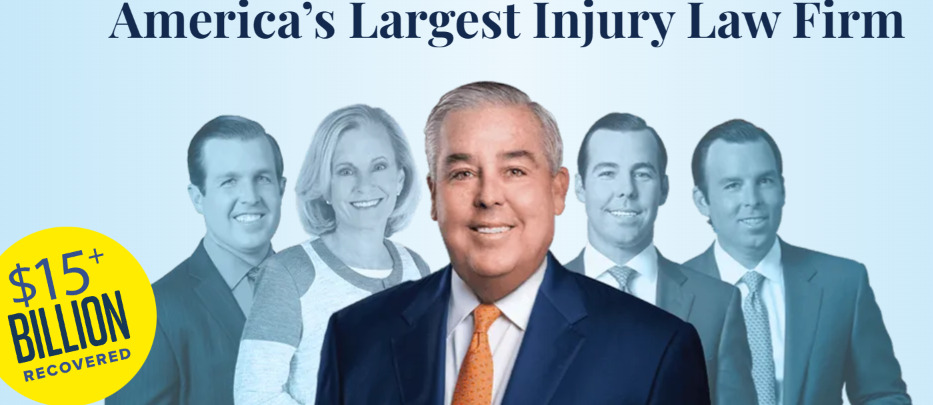
The mega-injury law firm reports annual revenue of $2.4 billion. John Morgan has acknowledged the ethical and regulatory obstacles to taking a law firm public, putting any such plan a long way off.
A billion-dollar raise and an IPO pathway for a contingency-fee firm is an extraordinary development in this arena. Just fifteen years ago that sentence would have been a bar complaint.
Working Out The Arithmatic
In a conventional partnership, retiring partners hand equity down, incoming partners buy in, build up, and eventually hand it on themselves. It’s a tried and true model, maybe, but it is also slow, illiquid and reasonably fair.
An MSO recapitalisation collapses that model. Today’s equity partners take a large upfront cash payment for infrastructure the firm built collectively over decades. Tomorrow’s partners inherit a firm that now pays a management fee, for services it used to own outright and for the life of the agreement.
So how is all this being framed? Politely, the framing is capitalising the platform to fund AI investment. But to be more blunt, there is also a cohort of senior partners is monetising net present value and handing the operating drag to whoever is a fifth-year associate right now.
And then there’s a structural problem sitting underneath the whole P/E model – the investors can’t lock the legal talent down.
Model Rule 5.6 bars agreements restricting a lawyer’s right to practise after leaving a firm. There are no enforceable non-competes. So if the rainmakers walk, (a stroll we are seeing with increasing regularity) the MSO is left owning a very well-capitalised billing system and an office with fewer clients paying the fees. Rollover equity, holdbacks and deferred consideration are doing a great deal of load-bearing work in these deals.
The States are Legislating.
The regulatory picture flipped from commentary to statute inside twelve months.
California got there first. Governor Newsom signed AB 931 on 10 October 2025, largely freezing California lawyers’ ability to work with alternative business structures for four years. It bans California lawyers and firms from sharing contingency fees with out-of-state ABS firms.
Critically for deal lawyers, AB 931 carves out contracts that use a flat fee structure, don’t pay for referrals or lead generation, and don’t scale with the amount recovered, meaning a properly built MSO survives even as ABS arrangements are effectively neutered.
Colorado went harder. Governor Polis signed HB26-1421, the Colorado Legal Practice Integrity and Fee-Sharing Prohibition Act, on 3 June 2026. It lifts the Rule 5.4 principle out of the ethics rules and into statute, adds civil remedies including a private right of action, and reaches beyond the state line. The Colorado law takes effect on 12 August 2026 and sunsets on 1 September 2029.
Illinois may be the template that more states use. The General Assembly passed HB 5487 on 31 May 2026. It bars entities not wholly lawyer-owned from interfering with professional judgment, controlling hiring, or accessing client documents, and prohibits fees tied directly or indirectly to a firm’s fees, revenue or profits.
Firms would also have to disclose MSO arrangements to clients. Penalties run to statutory damages of $10,000 or treble damages, plus fees and injunctive relief.
The lobbying alignment was extraordinary with both the Illinois Trial Lawyers Association and the Illinois Defense Counsel filing in support of the same bill.
Holland & Knight’s critique is worth reading, and it’s a sharp one: Illinois hasn’t outlawed MSOs so much as codified something broader and less precise than the professional rules it copies — while exempting entirely any firm making more than $300 million a year. Which is to say the bill lands hardest on the mid-market firms that actually need the capital, and not at all on BigLaw.
Not everyone thinks it changes much. Legal consultant Crispin Passmore has argued the legislation largely restates existing ethical obligations, attorneys control the firm, no fee sharing, no interference with independence, and that any properly structured MSO already complies.
Meanwhile the liberalisers keep liberalising. Puerto Rico’s Supreme Court amended Rule 5.4 to permit non-lawyer ownership up to 49%, with the firm operated by Puerto Rico-licensed lawyers and the court set to assess effectiveness after three years.
Clients must be told about the ownership interest and the island’s 4% corporate tax rate is not an incidental detail. Justice Estrella Martínez dissented, noting that investors are motivated by economic returns and that non-lawyer owners sit outside the disciplinary system entirely.
Arizona, which eliminated Rule 5.4 outright, now has a functioning market: 114 active ABS licensees as at 31 December 2024, including KPMG Law US, approved in February 2025 as the first Big Four subsidiary licensed to practise law in the United States.
Four Questions Before Signing
What exactly is the fee, and does it move? A flat, defensible FMV fee is the whole ballgame. Anything that tracks revenue is fee sharing with extra steps — and in Colorado and Illinois it’s now statutory exposure, not just a disciplinary risk.
Who owns the AI? If the MSO builds or trains proprietary tooling on your matter data, does the firm own it, licence it, or lose it at exit? This is the single most under-negotiated term in the market.
What’s the disclosure position? Illinois would require client disclosure. Puerto Rico already does. Assume you’ll be explaining the structure to your largest client eventually — draft as though that conversation is scheduled.
Who holds the keys in year five? The sponsor exits. The MSO gets sold to a strategic, a continuation fund, or a competitor’s platform. Your operational infrastructure has a new owner and you didn’t pick them.
The Bottom :ine
The MSO isn’t a loophole so much as a bet that “the business of law” and “the practice of law” can be cleanly and permanently separated. Healthcare made the same bet in the 1990s and spent thirty years litigating where the line actually sits.
The lawyers who take the money will not necessarily be the lawyers who find out.