
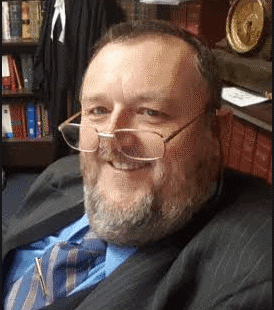
They may be relics these days, but for barrister Ray Broomhall, the collection of wigs is part of a desire to retain a slice of legal history. But at the same time this barrister has successfully fought against something far more modern than the wigs of old.
As wigs are now part of legal history in most of both Australian and New Zealand courts, the Tasmanian barrister recognises that they also represent the legal characters who wore them.
Mr Broomhall said he would like to get his hands on former justice of the High Court Michael Kirby’s wig.
“I’d love to have one of his wigs — whether his barrister wig or one that he wore in the High Court. That would be to me the ultimate,” he said.
He would not put a price on how much he has spent on his unusual collection.
“It’s not the wig itself — it’s the people behind the wig,” he said.
“The story behind each wig is absolutely amazing, and they’re priceless when you think of the stories behind them.”
Taking pride of place in his collection is the wig worn by Thomas Strangman when he successfully prosecuted Indian civil rights leader Mahatma Gandhi for sedition in 1922.
“There was actually a big court case that said you can’t trade in human body parts, so barristers were walking around with human-hair wigs and they found they had to go to horsehair,” Mr Broomhall said.
While the more modern wigs follow a pattern which includes a set guide of the number of side curls for barristers and back curls for judges, each wig is subtly different.
The wigs’ individual quirks give a special insight into the wearer.
Full-bottomed wigs for judges have been phased out — even for ceremonial occasions — in Tasmania.
The now-retired wigs are still housed at the Supreme Court of Tasmania in Hobart. Registrar Jim Connolly is the keeper of Supreme Court of Tasmania judges’ wigs.
“They’re part of our legal history,” Mr Connolly said.
“These wigs are handmade. They are made of horsehair and they are fitted to the particular judge’s head that they need to adorn.
The Barrister’s Fight Against 5G
Barrister Broomhall is not just about collecting and retaining a slice of legal history however. He has also spearheaded a successful legal fight against the introduction of the 5G network in Australia with his ‘Say No’ campaign.
The basis for the Broomhall opposition to 5G is the dangers alleged to emanate from magnetic fields and he has spoken widely across Australia about the dangers and the opposition to the implementation of the 5G network.
Source: ABC
Other Law News
- Sports Law Professor: NBA’s Clippers Penalties Send Clear Message — Teams Can’t Buy Their Way Around Salary Cap
- NZ Law – Anthony Harper Joined by Litigator Cecil Hanafin
- Meredith Connell Clean Up On Fees in Tauranga Landslide Legal DefenceRatepayers across Tauranga are picking up a legal and professional advice bill exceeding $1.2 million in the aftermath of the fatal Mauao (Mount Maunganui) landslide, highlighting the mounting exposure and legal complexities facing local authorities in disaster response. Figures presented to the Tauranga City Council (TCC) reveal that responding to the tragic 22 January 2026 slip, which claimed six lives at the Mount Maunganui Beachside Holiday Park, has so far cost more than $5 million from the council’s $7 million emergency risk reserves. Of that, professional advice and legal review expenses have rapidly spiralled past $1.7 million, with external counsel and legal support alone accounting for well over $1.2 million.
- The 3,000 Hour Associate: Inside The Troutman Pepper Locke Partnership Lawsuit
- Ogletree Grows Mexico Office With 61st Global Location Opening
- Legal AI – Can’t Work Without It: Why 15% of Big Law Attorneys Are Now Officially Dependent on AIAccording to fresh survey data from LexisNexis UK, 15% of lawyers at large commercial law firms now admit they are completely dependent on AI to carry out their daily legal work. The reliance is almost as pronounced in corporate legal departments, where 13% of in-house counsel report identical dependency. Artificial intelligence in the legal sector has crossed the rubicon from experimental pilot project to standard operating equipment. Log in to read ., .
- The Former ANC Leader and Lawyer Who Took Shares Instead Of Fees And Built A Business Empire
- Veteran China Disputes Lawyer Joins Baker McKenzie from Linklaters
- The Gentlemen in the Life of Meghan Markle
- Hacked On Thursday, Disqualified On Friday: BigLaw’s Information Problem Gets A Face
- Voluntary discontinuance is not free: what a Queens no-fault case still teaches about CPLR 3217
- Paul, Weiss Adds Investment Funds Partner in New York
- Best Family Law Attorneys in Denver (2026 Guide)
- Best California Clergy Abuse Lawyers




This article is inaccurate. There is no legal precedent against emitters of EME in Australia. The first case tested the Maroochydore magistrates court Jan-20
was dismissed by the judge who referred to the “method” as “incompetent”.
This method did also not stop the TPG roll-out in Australia. It was halted due to the Huawei ban and the ACCC initially blocking the merger between TPG and VHA. Now that the merger can proceed, the rollout of small cells will resume.
I did a workshop with Ray having heard about his loss in the courts in Queensland. I am disappointed as I can’t see how any of the methodologys he suggested could be used. Am i right.? This question relates to 5G
That’s right – it’s giving those concerned false hope