
Ramona Nee’s refusal of the top job leaves Weil Gotshal facing something worse than a partner exodus: a leadership vacuum.
Just when it seemed things couldn’t get worse at Weil, Gotshal & Manges, the woman chosen to lead it through the storm has decided she’d rather not. Star lawyer Ramona Nee has picked up honors and recognition for her work culminating in her position atop the firm, only to decide it’s not for her.
Ramona Nee is the Boston private equity heavyweight named in March to succeed executive partner Barry Wolf (pictured below) on 1 January 2027, has told the firm’s leadership committee she will not take the job, according to the Financial Times and Bloomberg Law.
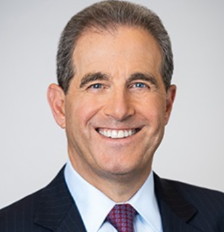
Nee joined Weil in 2002 and built a formidable private equity practice anchored by Advent International. She was meant to be the steady hand after Wolf’s 16 years in charge of the firm, but instead she has become the latest item on a list that was already long.
Weil has lost nearly 30 partners this year following the headline-making departure of corporate chair Michael Aiello, widely seen as the firm’s most powerful partner, who left for Cravath with five colleagues.
Then private equity partners went to Simpson Thacher and Paul Weiss. London’s M&A leader went to Sullivan & Cromwell. Merger talks with Willkie Farr & Gallagher then collapsed.
Now the designated successor, whose position was announced by the firm in March, has handed back the keys before getting to the executive suite. Semafor reports Nee has held talks with Simpson Thacher, although a move is not certain and Weil declined to comment.
The bigger problem
The immediate question is who replaces Ramona Nee at a time like this for Weill? The more uncomfortable one is what her decision says about the job.
Nee was not just some outsider who had been parachuted into a crisis but was a respected insider, and a significant rainmaker who already played a central part in Weill’s management. and already part of the firm’s management. So what has made Weill’s management so unattractive – putting aside the seemingly endless stream of departures?
According to Bloomberg Law, Weil grew revenue at half the annualised rate of its competitors between 2008 and 2025. Last year its revenue rose less than 3 per cent, while the 50 largest firms grew more than 13 per cent. Intense competitor pressure is part of the issue, apart from the departures.
Weil remains a heavyweight law firm, with about $2 billion in revenue and restructuring, litigation and deals practices most firms would envy.
But BigLaw’s arms race for rainmakers has shown that no Wall Street name is safe and the deals being offered continue to water the eyes. For Weil the question is no longer how to replace departing partners, but rather whether it can give the ones still there a reason to stay.
Nee’s decision doesn’t make that argument any easier.
It’s attempts to find a merger partner have faltered and its departures continue in a trend no law firm likes to see and which firm leadership may stem.
But now the firm that needed a leader to stop the departures has now lost the leader it chose to stop them, which may be the most troubling departure of all.
Everyone will be watching Weill with heightened interest.