From WikiLeaks to Venezuela: Barry Pollack Takes on the Maduro Defense in a Case That Could Reshape International Law
Tom Borman, LawFuel contributor
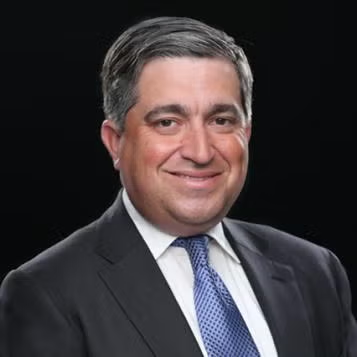
Fresh from orchestrating Julian Assange’s dramatic release from a British prison cell, Washington power lawyer Barry Pollack has now assumed what may prove to be the most geopolitically important defense case of the decade by representing Venezuelan President Nicolás Maduro against federal narco-terrorism charges in a Manhattan courtroom that has become ground zero for testing the boundaries of sovereign immunity and international jurisdiction.
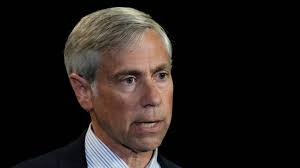
Pollack sat beside Maduro during Monday’s arraignment before U.S. District Judge Alvin Hellerstein, where the ousted leader declared himself “a kidnapped president” and “a prisoner of war” following his capture by U.S. special forces in Caracas.
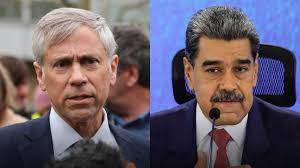
The choice of Pollack—a partner at boutique firm Harris St. Laurent & Wechsler—signals an aggressive legal strategy that industry observers say could fundamentally challenge how the United States prosecutes foreign leaders.
For trial lawyers watching this case, Pollack’s defense strategy offers a masterclass in jurisdictional challenges, sovereign immunity assertions, and the art of transforming prosecutorial overreach into grounds for dismissal—techniques applicable far beyond the realm of international law.
The Architect of Impossible Defenses
What makes Pollack uniquely suited for this geopolitical tinderbox? He has demonstrated ability to transform seemingly unwinnable cases into landmark victories through a combination of meticulous trial preparation and strategic narrative reframing.
With over 35 years of trial experience, Pollack has built a reputation as one of America’s top one percent of advocates, earning fellowship in the American College of Trial Lawyers and past presidency of the National Association of Criminal Defense Lawyers.
In 2021, he received NACDL’s prestigious Robert C. Heeney Memorial Award—the association’s highest honor—for exemplifying the goals and values of the criminal defense bar.
But it’s his specific case history that tells the real story.
The Enron Victory That Defined His Reputation
In the Enron prosecutions—which the FBI itself called its most complex white-collar crime investigation—Pollack secured one of only two jury acquittals among the two dozen executives charged, successfully defending former accountant Michael Krautz when virtually everyone else fell.
Chambers USA describes him as someone who “lives, breathes and sleeps trials” with an uncanny ability to connect with juries. Colleagues characterize him as a “legend in the white-collar world” whose “lawyering is sublime.”
This Enron acquittal wasn’t just a career highlight—it established a template that Pollack has replicated across multiple high-stakes cases: challenging the government’s narrative of harm, systematically dismantling circumstantial evidence, and humanizing clients whom prosecutors attempt to demonize.
The Pro Bono Pattern That Defines His Philosophy
One of the key features of Pollack’s profile that is uniquely compelling is his commitment to wrongful conviction cases reveals a legal philosophy that may prove critical in the Maduro defense.
Martin Tankleff: 17 Years of Wrongful Imprisonment Overturned
Pollack led the successful exoneration of Martin Tankleff, who spent 17 years imprisoned for murdering his parents—a crime he didn’t commit. In a lengthy evidentiary hearing, Pollack presented evidence demonstrating Tankleff’s innocence, resulting in the reversal of his conviction and dismissal of all charges. He then secured $13.4 million in civil compensation for his wrongfully convicted client.
The Mid-Atlantic Innocence Project honored Pollack with its Defender of Innocence Award, while the New York State Association of Criminal Defense Lawyers gave him its Gideon Champion of Justice Award.
Fernando Bermudez: Fighting Through 11 Failed Appeals
Pollack also led a pro bono defense team that freed Fernando Bermudez from a 23-years-to-life murder sentence after 11 previous unsuccessful appeals. Judge Jonathan Cataldo not only reversed the conviction but declared Bermudez factually innocent, going beyond the typical “not guilty” finding to issue a rare declaration of actual innocence.
Bermudez had spent 18 years imprisoned for a murder he didn’t commit.
In another case, Pollack obtained a writ of actual innocence and $2.4 million in compensation for a man who served 25 years for a homicide he didn’t commit in Baltimore, Maryland.
The trial lawyer’s takeaway: These cases demonstrate Pollack’s systematic approach to dismantling flawed prosecutions—a methodology directly applicable to the Maduro defense, where he’s already signaling challenges to the legality of his client’s military abduction and asserting sovereign immunity protections.
The Geopolitical Defense Specialist: Building Expertise in Extraterritorial Jurisdiction
The 15-Year Assange Odyssey
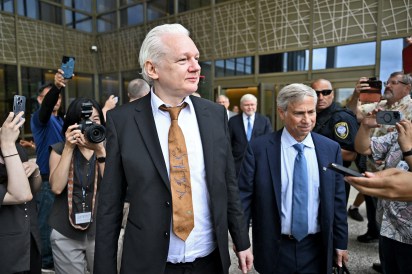
Pollack represented WikiLeaks founder Julian Assange for nearly 15 years, beginning when Assange first sought refuge in Ecuador’s London embassy in 2012 and continuing through his 2019 arrest and seven years in British prison.
The 2024 plea deal that Pollack negotiated allowed Assange to plead guilty to one Espionage Act count and immediately return to Australia, ending one of the most protracted legal sagas in modern journalism history. Assange walked free after time served, avoiding a potential 175-year sentence.
In a revealing Lawdragon interview, Pollack expressed concern about the Justice Department’s “extraordinary view” of its jurisdiction:.
“You’ve got somebody who’s not a United States citizen who is publishing information not in the United States, had not set foot in the United States, with respect to any of the alleged offensive conduct. The information was leaked to him by somebody in Iraq. Yet the United States obviously felt that it could pursue that as a criminal offense in the United States.”
This jurisdictional skepticism now forms the backbone of his Maduro defense strategy.
Jeffrey Sterling: CIA Whistleblower Defense
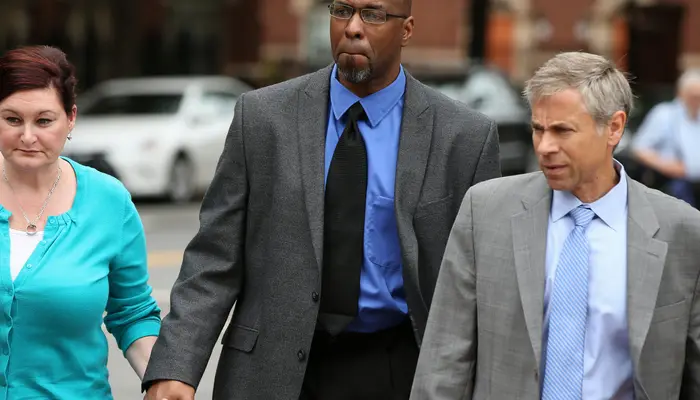
Pollack also represented Jeffrey Sterling, a former CIA officer convicted under the Espionage Act of leaking classified information to New York Times journalist James Risen about a CIA operation to provide faulty nuclear blueprints to Iran.
While Sterling was convicted on all counts in the circumstantial case, Pollack secured a sentence of just 3.5 years—a fraction of the 19-25 years recommended under federal sentencing guidelines. Judge Leonie Brinkema, who had presided over the Zacarias Moussaoui 9/11 trial, clearly rejected the government’s claim of catastrophic harm.
As Pollack told The Intercept: “By claiming that this was one of the greatest leaks and threats to national security, the government simply overplayed its hand and I think the judge did not agree with that assessment.”
The pattern: Pollack excels at exposing prosecutorial overreach and forcing courts to examine whether the government’s claims of harm withstand scrutiny—precisely the strategy needed when defending a foreign leader against narco-terrorism charges.
The Pras Michel Complication
Bloomberg Law reports that Pollack’s notable past clients also include Fugees rapper Prakazrel “Pras” Michel, when he was indicted for his role in the Malaysian 1MDB financial scandal. Michel was ultimately convicted in April 2023 and sentenced to 14 years in November 2025.
While this represents one of Pollack’s rare courtroom losses, it underscores his willingness to take on extraordinarily complex international financial prosecutions—experience directly relevant to understanding the transnational conspiracy allegations in the Maduro case.
Andy Birrell, current president of the National Association of Criminal Defense Lawyers, told NBC News that Pollack’s experience with Assange provided ideal preparation for the Maduro case: “There’s always challenges in high-profile cases, but Barry’s a veteran. He’s done it before.”
Pollack’s Academic Side: Teaching Trial Strategy at Georgetown
What many overlook is Pollack’s dual role as practitioner and educator. He serves as adjunct professor at Georgetown University Law Center, teaching “Anatomy of a Federal Criminal Trial”—a course that essentially provides students with a masterclass in his own three-decade trial methodology.
This academic dimension matters because it reveals Pollack’s systematic approach to complex litigation. C. Melissa Owen, president-elect of NACDL, characterized Pollack as having “Ivy League intellect with Midwestern sensibilities in terms of being able to communicate with the American public”—a crucial asset when your client is an internationally polarizing figure.
For lawyers seeking CLE insights: Pollack’s teaching methodology emphasizes narrative control, systematic deconstruction of government theories, and the art of humanizing demonized defendants—all techniques on full display in the Maduro proceedings.
The Strategic Battlefield Ahead: Sovereign Immunity and Jurisdictional Challenges
During Monday’s arraignment, Pollack signaled that the defense will raise “questions about the legality of his military abduction” and assert that Maduro “is head of a sovereign state and entitled to the privilege” such status ensures.
The attorney warned there would be “voluminous” pretrial filings challenging the prosecution’s legal foundation.
The Co-Defendant’s Defense Team
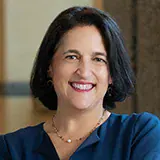
Maduro’s wife, Cilia Flores, is being represented separately by Mark Donnelly, a veteran Houston federal prosecutor who spent 12 years at the Justice Department, including service as senior adviser to the U.S. attorney for the Southern District of Texas—one of the nation’s busiest federal courts.
Donnelly, a Spanish-speaking Houston native, also served on the legal team investigating Texas Attorney General Ken Paxton in the 2023 impeachment proceedings.
Key Legal Issues for Trial Lawyers to Watch
- Sovereign Immunity Doctrine: Can a sitting head of state be prosecuted in U.S. courts for alleged crimes committed in his official capacity?
- Extraterritorial Jurisdiction: Does the U.S. have legitimate jurisdiction over alleged conduct occurring entirely outside its borders?
- Legality of Military Capture: Did the U.S. military operation violate international law, potentially rendering Maduro’s presence before the court unlawful?
- Head of State Protections: What immunities, if any, survive the transition from recognized to “ousted” leader?
These issues extend far beyond this single case—the precedents established here could reshape how the United States prosecutes foreign nationals and exercises extraterritorial jurisdiction for decades to come.
The Times Perspective and International Coverage
As noted in The Times coverage, Pollack’s selection represents a calculated bet that aggressive jurisdictional challenges combined with sovereign immunity arguments could derail the prosecution before it reaches a jury.
International observers from CNN Politics, Bloomberg Law, and legal analysts worldwide are watching to see whether Pollack can replicate his Assange success—transforming a seemingly hopeless situation into a negotiated resolution that allows his client to avoid decades in prison.
The CPA Advantage: Following the Money
An often-overlooked credential for Pollack is that he is a former certified public accountant. As a former CPA, a substantial amount of his work involves criminal and civil litigation of complex financial matters—crucial expertise for narco-terrorism charges that inevitably involve intricate financial transactions and money laundering allegations.
This financial acumen, combined with his trial skills, makes him uniquely equipped to challenge the government’s money trail and financial conspiracy theories.
What Lawyers Should Learn from Pollack’s Approach
In a Lawdragon interview, Pollack reflected on what he finds most fulfilling about his profession: forming personal connections with clients facing “what may be the worst crisis that they have ever faced.” He added that by the case’s conclusion, “it’s no longer a stranger who I’m seeing get through to the other side of this terrible piece of their life.”
That human-centered philosophy, combined with Pollack’s track record of defying prosecutorial expectations in cases ranging from corporate fraud to international espionage, makes him perhaps the only attorney in America with both the courtroom chops and the geopolitical credibility to mount a viable defense of a captured foreign leader.
Practice Pointers from Pollack’s Methodology:
- Challenge the narrative of harm: Don’t accept the government’s characterization of damages at face value
- Humanize the demonized: Even the most vilified defendants have stories that juries need to hear
- Master the facts obsessively: Chambers notes Pollack “lives, breathes and sleeps trials”
- Question jurisdiction aggressively: Extraterritorial prosecutions often rest on shaky legal foundations
- Build a comprehensive pretrial motion strategy: Pollack has signaled “voluminous” pretrial challenges
- Combine trial excellence with settlement savvy: The Assange plea deal shows when to fight and when to negotiate
The Global Stakes
As one legal observer noted, a verdict in Maduro’s case “will not only echo through courtrooms but through capitals around the world, testing the limits of American legal jurisdiction and setting precedents that could reshape international law for generations.”
For Pollack, it’s just another Tuesday at the office—albeit one where the stakes involve not just one man’s freedom, but the fundamental principles governing how nations interact under the rule of law.
And if his history is any guide, underestimating his chances of success would be a costly mistake.
About Barry J. Pollack:
- Partner, Harris St. Laurent & Wechsler LLP
- Fellow, American College of Trial Lawyers
- Fellow, American Board of Criminal Lawyers
- Past President, National Association of Criminal Defense Lawyers
- Past President, Mid-Atlantic Innocence Project
- Adjunct Professor, Georgetown University Law Center
- 2021 Robert C. Heeney Memorial Award Recipient
- Super Lawyers Top 100 (Washington, D.C.) 2021-2025
- Chambers USA Band 1: White Collar Crime & Government Investigations
Education:
- J.D., Georgetown University Law Center (1991), magna cum laude, Order of the Coif
- B.A., Indiana University (1986), High Honors
- Judicial Clerkship: Hon. Thomas A. Flannery, U.S. District Court, D.C.
Firm Website: https://hs-law.com/barry-pollack
The next hearing in United States v. Maduro is scheduled for March 17, 2026, in the U.S. District Court for the Southern District of New York before Judge Alvin Hellerstein.