By Ben Thomson, LawFuel contributing editor
Snobbery alert: while Big Law partners chase prestige, lockstep compensation, and sky-high billable-hour targets, those flashy “billboard lawyers” at personal injury firms like Morgan & Morgan are quietly running the smartest, most scalable legal businesses in America. And the data proves it.
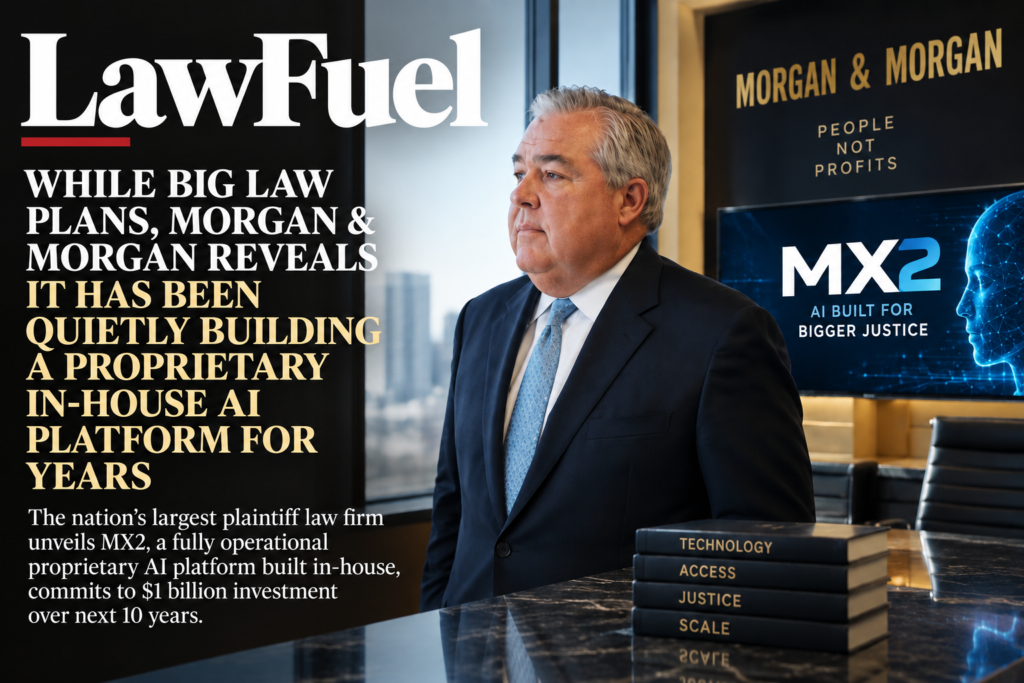
Morgan & Morgan isn’t just big (as LawFuel has previously reported) it’s the largest personal injury firm in the country, with over 1,000 attorneys (ranking 42nd overall on the 2025 NLJ 500 and 34th on the Law360 400), offices in every state, and more than $30 billion recovered for 700,000+ clients.

Founder John Morgan, now a self-made billionaire with an estimated $1.5 billion net worth (Forbes 2025), built the firm on a $2 billion annual revenue engine fueled by a staggering $350 million+ yearly marketing spend on billboards, TV, and digital ads.
What really stings Big Law egos though is that these high-volume contingency machines treat law like an actual business. They systematize intake, leverage national advertising for predictable case flow, settle or litigate at scale, and generate enterprise value that traditional firms can only dream of.
Solo and small-firm PI lawyers are among the highest earners in the profession — 58% pulling in $500,000+ annually — while founders like Morgan walk away with billionaire status and real exit options.
The entire U.S. personal injury market hit $61.7 billion in 2025 and keeps growing, yet the sector remains wildly fragmented — perfect for the disciplined, marketing-savvy operators who dominate it.
On the pure business side, the economics are magnetic: predictable insurance payouts create reliable cash flows with 12–24 month backlog visibility and high margins that PE firms love. The market’s $61.7 billion size (with steady 2.5% CAGR growth) plus extreme fragmentation (over 50,000 firms) makes it ripe for the classic PE playbook — roll-ups, tech upgrades, and professionalized operations.
The January 2026 Uplift–Orion Legal MSO deal with Dudley DeBosier is the canary in the coal mine – the first major platform investment signals the start of national consolidation waves. In early 2026, Louisiana powerhouse Dudley DeBosier spun off its non-legal operations into an MSO and took PE investment from Uplift Investors to fuel national acquisitions.
Similar moves are happening across the country as PI firms use the MSO model to bring in outside capital without tripping ethics rules. Big Law may talk about “alternative structures,” but the plaintiff side is actually executing them.
We expect PE-backed super-platforms to emerge fast, pouring capital into AI intake engines, digital marketing at scale, and automated settlement systems. Founders will finally treat their practices as sellable enterprises rather than lifetime jobs, opening genuine exit paths that Big Law partnerships rarely offer.
For Lawyers Watching
For lawyers watching this shift, the message is clear: systematize now or risk becoming acquisition fodder. The business is developing fast and the winners won’t just survive but will thrive with institutional-grade infrastructure while keeping full control of the legal practice.
Who knew the underdogs with the billboards were the real wolves of Wall Street? In 2026, the smartest money in law isn’t chasing prestige but instead are chasing scalable, profitable results.
LawFuel has been Tracking Developments
Check our deep dive into the largest personal injury firms in America (spoiler: Morgan & Morgan still reigns) and the fastest-growing PI players who are scaling like tech startups: