Neal Katyal, the superstar legal hotshot, set off a minor legal‑Twitter firestorm by posting a victory‑lap tweet and TED‑talk teaser crediting a bespoke AI tool, “Harvey,” with helping him win the Supreme Court tariffs case—a bit of self‑branding that many lawyers found tone‑deaf and over‑the‑top.
A subsequent reader poll by David Lat found roughly 70 percent of respondents viewed Katyal’s tweet and talk negatively, with only about 15 percent on the positive side.
What Katyal Actually Posted
On Wednesday night, Katyal promoted a new TED Talk by recounting how he argued against the President’s multi‑trillion‑dollar tariffs at the Supreme Court and prevailed, framing it as an unprecedented win against a sitting president’s signature initiative. He then revealed the “twist”: behind the scenes, he had used Harvey, a custom AI tool trained on years of Supreme Court questions and opinions, to model likely questions and help shape answers for the argument.
The tweet and related LinkedIn promotion positioned Harvey as a kind of super‑coach that anticipated the justices’ concerns, including an “escape route” that might bring Chief Justice John Roberts on board in the 6–3 ruling striking down the tariffs.
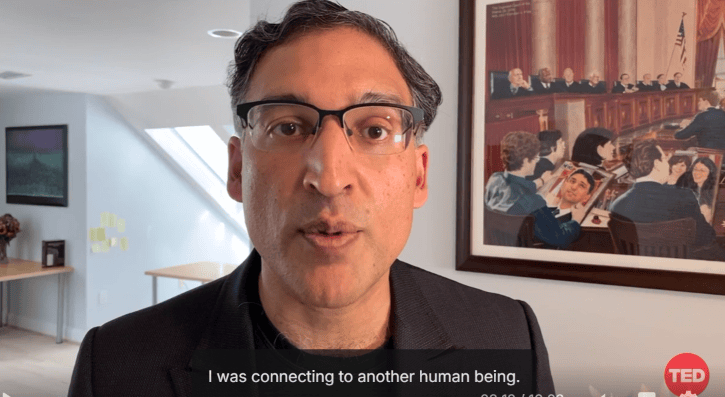
The TED Talk itself, titled along the lines of AI’s ability to “predict” versus humans’ ability to “connect,” cast Harvey as “peripheral vision” for a litigation team rather than a replacement for lawyers.
Why the Intense Backlash?
Within hours, academics, appellate advocates and legal Twitter/X piled on, criticizing the post as self‑congratulatory, overstating the influence of one advocate and one AI tool on a major separation‑of‑powers case, and flirting with “influencer”‑style AI promotion.
Commentators also bristled at the suggestion that a proprietary AI “won” what many thought the justices were already inclined to do on the law, and at the TED‑style packaging of a serious public‑law case as a personal branding moment.
David Lat, who has long praised Katyal’s advocacy, called the tweet and TED Talk “ill‑advised” in a widely read piece that helped crystallize the “TED‑gate” narrative in the bar. In a follow‑up Judicial Notice item, he reported that about 70 percent of his readers described their reaction to the tweet and talk as “very negative” or “negative,” versus only around 15 percent who saw them positively.
Katyal’s Side of the Story
When Lat pressed Katyal, the Milbank partner said his real goal was to start an honest conversation about how AI will reshape lawyering, not to claim robots had single‑handedly won a blockbuster case. Katyal emphasized that the core message of the TED Talk is about pairing AI’s predictive power with irreducibly human skills like “reading the room,” judgment and empathy, an argument Lat ultimately described as sensible and even wise, despite the clumsy rollout.
Lat also raised an FTC‑style “material connection” question: did Katyal have any financial or promotional relationship with Harvey that should have been disclosed? Katyal responded that he has no equity stake, received no discounts and is simply a paying customer who worked with Harvey’s engineers for free, a claim Harvey’s spokesperson echoed in comments to Bloomberg Law.
Why It Matters For Law Firms
For Supreme Court and BigLaw watchers, TED‑gate is less about one tweet than about how elite advocates talk about AI, clients and credit in public. The episode shows how quickly a victory story can be reframed as cringe if it sounds like tech hype, minimises co‑counsel or treats a major public‑law case as a vehicle for personal and product branding.
For law‑firm marketers, the lesson is clear – AI war stories are powerful content, but the tone, disclosures and allocation of credit; ber they to clients, co‑counsel, funders and yes, the humans on the team matter just as much as the technology itself.