By John Bowie | LawFuel
The shock death of Weil Gotshal last week, currently just a disturbing, near-death experience, has brought into sharp relief the very idea that big law partnerships are the secure pinstripe-and-poncy positions once guranteeing a future of special edition Range Rovers and ski holidays in the Dolomites.
The once bolt-locked position of status and security has been revealed as merely a starting blocks poitions in Who Wants To Be a Multimillionaire.
Leaving a law firm legacy and a picture in the boardroom has truly gone the way of the Epstein Files.
We can blame New York and the US firms with that demise as the lateral hiring revolution has turned the legal world upside down both stateside and in London’s once Magic Circle, where the allure of City firms has been substantially vanished by rich American plunderers.
After all, 95 year old Weil Gotshal & Manges was highly profitable, essentially debt-free and one of the most prestigious names on Wall Street.
There have been law firm failures before of course, Dewey & LeBoeuf, Heller Ehrman, Brobeck, Phleger & Harrison, but those firms were sick, or had debts, scandals or both.
Not so with Weil.
Legal commentator David Lat, who has chronicled more BigLaw collapses than anyone, reckons it is arguably the most prestigious and profitable firm ever to go under. It brought in $2.078 billion last year, 29th in the Am Law 100, with profits per equity partner of $5.593 million. One partner told Lat the firm was heading for a record 2026, with PEP possibly above $6 million.
Which raises the question for any law partners of how a rich scandal-free firm can simply decide to call it a day. What about that partnership, loyalty, fealty to a greater good, even?
Pah!
But Weil has woken the legal world to one thing in a brutal fashion, ripping the mask off what a partnership is really about. For years BigLaw has dressed its pay arms race in the language of culture, values and collegiality. The truth, now on public display, is simpler – just follow the money.
Lateral Transfer Bucks
The mechanism is the lateral market, which we have been charting for the best part of five years or more.
Top-end partner pay now looks less like the comfortable reward for a legal career and more like an investment banker’s package. Law firms, including an emerging group of major lucrative boutiques, have built themselves a transfer market that has disrupted the market. With football transfers however, there is no fee paid to the firm following the move. They just get a farewell email, a hole in next year’s profits and a headline on BloombergLaw.
The irony is that Weil played that game with gusto. Above the Law counted 51 lateral partner hires at the firm since the start of 2025. It was buying talent with one hand while the other was being picked.
Law firm raids are now as common as Meghan Markle misfires.
The Aiello Moment
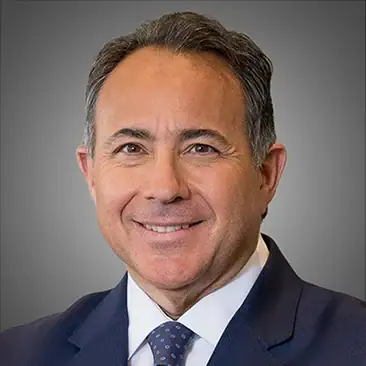
The dominos began their collapse last September when Michael Aiello announced he was leaving for Cravath with five fellow M&A partners.
Aiello was not just another senior partner because he chaired Weil’s 600-lawyer corporate department, sat on the management committee and was reportedly the firm’s most powerful partner.
According to the Financial Times, he was personally responsible for around 6 percent of Weil’s revenue, somewhere between $100 million and $150 million a year.
It’s not difficult to do the maths here. However generously Weil paid him, it was never going to hand him anything like 6 percent of the firm’s takings. These firms operate in a market that prices partners by their book, just like investment bankers, so walking was not betrayal but a commercial decision based on revenue.
In a sense, noone should really be suprprsed by that because fee-earning and partner profits have driven law firms since Clarence Darrow was a boy.
The private equity group had already been raided by Paul Weiss and Simpson Thacher, and white-collar co-head Daniel Stein had gone to Freshfields. After Aiello, the trickle of departures became a flood. Ramona Nee, chosen in March to succeed long-serving executive partner Barry Wolf, decided not to take the job. Merger talks with Vinson & Elkins, and then Willkie Farr, went nowhere.
From failed merger to wind-down recommendation took less than a week. Lat, who covered Dewey’s collapse in real time, notes that Dewey took three to four months to die. Weil’s final unravelling took three to four weeks.
The $5.5 Million Problem
Perhaps the most ironic and tragic part of the story is that Weil was not unsuccessful, but was not successful enough. It was hitting its stride big time, but so too were its competitors, sharks that must keep moving faster and harder, year after year, lateral hire after lateral hire.
The firm lifted PEP from about $4 million in 2019 to $5.6 million in 2025. Most businesses would throw a party for that, but every other firm in the Am Law top 20 by PEP posted double-digit growth last year, while Weil managed a little over 4 percent, falling from ninth on PEP in 2020 to twentieth this year.
There were some missteps from Weil, but not enough to lead to its windup. The firm made a fortune after the global financial crisis but failed to reinvest it well and trimmed lawyer numbers while its rivals were busy hiring. That may have slowed the rate of their growth trajectory, but it certainly didn’t lead to any sense of financial failure that might lead to the end of days for the firm.
After all, a partner on $5 million is perfectly content until she discovers her equivalent at Kirkland or Paul Weiss is earning a great deal more. Suddenly the $5 million being taken back to the Park Avenue apartment is evidence of underachievement, which is a strange definition of hardship but, more importantly, it is also a dangerous basis for a business relying upon her continued fee generation right where she is now.
Eat What You Kill. Then Leave.
Lockstep has on life support, for some years now and it has been a drum legal media have been reporting with rather tedious regularity. Lockstep had a nasty habit of rewarding people simply for sticking around.
The old law firm model belonged to the age of closed clubs, when partners were paid on seniority, stayed for life and were bound by ties beyond mere money. It has been the same everywhere.
In Sydney, for instance, Allen Allen & Hemsley was once the Protestant firm and Freehills Hollingdale & Page the Catholic one.
Weil itself was founded by Jewish lawyers shut out of the white-shoe firms, as were a number of other now-leading law firms like Wachtell Lipton, Skadden Arps, Fried Frank, Proskauer Rose – the list goes on, making you wonder what the anti-semites were thinking.
Under Harvey Miller Weil turned bankruptcy, once regarded as something of a bottom-feeding area of legal practice, into a prestige specialism. The firm meant something, and that meaning was worth a little less money.
But eat what you kill has come with a cost less tangible than a Patek Philippe chronograph or a house in the Hamptons where they can ride the rails. It has hollowed out the reason anyone stays in these place where you might once have stuck with a firm because you believed in what it stood for. It was the litigation shop, or the firm with the West Coast tech practice, or the one that took access to justice seriously, specialised in high octane M&A work or handled great pro bono work magnificently to fulfil its culture and public payback.
That’s not the case any more. The profession has not-so-quietly admitted that the only thing that matters is the money. And once you have said that out loud, you have stripped the bonding agent out of the firm so the new partnership deed has one clause that counts – pay me enough, or I’m out.
The cruellest detail of the Weil story is that its culture was, by most accounts, genuinely good. David Lat reports an outpouring of affection from current and former Weil lawyers. Culture, it turns out, may be a lovely thing to have but it’s a useless thing to bank on.
Once a firm starts making exceptions for its stars, the exceptions become the rule. The partner on $8 million wants $10 million, and so it goes. Enough is never enough. The partner with a similar book wants the same deal so the firm’s compensation committee stops being a guardian of fairness and ‘culture preservation’ and becomes a hostage negotiation team.
A Law Firm Can Have a Bank Run.

Yale law professor John Morley (above) saw this coming. In Why Law Firms Collapse, he calls it the partner run. A rainmaker leaves, profits dip and as partners are paid from profits the remaining partners start feeling their pockets, too. Less money, more concern, sideway looks, lunch talk – departures follow. No one wants to be last-man-standing when the firm’s liabilities are discussed at partner meetings when the revenue slips and the rainmakers have gone.
As Morley says, it works like a bank run. He argues that a firm could collapse without owing anyone a cent, and that debt is usually a symptom of decline rather than its cause. Weil looks like the proof. With Weil suffering its losing run of lawyers, almost at once, it suddenly made the fixed costs of global leases and some 2,000 staff untenable overnight.
Other firms have survived the partner departures, such as Boies Schiller, K&L Gates and O’Melveny & Myers, which survived the exodus and even Weil itself shrugged off a wave of departures in 2013 and 2014.
The difference now is the size of the pay checks and the speed with which the market has turned as rich firms become richer faster while the laggards who lost the rainmakers get poorer – but also faster.
A firm held together by shared purpose can survive a bad year. A firm held together only by money cannot survive a better offer.
The Magic Circle’s Uncomfortable Week
None of this is good news for the Magic Circle firms where partners have been soiling themselves with concern over the US invaders for years.
It is London where the end of lockstep has bitten hard. The Magic Circle has struggled for years to adapt to a market reshaped by American money for the big US firms. Partners at Linklaters, Clifford Chance and their peers still earn enough to buy their digs in the Cotswolds and Somerset, but its modest money compared to the investment-banker money earned by counterparts at the US firms.
And those US firms have spent a decade picking off the City’s best private equity, finance and M&A partners with packages a modified lockstep was never designed to match.
The Magic Circle has responded by loosening its own pay structures to keep its stars, but it has only served to nudge London towards precisely the star-driven model that left Weil so exposed.
There is one twist worth noting. Since the Legal Services Act 2007, English firms have been able to take outside capital, and Morley points to Slater & Gordon, the investor-owned firm with a large UK business, which became insolvent but did not disintegrate the way a partnership does.
Australia’ Experience
Australia has already had a small-scale rehearsal. DibbsBarker, a firm with more than 130 years of history, shut its doors in 2018 after 17 partners left for Dentons in a single move.
The pay pressures are real. The AFR reports that Corrs Chambers Westgarth pays its chief executive and top partners more than A$8 million, and Gilbert + Tobin is known for eye-watering remuneration.
The talk now is of Australia’s first A$10 million partner.
Joel Barolsky of the University of Melbourne told the AFR a Weil-style failure is possible, particularly “for firms where there’s a strong personality that’s holding it together”, which is the Aiello story in a sentence.
The big Australian firms are nowhere near the edge, and the local market remains comparatively comfortable and clubby. But Australia tends to follow the US a few years behind.
Boutiques, AI and the Shrinking Pyramid
A partner with a loyal client following now has options that barely existed a generation ago. Why fund global overheads and management committees when a smaller firm offers flexibility and a bigger slice?
None of this means every major firm is heading for the cliff. Many are well run, well capitalised and full of partners with no intention of going anywhere.
But the firms that last will be those that give partners a reason to stay that cannot be matched by money alone. These are firms that will be looking to strengthen capital, diversify practices and most to reduce dependence on any one partner.
They need to reward institutional contribution as well as billings and to actually stand for something, just like some did in the old days. And perhaps they also need to ask, seriously, whether the traditional equity partnership is still the right structure, with outside capital already circling in the US and the UK.
Follow the Money
The acidic irony of the Weil demise is that it acted for the debtors in six of the ten largest US bankruptcies, including Enron, General Motors and Lehman Brothers. It practically wrote the rule book on corporate restructuring, but never thought it would be applicable within its own offices.
There is a lesson here for the winners too. The most rapacious American firms are riding high just now, proud of their profits, boastful about their hires and bound together by money alone. They might take a moment this week to stop congratulating themselves.
The partners who came to you for more money will leave you for even more money. If they were that quick to join, how long do you imagine they will stay when someone else offers them a penny more?
Weil, therefore, can be seen as not so much an aberration as a harbinger.
The great firms were built to outlast their founders, their leaders and their stars. Partnership was meant to be the safe harbour, the reward for years of grind. That promise now looks like what it perhaps always was, a sentimental story told to associates on their way up.
That should worry every managing partner from Manhattan to the City, Sydney and Auckland.
Because the next great collapse may not start with a bank calling in its loans, but with a recruiteer calling a key partner.