
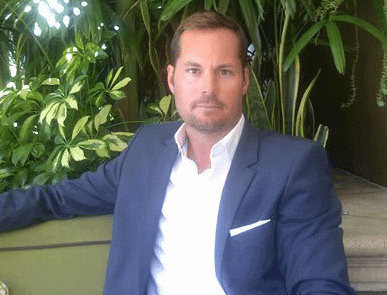
Lawyers for Prince Andrew have increased their preparedness for their client’s potential problems by speaking with a Washington DC lobbyist whose career was propelled by a New Zealand ambassador into a world of often insalubrious clients, according to The New York Times.
London lawyers Blackfords are representing the prince in the Jeffrey Epstein scandal, spoke with Washington lobbyist Robert Stryk in June according to the report.
But it appears that Prince Andrew may be too hot to handle, even for Stryk, who reportedly “expressed discomfort about the possibility of assisting Prince Andrew” and declined the representation.
Stryk and his firm were propelled to prminance among Washington’s 10,000-odd lobbyists by New Zealand’s former ambassador to Washington Tim Grocer (see NY Times extract below). The New Zealand government subsequently retain Stryk’s shadowy firm themselves.
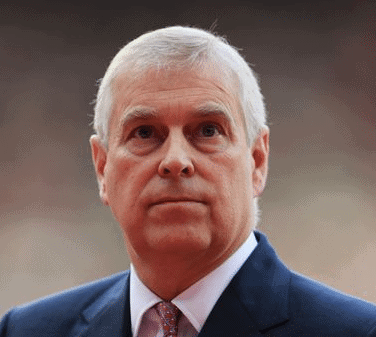
Last year, Virginia Giuffre Roberts — one of Epstein’s accusers — claimed she was forced to have sex with Andrew when she was 17. Prince Andrew has denied the various claims.
However a source close to Prince Andrew has claimed that the meeting with the lobbyist was actually initiated by Stryk’s firm, Sonoran Policy Group rather than Blackwoods, who had not responded to requests for comment on the matter.
Last year, Virginia Giuffre Roberts — one of Epstein’s most priminent accusers — claimed she was forced to have sex with Andrew when she was 17.
Giuffre is currently working with federal prosecutors in New York as part of a probe into Epstein, the convicted sex offender and disgraced financier. He died by suicide in jail last August.
The prince has denied Giuffre’s allegations against him, and has offered to comply with US law enforcement — but appears to be avoiding requests to explain himself.
US prosecutors also said Andrew has still not cooperated with them to answer questions about his relationship with Epstein.
Who Are Sonoran Group?
The Sonoran Policy Group are an obscure lobbying firm who have strong Trump connections but have signed on more, often dubious foreign clients than any other such group in Washington DC.
Politico reported that Stryk “has cut the figure of someone who’s gotten rich” and his group “are famous for representing high-profile figures, many of whom are accused of crimes and malpractice.”
Although Stryk has not actively lobbied for the Trump presidency his group has hired previous Trump staffers and also worked on a wide range of often dubious foreign government contractsw, such as representing Isabel dos Santos, the daughter of an Angolan president who is said to have embezzled millions of dollars.
Stryk helped set up a phone call between Trump and New Zealand’s prime minister in the chaotic weeks after the election and later persuaded New Zealand’s government to hire his firm after throwing a lavish inaugural party at the New Zealand Embassy. The New York Times Magazine chronicled his ascent, along with the activities of Lewandowski and other consultants and lobbyists with administration connections, in a piece headlined “How to Get Rich in Trump’s Washington.”
Stryk has cut the figure of someone who’s gotten rich. He has spent freely on cigars, flights on private planes and long dinners in the private upstairs room of Café Milano in Georgetown with bills that ran to thousands of dollars, according to three people familiar with the firm. He built a wet bar in SPG’s Georgetown office, boasted of plans to open a London office and said he wanted to build a $200 million-a-year business.
The New Zealand Connection
Stryk’s rise to prominence, of that is the word for his largely ‘below-rhte-radar operation, is due largely to the Scottish-born, Islamic convert and former New Zealand ambassador to the US, Tim Groser. He served as New Zealsnd ambassador from 2016 until 2018 under Prime Minsiter Sir John Key.
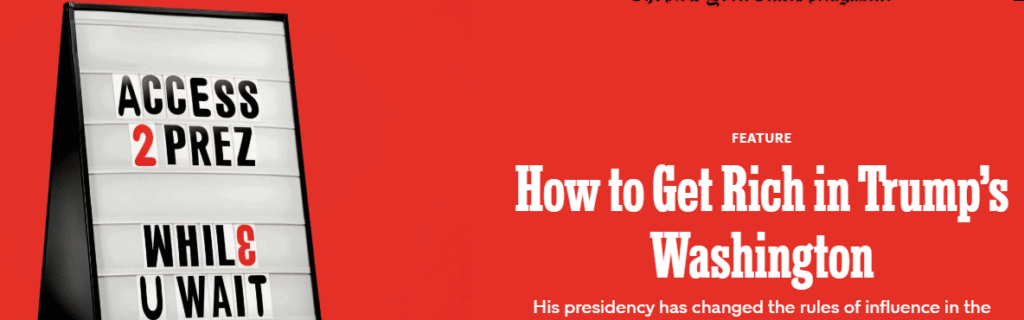
A New York Time article chronicled the rise of Stryk in his assistance to the Trump campaign as a little known former Oregon vineyard owner.
As the Times reported:
“He was still reveling in Trump’s upset win two nights later, over a bottle of wine on the patio of the Four Seasons in Georgetown, when a chocolate Lab padded over to his table to sniff his crotch. Stryk and the dog’s owner got to talking about wine and cigars and finally, like most of the country, about Trump. It turned out that she worked for New Zealand’s Embassy in Washington.
“New Zealand’s prime minister still hadn’t connected with the new president-elect, she told Stryk — a diplomatic and political embarrassment. Stryk cocked an eye across the table. ‘‘What if I said I could get you the number of someone to call the president?’’ he asked her.”
The meeting was arranged and Stryk’s PM-call was arranged.
The following afternoon, Stryk found himself in a cab, headed for a meeting with New Zealand’s ambassador to the United States, Tim Groser. Stryk was more than a little nervous. On the way over, he called a friend named Stuart Jolly, a retired Army lieutenant colonel who ran Trump’s field operation during the Republican primary and spent election night with Stryk at Morton’s.
Jolly reached out to someone he knew in the Trump high command and delivered a cell number, but Stryk didn’t know if it would actually work. At the embassy, Groser invited him in, uncorked a bottle of pinot noir and called the prime minister to pass along the number. A week later, President-elect Trump was finally able to accept a congratulatory phone call.
But even before the call went through, plans and possibilities were blooming in Stryk’s mind. ‘‘I said to myself: ‘This could be very, very interesting,’ ’’ he told me when I first met him this spring. ‘‘ ‘The world’s going to change.’ ’’
The Trump victory had transofrmed the nearly broke Stryk and his operation and the NZ connection organised by Groser had also transformed his world.
Groser and his staff had spent months researching Hillary Clinton, calculating who among her vast claque would win positions of power and influence in her administration. The main thing they knew about Trump was that he had sworn to pull the United States out of the Trans-Pacific Partnership, the complex 12-nation trade deal that Groser helped negotiate.
Stryk, offering to work free, had a proposal. New Zealand would throw the biggest party of Trump’s inauguration. Stryk would put the new administration’s leading lights in the room; Groser would do the rest. ‘‘It was about building brand recognition for New Zealand,’’ Stryk explained. ‘‘If we can get them there, then forever, bad or good, Trump and New Zealand are a co-brand.’’
As the Ghislaine Maxwell saga unfolds the role played by various operators to achieve whatever an outcome Prince Edward can obtain will doubtless intensify.
[adrotate banner=”94″]
More on LawFuel
- Slaughter And May Still Rules London’s Listed Market. The Problem Is The Market Is Shrinking

- Sports Law Professor: NBA’s Clippers Penalties Send Clear Message — Teams Can’t Buy Their Way Around Salary Cap
- NZ Law – Anthony Harper Joined by Litigator Cecil Hanafin

- Meredith Connell Clean Up On Fees in Tauranga Landslide Legal Defence
 Ratepayers across Tauranga are picking up a legal and professional advice bill exceeding $1.2 million in the aftermath of the fatal Mauao (Mount Maunganui) landslide, highlighting the mounting exposure and legal complexities facing local authorities in disaster response. Figures presented to the Tauranga City Council (TCC) reveal that responding to the tragic 22 January 2026 slip, which claimed six lives at the Mount Maunganui Beachside Holiday Park, has so far cost more than $5 million from the council’s $7 million emergency risk reserves. Of that, professional advice and legal review expenses have rapidly spiralled past $1.7 million, with external counsel and legal support alone accounting for well over $1.2 million.
 - Big Law Firms Have Been Keeping the AI Savings – Now Wall Street Wants Them Back
 Goldman Sachs, Morgan Stanley and Citi are asking a rather uncomfortable question of their outside lawyers: if AI is making legal work faster, why aren’t the bills getting smaller? Power Points Goldman Sachs, Morgan Stanley and Citigroup are pushing major law firms to demonstrate how AI efficiencies are being reflected in their legal bills. Citi has begun asking firms bidding for work to explain their AI-related savings, while Morgan Stanley is moving much of its outside legal work toward competitive bidding and alternative fee arrangements. The pressure goes directly to the BigLaw leverage model, where armies of associates traditionally generated large volumes of billable hours. New LexisNexis research shows 94 per cent of lawyers now use AI for legal work and 55 per cent expect AI to change law firm billing. The battle is shifting from whether lawyers should use AI to a much more interesting question: who gets the financial benefit? For the past few years BigLaw has been enthusiastically telling anyone within PowerPoint range that artificial intelligence will transform legal practice and clients have been listening.
 - When a Software Bug Becomes a Legal Problem: What Businesses Should Know

- Is Road Rage Actually a Crime in Florida?




There are a number of references to Prince Edward in the article. I assume these should be Prince Andrew? Not good to implicate Edward in his brother’s misconduct.