Australian billionaire James Packer’s company paid Benjamin Netanyahu’s defence firm US$50,000 a month for two years. Packer says not a cent went to the defence. Then the firm asked the court to hear from Packer as a witness.
The story of billionaire James Packer’s involvement in Benjamin Netyanyahu’s corruption case has raised some interesting questions for Netanyahu’s law firm. Hadad Roth Shenhar & Co., the Tel Aviv firm whose head, Amit Hadad, leads Netanyahu’s corruption defence has taken substantial payments from Packer, unrelated to the defense of the case, but it is nonetheless a case where Packer features in the prosecution of their client and who now seek his evidence.
That is the position of
Hadad Roth Shenhar & Co., the Tel Aviv firm whose head, Amit Hadad, leads Netanyahu’s corruption defence, is discovering how that rule plays when the payer’s gifts sit at the centre of the prosecution’s case.
An investigation by The Sydney Morning Herald published on 26 October on the eve of Israel’s election, reported that a company controlled by James Packer paid the firm at least US$1.25 million (about A$1.78 million) over two years.
The money trail
According to the SMH, from 23 September 2024 Packer’s Consolidated Press International sent US$50,000 a month from a Citibank account to the firm’s account at Israel’s Mizrahi Tefahot Bank.
The first payment landed roughly eight weeks after Packer and Netanyahu renewed contact around the Prime Minister’s July 2024 address to the US Congress, which Packer attended as a guest.
The SMH was explicit that it had not established Netanyahu benefited and there is no evidence that the money funded his defence.
Packer did not deny the payments and declined to comment, as did Hadad.
A source close to Packer said the firm was paid for work done for Packer himself, including “deal finding” in Israel, and that it had nothing to do with the trial.
Packer’s formal denial came later, in a statement issued, of all routes, through Hadad Roth Shenhar. He said the suggestion that he had paid even a single cent toward Netanyahu’s defence was false, and warned of legal action.
“The claim that I paid even a single cent toward the legal defense of Israeli Prime Minister Benjamin Netanyahu is false,” adding that anyone making such a claim “exposes themselves to legal action.”
The statement does not dispute that money was paid, while a spokesman for Netanyahu took a less lawyerly approach explaining there was an election to run.
It rejects the claim that the money paid for the defence. It does not dispute that the money was paid. Netanyahu’s spokesperson, less lawyerly, brushed off the questions because there was an election to run.
Case 1000
Case 1000, one of three cases against Netanyahu, alleges he and his wife received luxury gifts from benefactors, chiefly Hollywood producer Arnon Milchan and Packer. Netanyahu is charged with fraud and breach of trust and denies wrongdoing.
Packer has not been accused of any offence; Australian Federal Police questioned him as a witness for Israeli investigators in 2017. Hadad Roth Shenhar represents Netanyahu in all three cases.
The twist: the benefactor as defence witness
After the story broke, Hadad filed a motion asking that Packer and two of his employees testify from abroad by video link. According to Israel newspaper Haaretz, the defence wants their evidence to challenge testimony from Hadas Klein, a former assistant to Milchan and Packer, and driver Yonatan Hasson about how many cigars and how much champagne reached the Netanyahus. Packer and the two associates have said they will give evidence remotely.
Hadad says the firm’s work for Packer is unrelated to the trial. Even so, the sequence reads awkwardly: a man whose gifts are on the charge sheet has been paying the defence firm, which now wants his evidence for its client.
No one has shown that any rule was broken. But the arrangement hands the prosecution an obvious line of cross-examination, and every legal ethics lecturer a ready-made seminar.
The Funding History
Israel’s State Comptroller’s Permits Committee has repeatedly refused to let Netanyahu’s wealthy associates pay his legal bills, reasoning that a case about benefits from wealthy businessmen should not be funded by them. It also ordered him to repay legal-cost money from his cousin.
Four intake questions
The canse provides some awkward questions given that as a firm specialising in media crises among other matters, the firm is now itself in the center of one. Retaining independence and credibility in the face of a major figure in a client case, who is now called as a witness, is also uncomfortable.
Amit Hadad, the Lawyer
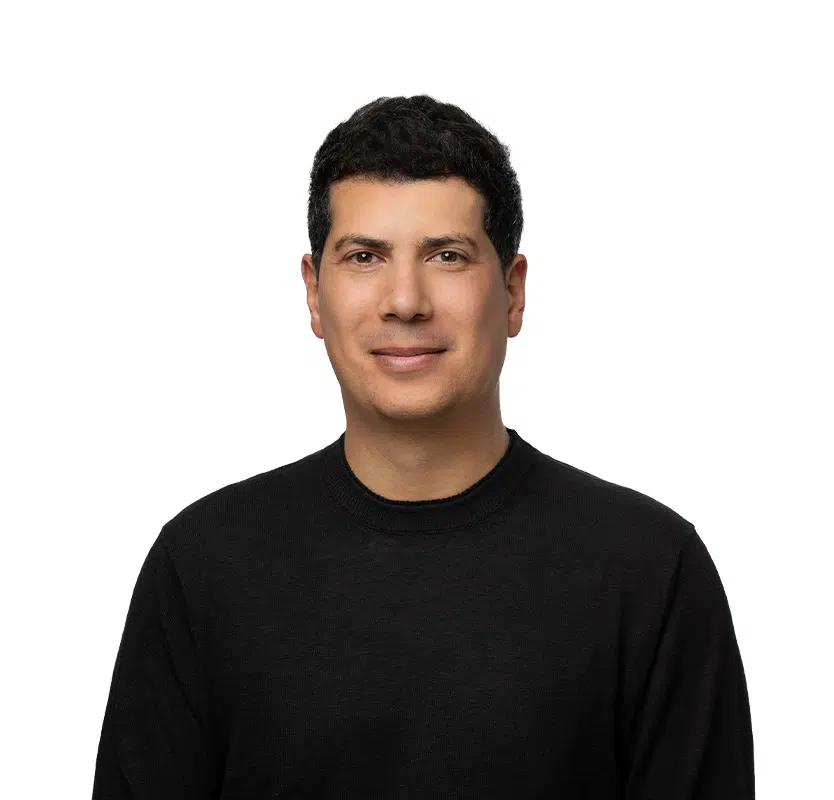
Hadad founded the firm in 2018 after leaving Weinroth & Co., the firm of the late Jacob Weinroth, Netanyahu’s long-time lawyer, taking Ariel Roth, four other lawyers and Netanyahu with him. From 2 Weizmann Street in Tel Aviv it covers white-collar defence, litigation, real estate, commercial and nonprofit law, and defamation and media crisis work, the last led by Ori Shenhar.
Roth, the managing partner, handles corporate work including M&A. The firm appears in Israel’s Dun’s 100 rankings for criminal law and nonprofit organisations.
The Election
Israel went to the polls on 27 October; the trial continues whatever the result. Watch whether the court admits the video-link testimony, whether any authority examines the payments, and whether anyone produces paperwork for the deal finding.
In white-collar defence, the standard advice is never to create a paper trail you cannot explain. Hadad Roth Shenhar now needs to explain its own.