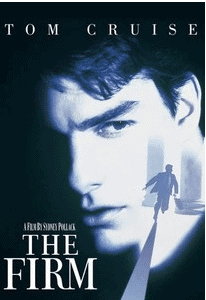
It should come as no surprise that John Grisham holds a law degree. His criminal-justice background likely adds to his novels’ believability. The best-selling crime author earned his law degree from graduated from Mississippi State University and received a J.D. degree from the University of Mississippi School of Law in 1981. He practiced criminal law for about a decade and served in the Mississippi House of Representatives from January 1984 to September 1990.
In 2010, Grisham started writing a series of legal thrillers for children aged 9 to 12 years, which feature a 13 year old, Theodore Boone, who gives his classmates legal advice ranging from rescuing impounded dogs to helping their parents prevent their house from being repossessed. He said, “I’m hoping primarily to entertain and interest kids, but at the same time I’m quietly hoping that the books will inform them, in a subtle way, about law,” he says
Kirkland & Ellis just changed the frame for the entire industry If you write about lawyers for long enough, you make a quiet peace with the gap between your pay packet and theirs. This week, however, Kirkland & Ellis has made that gap feel almost cosmic. Equity partners at the world’s highest-grossing law firm averaged $11.1 million each for 2025 – a 20% increase on 2024. The major money figure places Kirkland’s partners in the earnings bracket of a top Premier League footballer, at roughly £22,500 a day. The firm simultaneously became the first law firm in history to break $10 billion in revenue, posting $10.56 billion for the year.
When Weil, Gotshal & Manges announced last week that Ramona Y. Nee will succeed Barry Wolf as Executive Partner from January 2027, the news landed with the quiet inevitability of a deal that everyone saw coming. Wolf, who has steered the firm for 16 years, called her “uniquely suited.” He was not exaggerating. For nearly a quarter-century Nee has been the quiet engine of Weil’s U.S. private equity practice and the beating heart of its Boston office. Now the firm is handing her the keys.
The legal profession has survived recessions, regulatory upheavals and the occasional partner meltdown. But the next threat to BigLaw’s favourite revenue model may come from something far less dramatic. A machine that reads faster than any associate and which could spell the end of the infamous ‘billable hour’, which has been touted as being in its end time for some time.
According to Jeff Bleich, general counsel at AI company Anthropic, (pictured) the traditional billable hour could soon be on borrowed time.
A two‑year‑old Swedish startup has just become one of the most valuable legal tech businesses on the planet—and it is using that war chest to plant its flag squarely in the US legal market. Legora’s $550 million Series D at a $5.55 billion valuation is not just another exuberant AI round; it is a blunt message to law firm leaders that the window for treating AI as a side project has closed. Legora’s pitch is disarmingly simple. Built on top of large language models, its platform targets the work that eats most of a junior lawyer’s life: research, document review, contract drafting and due diligence. The company claims tens of thousands of legal professionals using the product daily, across some 800 customers in more than 50 markets, including heavy‑hitting firms like Bird & Bird, Cleary Gottlieb, White & Case, Linklaters, Goodwin, Dentons and advisers such as Deloitte.
LawFuell's editors select and publish the most relevant and up-to-date information about lawyers and law firms for LawFuel on a daily basis from the most reputable and independent sources available.